

Maddy summaryThis bill, HR 2102 (Major Richard Star Act), allows veterans with combat-related disabilities to receive both full military retired pay and veterans' disability compensation simultaneously, without the previous offset that reduced retired pay. It directly affects veterans already eligible for both benefits due to combat-related injuries, removing the requirement that their retired pay be reduced by the disability compensation amount. The key provision amends Title 10 and Title 38 to eliminate the offset rule (sections 5304 and 5305 of Title 38) for these veterans. The change applies to payments starting after the bill’s enactment date, effective for all qualifying veterans. This is a policy change to increase financial support for affected veterans, not a new benefit.
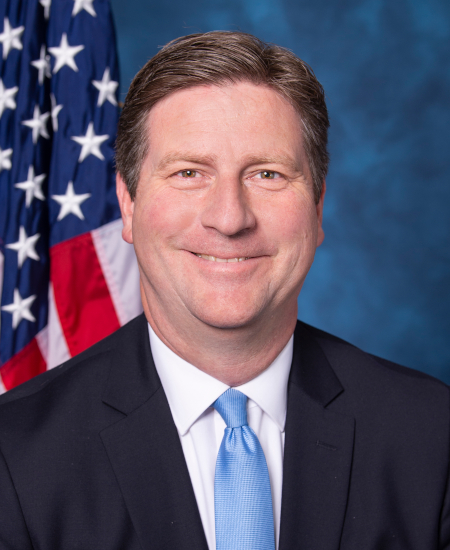
Rep. Greg Stanton
Sponsored bills
Maddy summaryThe IDEA Full Funding Act (HR 2598) mandates specific annual federal funding levels for the Individuals with Disabilities Education Act (IDEA), directly affecting schools and students with disabilities nationwide. It requires the federal government to appropriate either a fixed dollar amount or a specified percentage (increasing annually from 4.5% to 40%) of a calculated total - based on the number of eligible students and average per-pupil costs - starting in fiscal year 2026 through 2035. The bill sets clear, escalating funding targets, with the higher of two calculated amounts (dollar figure or percentage) becoming available for obligation each fiscal year. This establishes a binding financial commitment to address long-standing underfunding of special education services under IDEA.
Maddy summaryThis bill requires the State Department to obtain specific congressional authorization and submit a detailed reorganization plan before making any structural changes. The plan must cover impacts on diplomatic operations, consular services, workforce transitions, and risks to U.S. foreign policy interests. If the department bypasses these requirements, federal funds cannot be used for State Department efficiency activities or official travel by politically appointed officials. The bill directly affects State Department leadership and congressional committees, mandating strict oversight before any reorganization takes effect.
Maddy summaryHCONRES 25 is a symbolic congressional resolution stating that the Trump administration's planned 25% tariffs on imports from Canada and Mexico violate the USMCA trade agreement. It directly addresses the administration's tariff announcement (set for April 2, 2025), which Congress claims undermines the USMCA's terms. The resolution emphasizes that these tariffs threaten established trade relationships, harm the $1.6 trillion annual trade between the U.S. and these nations, and contradict the agreement's goal of maintaining a level playing field. As a non-binding expression of congressional opinion, it does not alter tariffs but highlights concerns about USMCA compliance.
Maddy summaryHR 2559, the Taiwan Allies Fund Act, authorizes $40 million annually (2026-2028) from existing foreign aid funds to support countries maintaining or strengthening unofficial ties with Taiwan, particularly those facing economic or diplomatic pressure from China. The bill directs funds to help eligible countries diversify supply chains, counter Chinese propaganda, develop health initiatives as alternatives to China's "Health Silk Road," and advance Taiwan's participation in international organizations. Countries receiving funds cannot get more than $5 million per year, and the State Department must coordinate with Taiwan and report annually on fund usage and effectiveness. This is a targeted financial assistance program, not a policy change affecting Taiwan's status or U.S. diplomatic recognition.
Maddy summaryHR 2585, the Armenian Genocide Education Act, establishes a federal program through the Library of Congress to develop educational resources about the 1915-1923 Armenian Genocide for K-12 schools. It requires the Librarian to create and distribute accurate teaching materials, provide teacher training workshops, and maintain an online resource hub focused on the genocide's history, lessons, and prevention of hate. The program directly supports local educational agencies, independent schools, and educators by offering professional development and curriculum resources. It defines key terms like "denial" and "distortion" to guide the educational content, aiming to improve understanding of this historical event and its relevance to preventing modern-day hate crimes.
Sanctioning Russia Act of 2025 This bill imposes penalties on certain persons (individuals and entities) if the President determines that the Russian government or a person acting at Russia's direction is involved with (1) refusing to negotiate a peace agreement with Ukraine; (2) violating a negotiated peace agreement; (3) initiating another invasion of Ukraine; or (4) overthrowing, dismantling, or seeking to subvert the Ukrainian government. If the President makes such a determination, the bill requires certain actions including the President must impose visa- and property-blocking sanctions on specified persons such as the Russian president, certain Russian military commanders, and any foreign person that knowingly provides defense items to the Russian armed forces; the President must increase the rate of duty on all goods and services imported from Russia into the United States to at least 500% relative to the value of such goods and services; the President must increase the rate of duty on all goods and services imported into the United States from countries that knowingly engage in the exchange of Russian-origin uranium and petroleum products to at least 500% relative to the value of such goods and services; the Department of the Treasury must impose property-blocking sanctions on any financial institution organized under Russian law and owned wholly or partly by Russia, and any financial institution that engages in transactions with those entities; and the Department of Commerce must prohibit the export, reexport, or in-country transfer to or in Russia of any U.S.-produced energy or energy product.
Maddy summaryHR 2525, the Housing Vouchers Fairness Act, allocates $2 billion annually starting in 2025 to provide additional rental vouchers to public housing agencies serving 25 U.S. areas with populations over 100,000 that experienced the highest population growth between 2012-2022. It directs the Secretary to distribute these funds based on each agency's population size, current voucher shortages relative to housing needs, and historical underfunding due to population growth. This targeted funding aims to address gaps in housing assistance for residents in rapidly growing communities. The bill directly affects public housing agencies in those 25 designated high-growth areas.
Maddy summaryHR 1923, the Modernizing Wildfire Safety and Prevention Act of 2025, establishes training programs for wildfire professionals and improves retirement benefits for firefighters. It creates a National Smoke Monitoring and Alert System to protect public health during wildfire events and requires payment for wildfire recovery programs within 90 days of application approval. These provisions directly affect federal firefighters, wildfire response organizations, and communities in wildfire-prone areas. The bill also includes mechanisms for workforce development, casualty assistance, and data sharing to enhance wildfire management and public safety.
Save America's Forgotten Equines Act of 2025 or the SAFE Act of 2025 This bill permanently prohibits the slaughter of equines (e.g., horses and mules) for human consumption. (Current law prohibits the slaughter of dogs and cats for human consumption. This bill extends the prohibition to equines.) Specifically, this bill prohibits a person from knowingly (1) slaughtering an equine for human consumption; or (2) shipping, transporting, possessing, purchasing, selling, or donating an equine to be slaughtered for human consumption or equine parts for human consumption. The bill subjects a violator to a fine. The bill applies to conduct in or affecting interstate or foreign commerce or within the special maritime and territorial jurisdiction of the United States. However, it does not apply to an activity carried out by an Indian for a religious ceremony. As background, in recent years, the appropriations acts have prohibited the Department of Agriculture (USDA) from using federal funds to inspect horses before they are slaughtered for human consumption. Therefore, there are currently no USDA-inspected horse slaughter facilities in the United States.