Maddy summaryHR 2314, the FAIR Act, requires hospitals participating in Medicare-funded residency programs to annually report data on applicants and acceptances from both osteopathic (DO) and allopathic (MD) medical schools. Hospitals must publicly affirm they consider applicants from both pathways equally and accept scores from either the COMLEX (for DOs) or USMLE (for MDs) exams. Non-compliant hospitals face a 2% reduction in Medicare payments starting in 2026 for each prior year of non-reporting. The bill directly affects hospitals receiving Medicare residency funding, aiming to increase transparency in admissions without mandating specific acceptance rates or federal oversight of medical education.
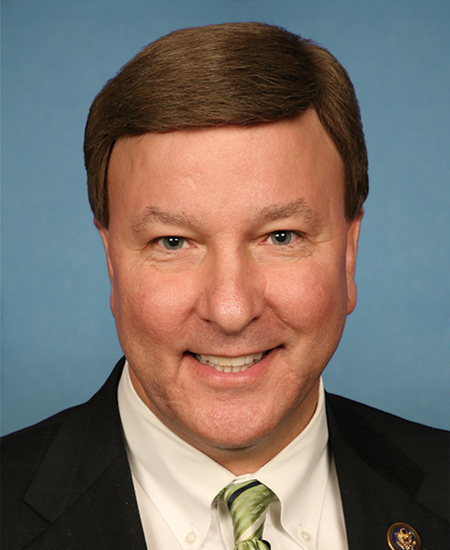
Rep. Mike Rogers
Sponsored bills
Maddy summaryHRES 227 is a non-binding resolution expressing the House of Representatives' support for designating March 18, 2025, as "National Agriculture Day" to honor agriculture's role as a vital U.S. industry. It does not create new laws, allocate funds, or impose requirements on any group. The resolution serves as a symbolic gesture to highlight agriculture's economic impact and contributions to the nation. As a procedural resolution, it has no direct policy effect beyond raising awareness.
Maddy summaryThis bill amends the tax code to permanently establish a 7-year depreciation period for motorsports entertainment complexes, replacing a temporary provision. It directly affects businesses operating these facilities by allowing them to deduct the cost of qualifying assets over seven years instead of a shorter period. The key change is removing a temporary rule (subparagraph D) from the tax code, making the longer recovery period permanent for these specific properties. The bill focuses solely on clarifying and extending this tax treatment without additional policy changes.
Maddy summaryThe FOCA Act of 2025 prohibits federal agencies from requiring or banning contractors from using union agreements in construction project bids or contracts. It directly affects federal agencies, contractors, and subcontractors working on federally funded or assisted construction projects (like buildings or infrastructure). The law requires bid documents to not favor or penalize contractors based on whether they have union agreements, aiming to promote open competition and prevent discrimination. This changes how agencies structure bids but does not affect union agreements themselves. The bill applies to all new contracts and subcontracts after enactment, with limited exemptions only for public health/safety emergencies or national security.
Homes for Every Local Protector, Educator, and Responder Act of 2025 or the HELPER Act of 2025 This bill establishes a program administered by the Department of Housing and Urban Development to provide mortgage assistance to law enforcement officers, elementary and secondary school teachers, firefighters, or other first responders. Specifically, these individuals may be eligible for a first-time mortgage on a primary family residence with no down payment. Instead, the mortgage is subject to a one-time, up-front mortgage insurance premium.
Resident Education Deferred Interest Act or the REDI Act This bill allows borrowers in medical or dental internships or residency programs to defer student loan payments until the completion of their programs.
Maddy summaryHRES 153 is a ceremonial resolution expressing condolences to the families and loved ones of the 67 victims who died in two aviation incidents: American Eagle Flight 5342 and U.S. Army flight PAT 25, which crashed near Washington, D.C.'s Reagan National Airport on January 29, 2025. It specifically honors the victims - many connected to Wichita, Kansas (known as the "Air Capital of the World") - and extends sympathies to affected communities including Wichita, Kansas, and the National Capital Region. The resolution also commends first responders who aided in the recovery efforts. As a non-binding expression of sympathy with no policy changes, it does not affect laws or regulations.
Maddy summaryHR 1772 designates English as the official language of the United States federal government, requiring all official government functions (like laws, regulations, and public proceedings) to be conducted in English. It directly affects federal agencies, naturalization processes (mandating English ceremonies and language standards for new citizens), and government communications. Key exceptions include language teaching, disability education, national security needs, census activities, and protections for Native American languages under existing law. The bill does not restrict the use of other languages in private settings or ban bilingual services for essential government functions. It amends U.S. Code to establish these requirements, with implementation set for 180 days after enactment.
Federal Firearms Licensee Protection Act of 2025 This bill modifies criminal penalties for an offense involving the theft of a firearm from a licensed importer, manufacturer, or dealer, or from their business premises. Specifically, the bill does the following: increases from 10 to 20 years the maximum prison term, and creates a 3- or 5-year mandatory minimum prison term for an offense that occurs during the commission of a burglary or robbery. An attempt to commit an offense is subject to the same penalties as a substantive offense.
Maddy summaryHR 1383 extends the Secure Rural Schools program, which provides payments to counties and states with federal land (like national forests) to support local schools and services. It reauthorizes these payments through fiscal year 2026, adding specific rules to ensure counties don’t receive duplicate payments for 2024 and 2025. The bill also extends related authorities for special projects on federal land and county fund expenditures through 2028-2029. This directly affects rural communities adjacent to federal lands that rely on these payments for education and infrastructure.