Maddy summaryHR 2665 delays Medicaid payment reductions for safety net hospitals by two years, changing the effective date from 2024 to 2026 under Section 1923(f)(7)(A) of the Social Security Act. This bill directly affects hospitals that serve high numbers of low-income and uninsured patients, providing them with additional time before facing reduced federal Medicaid payments. The key mechanism is a technical amendment to existing law, postponing an already scheduled payment adjustment without altering funding levels or eligibility. As a procedural bill, it does not create new programs or change hospital requirements.
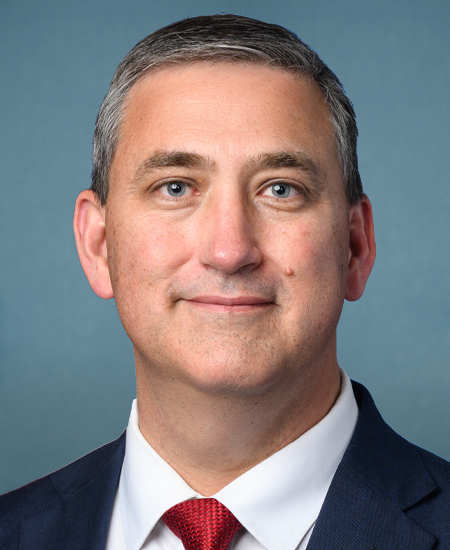
Rep. Nathaniel Moran
Sponsored bills
Maddy summaryHR 2630, the Safe Step Act, requires group health plans and health insurance issuers to establish a clear, transparent process for patients or their doctors to request exceptions to medication step therapy protocols. These protocols typically force patients to try cheaper drugs first before covering more expensive alternatives. The bill mandates that plans must approve exceptions when prior treatments failed, delay would cause serious harm, a treatment is unsafe, or a patient is stable on a previously approved drug, with strict 72-hour (or 24-hour in emergencies) decision timelines. It also requires plans to publish the exception process online and limit documentation requests to only necessary medical information. This law directly affects health insurers, employers offering health plans, and patients using step therapy for prescription drugs.
Maddy summaryHR 1839, the Combating Illicit Xylazine Act, makes the illicit use and distribution of xylazine a federal crime by adding it to the Controlled Substances Act. The bill broadly defines xylazine to cover numerous chemical variants and prohibits human use or non-licit distribution, while preserving legitimate veterinary and pharmaceutical uses. It requires tracking xylazine in drug supply chains and mandates two reports to Congress within 1 and 4 years on its prevalence, sources, and whether it should be rescheduled. The bill directly affects individuals distributing or using xylazine illicitly, including as an additive to drugs like fentanyl, and aims to address its public health risks. Congress declared illicit xylazine an "emerging drug threat" under existing law.
Maddy summaryHR 1581, the America Works Act of 2023, modifies work requirement exemptions for the Supplemental Nutrition Assistance Program (SNAP). It expands direct exemptions to include individuals medically certified as unfit for work, parents or caregivers of children under 7, and pregnant women, while removing a specific enforcement clause (Section 6(o)(4)(A)(ii)). The bill adjusts existing exemption rules to clarify that certain exemptions apply retroactively to cases beginning before the bill's enactment date. These changes directly affect SNAP recipients who would otherwise face work requirements under federal law.
Visa Overstays Penalties Act This bill increases the civil penalties for unlawful entry into the United States and establishes criminal penalties for overstaying a visa. A non-U.S. national ( alien under federal law) apprehended while unlawfully entering the United States shall be subject to a fine of at least $500 and up to $1,000 (currently at least $50 and up to $250). If an individual overstays a visa (or otherwise fails to comply with the conditions of a visa) for 10 days or more, on first offense the individual shall be subject to fines or imprisonment for up to six months, or both. For subsequent violations, the individual shall be subject to fines or imprisonment of up to two years, or both.
Maddy summaryHR 1831 would award Billie Jean King a Congressional Gold Medal to honor her lifelong advocacy for equal rights in sports and society. The bill directs the Secretary of the Treasury to strike the medal and have it presented by congressional leaders, recognizing her pivotal role in advancing women's equality through tennis (including founding the Women’s Tennis Association and securing equal prize money) and her broader impact on society through initiatives like Title IX advocacy.
Maddy summaryThis bill prohibits public colleges receiving federal funds under the Higher Education Act from denying religious student groups equal access to campus facilities and official recognition that is available to other student organizations. It directly affects public institutions of higher education that receive federal funding, requiring them to treat religious groups the same as secular groups regarding access to spaces and official status. The key provision states that schools cannot withhold these rights based on a group's religious beliefs, practices, speech, leadership standards, or conduct. The law aims to ensure religious student organizations have the same opportunities as non-religious groups on campus.
Maddy summaryHR 5, the Parents Bill of Rights Act, would require public schools receiving federal funding to provide parents with greater access to educational information. The bill mandates that schools post curricula online or widely distribute it to parents, include school budgets in report cards, and provide specific information about school activities including violent incidents and plans to eliminate gifted programs. It also guarantees parents the right to meet with teachers twice a year, review library materials, and address school boards. These requirements would apply to all local educational agencies and schools covered by the Elementary and Secondary Education Act. The bill amends existing education laws to strengthen parental transparency and involvement in their children's education.
This bill requires the President to impose visa- and property-blocking sanctions on foreign persons (individuals or entities) that knowingly engage in certain acts of corruption in Mexico. Such corruption includes bribery, extortion, acts of violence against corruption investigators, and involvement in illicit fentanyl production or distribution.
Maddy summaryHR 1777 establishes a $50 million annual fund (2024-2028) for collaborative defense research between the U.S. and Israel in emerging technologies like artificial intelligence, cybersecurity, directed energy, and automation. The bill directly supports U.S. and Israeli military forces by enabling joint development of new warfare capabilities to address current and future defense challenges. Key provisions include authorizing $50 million per year for collaborative projects, building on existing U.S.-Israel defense partnerships like counter-tunnel and counter-drone systems. This funding aims to strengthen bilateral defense innovation without altering existing military aid structures.