Permanent Tax Cuts for American Families Act of 2023 This bill permanently increases the standard tax deduction for nonitemizing taxpayers. It also requires an inflation adjustment to the increased deduction amounts.
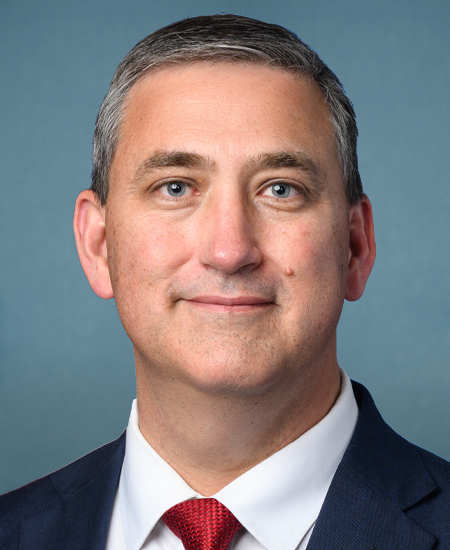
Rep. Nathaniel Moran
Sponsored bills
This bill prohibits the use of federal funds to seek U.S. membership in the World Health Organization (WHO), or to make contributions to the WHO, until the Department of State makes certain certifications to Congress. Specifically, these prohibitions shall apply until the State Department certifies that the WHO has met certain conditions, including that the WHO (1) has adopted reforms to ensure that humanitarian assistance is not politicized; (2) is not under the control of the Chinese Communist Party (CCP) and is not involved in a cover-up of the CCP's response to the COVID-19 pandemic; (3) has granted observer status to Taiwan; and (4) has ceased engagement on certain issues, such as climate change, access to abortion, and gender identity.
Maddy summaryHR 1690 (ORDER Act) establishes a framework for U.S. diplomatic agreements with Mexico, Honduras, El Salvador, and Guatemala to manage immigration flows in the Western Hemisphere. It requires Mexico to process asylum claims for migrants from other countries within Mexico and accept migrants waiting for U.S. asylum decisions, while also mandating Honduras, El Salvador, and Guatemala to process asylum claims for migrants in their territories. The bill commits the U.S. to accelerating asylum adjudications, supporting asylum capacity in partner countries, and conducting a feasibility study for a U.S. law enforcement center in southern Mexico to combat crime and reduce migration. These provisions directly affect migrants seeking asylum, the governments of the four partner nations, and U.S. immigration enforcement coordination.
Maddy summaryHR 3039, the DRIVE Act, prohibits the Federal Motor Carrier Safety Administration (FMCSA) from requiring speed limiting devices on trucks weighing over 26,000 pounds operating in interstate commerce. This directly affects commercial trucking companies and drivers transporting goods across state lines. The bill's key provision explicitly bans the FMCSA from issuing any rule mandating such devices, which are typically set to limit vehicle speed. The law applies specifically to interstate trucking operations and does not affect state-level regulations.
Maddy summaryThis bill directs the President to determine within 90 days whether to apply sanctions under existing law against the Iran Airports Company, a state-owned entity that facilitates Mahan Air's operations. Mahan Air, already sanctioned by the Treasury for supporting Iran's Revolutionary Guards and regional destabilization, uses Iran Airports Company's infrastructure for flights. The bill does not create new sanctions but requires a formal presidential assessment of whether the airport company should face penalties under Executive Order 13224, which targets entities aiding terrorism. It directly affects Iran Airports Company as the specific entity under review.
Clean Slate Act of 2023 This bill establishes a framework for sealing records related to certain federal criminal offenses. Courts must automatically seal records related to (1) a conviction for simple possession of a controlled substance or for any nonviolent offense involving marijuana, or (2) an arrest for an offense that does not result in a conviction. Additionally, an individual who meets certain criteria may petition to seal records related to a conviction for other nonviolent offenses.
Maddy summaryHRES 90 is a resolution demanding the Chinese government immediately release Mark Swidan, a U.S. citizen from Texas who has been detained since 2012 on drug trafficking charges. The resolution cites the UN Human Rights Council Working Group finding his detention arbitrary, with no evidence of drug offenses, passport records showing he wasn’t in China during the alleged crimes, and China denying his family contact and medical care. It specifically condemns China for blocking U.S. diplomatic access and calls on the U.S. government to prioritize Swidan’s release through diplomatic channels. The resolution focuses on the case’s documented legal and humanitarian issues, not broader policy implications.
Maddy summaryHR 2826, the Save Local Business Act, clarifies when multiple businesses can be held jointly responsible for labor laws. It amends the National Labor Relations Act and Fair Labor Standards Act to state that a business is only a joint employer if it directly controls key employment terms like hiring, pay, schedules, or discipline for another business's workers. This directly affects franchisors, contractors, and similar business models that might previously have been deemed joint employers under broader interpretations. The bill aims to limit joint employer liability to cases where one business has clear, day-to-day control over essential worker conditions.
Farm Credit Administration Independent Authority Act This bill specifies that the Farm Credit Administration (FCA) is the sole regulator of the Farm Credit System (FCS) and establishes reporting requirements for FCS institutions. Specifically, the bill states that the FCA is the sole and independent regulator of the FCS and exempts entities that are supervised by the FCA from the Equal Credit Opportunity Act (ECOA). (The bill addresses a proposed rule by the Consumer Financial Protection Bureau [CFPB] that would implement provisions of the ECOA by requiring covered financial institutions, including FCS lenders, to collect and report to the CFPB data on credit applications for small businesses, including the principal owner's race, sex, and ethnicity.) The bill also requires FCS institutions to (1) request that loan applicants and borrowers that are small farmers disclose information identifying their race, sex, and ethnicity; and (2) annually report the collected information to the FCA. If an FCS institution customer does not voluntarily report the requested information, the FCA may not require the institution to use other means to deduce the information.
Maddy summaryHJRES 27 is a congressional resolution seeking to block a federal rule that redefined which waterways fall under the Clean Water Act's protections. It targets a rule submitted by the Army Corps of Engineers, Department of Defense, and Environmental Protection Agency (EPA) on January 18, 2023, which aimed to revise the "Waters of the United States" definition. The resolution would formally disapprove this rule under a specific federal procedure (Chapter 8 of Title 5), preventing it from taking effect. This would directly affect how federal agencies regulate pollution and development near water bodies, including wetlands and smaller streams.