

Maddy summaryThis bill requires the Secretary of the Interior to enforce stricter environmental and safety rules before approving new large-scale mineral extraction projects near cities or sensitive areas. Companies seeking to extract over one million tons of materials annually must submit detailed plans covering truck routes, water usage, noise control, and the feasibility of using rail transport instead of trucks. The legislation also mandates that local governments have a formal process to request project modifications and ensures that all approved projects annually report their resource consumption and operational data. If a company fails to follow these new requirements, the Secretary has the authority to suspend operations or cancel the project's permit.
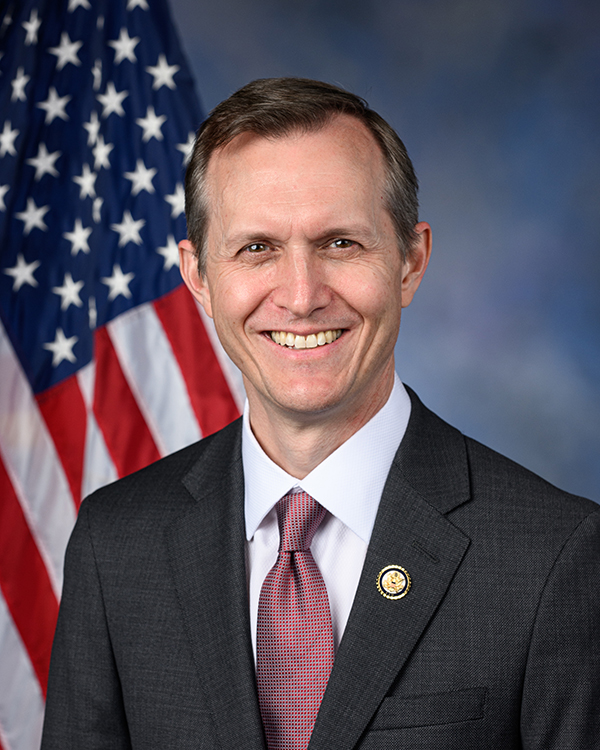
Rep. George Whitesides
Sponsored bills
Maddy summaryThe COPS Reauthorization Act of 2026 extends funding for the COPS ON THE BEAT grant program through fiscal year 2031, allowing the Department of Justice to continue providing grants to local law enforcement agencies for hiring and retaining officers. The bill also formally establishes the Office of Community Oriented Policing Services as a separate office within the Department of Justice, headed by a Director appointed by the President. These changes aim to maintain and clarify the administrative structure and financial support for community policing initiatives across the United States.
Maddy summaryH.R. 1242 is a resolution that officially designates the first Friday of May as National Space Day to honor the contributions of the aerospace community. It recognizes the achievements of government agencies like NASA and the Space Force, as well as private industry and educational partners, in advancing space exploration and technology. The bill highlights specific milestones such as the Apollo moon landing, the Artemis program, and the development of the James Webb Space Telescope. By supporting this observance, the House aims to celebrate past innovations and encourage STEM education for future generations.
Maddy summaryThis bill temporarily suspends a portion of the federal fuel excise tax when the national average price of gasoline rises above $3.99 per gallon. Instead of reducing government revenue, the money saved from this tax cut is transferred back into the Highway Trust Fund and the Leaking Underground Storage Tank Trust Fund. Additionally, the legislation disallows certain tax credits and deductions for oil and gas companies for costs incurred or production occurring during these high-price months. These changes would only take effect for taxable years beginning after December 31, 2025.
Maddy summaryHR 2488 designates the U.S. Postal Service facility at 3817 Marysville Boulevard in Sacramento, California, as the "Grantland Johnson Post Office." This bill updates all federal references in laws, maps, and documents to use the new name for that specific location. It directly affects the postal service facility and any federal records mentioning it. The bill is purely procedural, with no policy changes or financial impacts beyond the name designation.
Maddy summaryThe American Leadership in AI Act establishes a new Center for AI Standards and Innovation at the National Institute of Standards and Technology to develop voluntary guidelines and testing methods for ensuring artificial intelligence systems are safe, secure, and reliable. It creates a large National Artificial Intelligence Research Resource to provide researchers and students with access to advanced computing power and data, while also launching prize competitions to solve specific challenges in areas like national security and health care. The bill mandates that every federal agency appoint a full-time Chief Artificial Intelligence Officer to oversee responsible AI use and requires the development of federal standards for AI procurement and security. Additionally, the legislation strengthens penalties for financial crimes committed using AI, protects workers who report AI safety violations from retaliation, and expands educational programs to improve AI literacy among K-12 students and the broader workforce.
Maddy summaryThis bill requires the Department of Veterans Affairs to set a standard for how quickly veterans receive appointments after being referred for care, whether at VA facilities or through community providers. The VA Secretary must publish this standard in the Federal Register and report to Congress quarterly on how many referrals meet the timing requirement, broken down by service type and medical center performance. Each report must also include a ranking of VA medical centers from best to worst in meeting the standard, with data available to the public on a VA website. The VA must update the standard as scheduling processes change and include annual progress reports on steps taken to improve care timeliness.
Maddy summaryThis resolution designates April as "Community College Month" to recognize the significance of community colleges across the United States. It celebrates over 1,000 institutions for their role in providing accessible higher education and workforce training, and for contributing to the nation's economic prosperity.
Maddy summaryThis bill modifies tax credit rules for nuclear power plants to allow them to claim investment credits without certain restrictions that currently apply to other energy facilities. Specifically, it removes a limitation that previously prevented public utility companies from claiming these credits for nuclear facilities and eliminates a rule that capped credits based on how quickly the project was completed. These changes would affect nuclear power generators and investors starting with taxable years beginning after December 31, 2026. The bill does not create new tax credits but adjusts existing ones to treat nuclear facilities more similarly to other qualified energy projects.
Maddy summaryThe MATCH Act requires U.S. agencies to align export controls on semiconductor manufacturing equipment with allied nations to prevent adversaries from accessing critical technology. It mandates a 150-day period for diplomatic efforts to secure countrywide denial policies from allied suppliers, after which U.S. jurisdiction would extend to equipment exported from countries not complying with these controls. The bill specifically targets semiconductor manufacturing equipment that the U.S. cannot currently produce in high volume and includes a list of Chinese companies deemed to warrant comprehensive restrictions. If allies fail to implement matching controls, the Act would allow the U.S. to regulate equipment exported from non-compliant allied countries and restrict servicing of restricted items at facilities in adversary nations. The legislation includes a sunset provision that expires five years after enactment, with annual reporting requirements to Congress on progress and compliance.