Maddy summarySB 1949 amends Oklahoma's Plumbing License Law of 1955 by adding eight specific exemptions to where licensing requirements apply. It directly affects plumbers, farmers, homeowners, and maintenance staff by excluding minor repairs (like faucet replacements), farm building work (outside cities), state institution maintenance, automatic sprinkler systems, certain heating/cooling piping systems, work on one's own home, private service mains (5+ feet from buildings), and six-inch drains. The key mechanism is listing these clear exceptions in the law, allowing these activities to proceed without a plumbing license. The bill takes effect November 1, 2026, and does not create new licensing requirements.
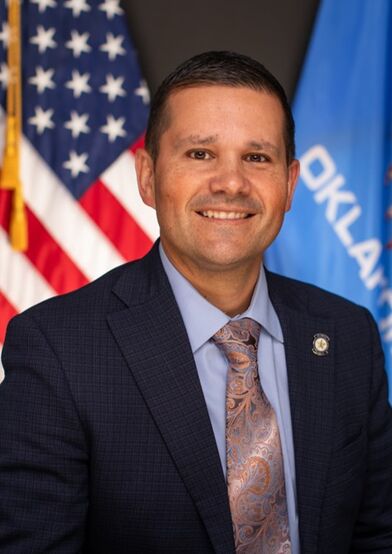
Sen. Bryan Logan
Sponsored bills
Maddy summaryHB 2973 requires all Oklahoma public school districts to report how they spend state-appropriated funds using a specific data code in the Oklahoma Cost Accounting System, starting with the 2026-2027 school year. This applies only to state funds, not other funding sources, and the State Board of Education must establish the required data code. The bill takes effect July 1, 2026, and was declared an emergency to allow immediate implementation. It directly affects school districts by mandating a new reporting structure for state education funding.
Maddy summarySB 2019 creates Oklahoma's Political Subdivision Liability Insurance Guaranty Program to protect local governments (like cities, counties, and school districts) from excessive liability judgments. It establishes a new fund administered by a seven-member board appointed by the Governor, Senate President, and House Speaker, with at least half of members representing local government. The program will cover costs for qualifying judgments, operational expenses, and training to prevent claims, with fund monies (including interest) reserved exclusively for these purposes. The fund is not subject to annual appropriation and will be audited like state funds. The program becomes effective November 1, 2026.
Maddy summaryHB 2976 requires Oklahoma's Department of Environmental Quality (DEQ) to create rules establishing safe water quality levels for aluminum. These rules would set maximum allowable concentrations of aluminum in water to protect aquatic ecosystems and drinking water sources. The bill, amended to take effect in 2028, directly impacts the DEQ (which must develop the rules) and industries discharging aluminum into waterways, such as manufacturing or mining operations.
Maddy summarySB 1950 prohibits Oklahoma government entities and private organizations from using automatic dependent surveillance-broadcast (ADS-B) flight data - including aircraft location, altitude, and speed - to calculate or collect fees from owners or operators of small aircraft. The bill specifically targets aircraft weighing 9,000 pounds or less operating under FAA Part 91 rules, banning the use of ADS-B information for fee generation. This directly affects small aircraft operators and businesses within Oklahoma who might otherwise face data-based fees. The law takes effect November 1, 2026.
Maddy summarySB 1979 creates the "Mining and Blasting Residential Protection Act" to establish a mandatory 800-foot buffer zone around residences, residentially zoned property, and protected structures like schools, hospitals, and nursing homes. It prohibits new mining or blasting permits within this buffer and requires applicants to submit maps showing all affected properties and a clear buffer zone depiction as part of their permit application. Applicants must also post signs along public roads near the site and mail notices to addresses within the buffer zone 45 days before submitting a permit application. The bill directly affects mining companies seeking new permits or expansions and aims to protect nearby residents and community facilities from potential disruptions.
Maddy summaryHB 4094 protects Oklahoma governments from liability if newspapers fail to publish required legal notices correctly, provided the government properly submitted the notice and met all other legal deadlines. It allows governments to use electronic publication alongside traditional methods to meet notice requirements, as long as they choose a method they reasonably believe is feasible. The bill applies directly to cities, counties, and state agencies that publish legal notices in newspapers. It takes effect on November 1, 2026.
Maddy summarySB 1981 allows licensed security guards or police officers volunteering security at places of worship to wear their agency's uniform with the employing agency's consent. It prohibits unlicensed volunteers from wearing uniforms or badges that make them appear as licensed security guards or police officers. The bill amends Oklahoma's Security Guard and Private Investigator Act to clarify these uniform rules for volunteer security services. The law takes effect November 1, 2026.