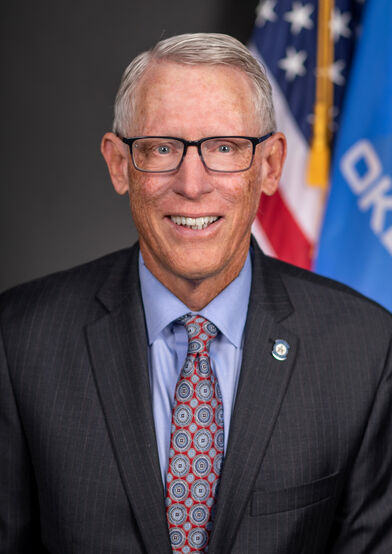
Photo of Dave Rader
R Oklahoma Senate · District 39

Sen. Dave Rader

Compare
Total votes
6,835
all sessions
Attendance
98%
108 missed
Higher than 83% of chamber peers
With party
96%
of cast votes
Near the chamber average
Bipartisan score
3%
crosses aisle rarely
Near the chamber average
Sponsored
628
bills & resolutions
Higher than 87% of chamber peers
Committees
6
assignments
628 bills and resolutions

Sponsored bills

Total
628
Primary
628
Co-sponsor
0
This page
628
matching current filters
Primary SB 568
Passed · Oklahoma Senate · Lead sponsor
Investments; requiring all shareholder and ownership interest votes to be in the pecuniary interest of the beneficiary. Effective date. Emergency.

Maddy summarySB 568 requires Oklahoma state entities managing public funds (like pension plans) to vote all shares solely based on financial benefit to plan participants and beneficiaries. It prohibits investment managers or government entities from following proxy adviser recommendations unless those advisers commit in writing to follow only financial guidelines. The bill also mandates annual reports of all proxy votes to the State Treasurer, including vote details and adviser recommendations, to be posted publicly. These changes apply to all state agency investments holding shares for public funds.

Passed Apr 1, 2025 0 co-sponsors
Primary SB 776
In committee · Oklahoma Senate · Lead sponsor
Torts; creating Julie's Law; requiring the use of helmets for certain individuals engaging in certain equestrian activities. Effective date.

Maddy summarySB 776, known as "Julie's Law," requires participants in equine training and teaching activities to wear helmets. The bill amends Oklahoma's livestock liability law to specifically mandate helmet use for individuals engaging in these activities at designated equestrian facilities. This directly affects participants in horse training, teaching, or similar programs at facilities designed for horses, including youth or recreational settings. The requirement is a new safety measure intended to reduce head injuries during these activities, while maintaining existing liability protections for sponsors and professionals regarding inherent risks of livestock activities.

In committee Mar 31, 2025 0 co-sponsors
Primary SB 776
In committee · Oklahoma Senate · Lead sponsor
Torts; creating Julie's Law; requiring the use of helmets for certain individuals engaging in certain equestrian activities. Effective date.

Maddy summarySB 776, "Julie's Law," requires participants in equine training or teaching activities at equestrian facilities to wear helmets. This applies specifically to individuals engaging in structured riding instruction or lessons, not general recreational riding. The bill amends Oklahoma's livestock liability law to state that helmet use is a condition for the liability protection that normally shields sponsors, professionals, or participants from claims related to "inherent risks" of equestrian activities. If a participant does not wear a helmet, the sponsor or professional may be held liable for head injuries resulting from a fall or accident. The law takes effect upon enactment.

In committee Mar 31, 2025 0 co-sponsors
Primary SB 48
Passed · Oklahoma Senate · Lead sponsor
Income tax; limiting certain capital gains deduction to certain tax years. Effective date.

Maddy summarySB 48 limits when Oklahoma taxpayers can deduct certain capital gains from their state income tax. It specifically restricts the deduction for "qualifying gains receiving capital treatment" to only certain tax years, affecting individuals and businesses with capital gains transactions. The bill amends Oklahoma's tax code (68 O.S. 2021, Section 2358) to update the rules governing these deductions, ensuring they align with specific tax year parameters. This change modifies how capital gains are treated for state tax purposes without altering federal tax rules.

Passed Mar 27, 2025 0 co-sponsors
Primary HB 1280
Failed · Oklahoma House · Lead sponsor
Schools; instructional expenditures; requirement; procedures; definitions; effective date; emergency.

Maddy summaryHB 1280 (2025) requires Oklahoma school districts to spend at least 50% of their annual budget on classroom instruction starting in 2025-2026. If a district falls below this threshold, it must increase instructional spending by 2% annually until reaching 50%, or face a written warning and, after four years of non-compliance, a permanent 2% annual teacher pay raise for each year missed. The bill defines "annual budget" to exclude bond sales, fundraisers, and non-educational grants, and "instructional expenditures" per federal standards. The bill failed to pass (36-57) on March 27, 2025, so it is not law.

Failed Mar 27, 2025 0 co-sponsors
Primary HB 1280
Failed · Oklahoma House · Lead sponsor
Schools; instructional expenditures; requirement; procedures; definitions; effective date; emergency.

Maddy summaryHB 1280 requires Oklahoma school districts to spend at least 50% of their annual budget on instructional activities (like teacher salaries and classroom materials) starting in the 2025-2026 school year. If a district falls short, it must increase instructional spending by 2% annually until reaching the 50% target. Failure to comply for four consecutive years after receiving a warning notice triggers permanent, automatic 2% annual pay raises for all teachers, based on each year of non-compliance. The bill defines "annual budget" to exclude bond sales and fundraisers, and "instructional expenditures" per federal education standards. It would take effect July 1, 2025.

Failed Mar 27, 2025 0 co-sponsors
Primary SB 48
Passed · Oklahoma Senate · Lead sponsor
Income tax; limiting certain capital gains deduction to certain tax years. Effective date.

Maddy summarySB 48 amends Oklahoma's income tax code (Section 2358) to clarify how taxpayers can carry forward or back net operating losses. It specifies that for tax years beginning after December 31, 2008, Oklahoma net operating loss carryback periods must follow federal rules (Section 172 of the Internal Revenue Code), using Oklahoma-specific terms like "Oklahoma net operating loss" instead of federal terminology. This change primarily affects businesses and individuals with tax losses who seek to offset future or prior-year income. The bill updates statutory language to align Oklahoma tax rules more closely with federal loss carryover provisions.

Passed Mar 27, 2025 0 co-sponsors
Primary SB 234
In committee · Oklahoma Senate · Lead sponsor
Income tax credit; providing credit for certain qualified expenditures on adaptive reuse project. Effective date.

Maddy summaryThis Oklahoma bill creates a tax credit program to encourage converting old, vacant buildings into housing. Property owners can claim up to 50% of qualified costs (like environmental cleanup, code upgrades, or system repairs) for adaptive reuse projects on structures at least 30 years old that have been vacant or underutilized (with rent below 50% of market rate). The program has a $5 million annual cap on approved credits, with unused funds carried forward to future years. Credits cannot reduce tax liability below zero but may be carried forward for up to 10 years. The Oklahoma Department of Commerce and Tax Commission will administer the program and prioritize projects based on local housing needs.

In committee Mar 24, 2025 0 co-sponsors
Primary SB 234
In committee · Oklahoma Senate · Lead sponsor
Income tax credit; providing credit for certain qualified expenditures on adaptive reuse project. Effective date.

Maddy summarySB 234 creates the Adaptive Reuse Housing Development Program, offering a tax credit to property owners converting vacant or underutilized older buildings (30+ years old, at least 50% vacant or below-market rent) into residential housing. It provides a 50% credit against income tax for eligible costs like environmental cleanup, code upgrades, and efficiency improvements, capped at $5 million annually. Applications are reviewed using a preference system prioritizing areas with high vacancy rates, low rents, and limited affordable housing. The credit is non-refundable, can be carried forward for up to 10 years, and requires project verification before claiming.

In committee Mar 24, 2025 0 co-sponsors
Primary HB 1129
Failed · Oklahoma House · Lead sponsor
Court fees; small claims court fee; increasing fee; effective date.

Maddy summaryHB 1129 proposed increasing the court fee for small claims cases in Oklahoma. It specifically targeted small claims court filings, though an amendment removed "actions for forcible entry and detainer" from the affected cases. The bill would have directly impacted individuals and businesses filing small claims lawsuits by raising their required court fees. The amendment refined the scope of the fee increase to exclude certain property-related cases. The bill ultimately failed to pass during its third reading on March 12, 2025.

Failed Mar 17, 2025 0 co-sponsors
Showing 131 to 140 of 628 bills
Previous 1 13 14 15 63 Next