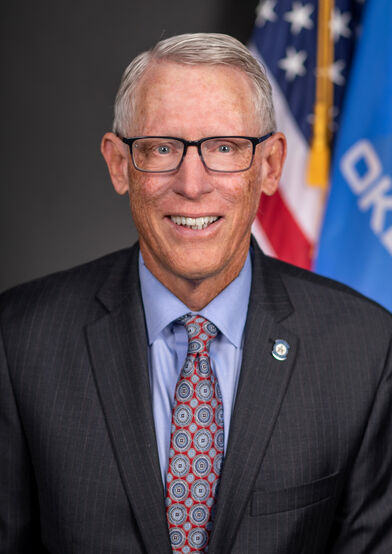
Photo of Dave Rader
R Oklahoma Senate · District 39

Sen. Dave Rader

Compare
Total votes
6,835
all sessions
Attendance
98%
108 missed
Higher than 83% of chamber peers
With party
96%
of cast votes
Near the chamber average
Bipartisan score
3%
crosses aisle rarely
Near the chamber average
Sponsored
628
bills & resolutions
Higher than 87% of chamber peers
Committees
6
assignments
628 bills and resolutions

Sponsored bills

Total
628
Primary
628
Co-sponsor
0
This page
628
matching current filters
Primary SB 423
Vetoed · Oklahoma Senate · Lead sponsor
Medical records; access; eliminating certain health care provider duties; authorizing certain fees. Effective date.

Maddy summarySB 423 updates Oklahoma's medical records access law by establishing standardized fees for patients and their representatives to obtain copies of medical records. Patients pay $0.50 per page for standard records, $15 for printed x-rays, and $20 for x-rays on CD/DVD, with providers prohibited from charging for searching or preparing records for the patient. The bill excludes psychological, psychiatric, mental health, and substance abuse records from these provisions, requiring separate access under different legal processes. It also sets higher fees for third parties (e.g., $20 base fee plus per-page charges for attorneys), while maintaining existing rules for disability-related requests.

Vetoed Jun 1, 2026 0 co-sponsors
Primary SB 1216
Signed into law · Oklahoma Senate · Lead sponsor
Drug courts; modifying eligibility requirements. Effective date.

Maddy summarySB 1216 updates Oklahoma's drug court eligibility rules by clarifying who can participate. It requires offenders to not be charged with drug trafficking under the Trafficking In Illegal Drugs Act, have committed a felony or specific misdemeanor, and demonstrate a substance abuse addiction (through admission, apparent signs, or known history) or have an offense eligible for drug court. The bill mandates an eligibility form explaining the program process, required waivers (including giving up the right to a quick trial), and consequences of failure (such as up to six months in an intermediate facility). This bill takes effect November 1, 2026, and directly affects offenders seeking drug court alternatives in Oklahoma.

Signed into law May 14, 2026 0 co-sponsors
Primary SB 1213
Signed into law · Oklahoma Senate · Lead sponsor
Prisons and reformatories; modifying provisions related to inmate earned credits. Effective date.

Maddy summarySB 1213 modifies Oklahoma's inmate earned credit system by removing minimum incarceration time requirements (previously 3 months for Class 3, 8 months for Class 4) for assigning credit levels. It establishes new monthly credit rates based on an inmate's criminal history: inmates without prior felony convictions receive higher credits (Class 3: 45 credits/month, Class 4: 60 credits/month) compared to those with felony histories (Class 3: 33 credits, Class 4: 44 credits). The bill affects all state prison inmates by changing how their sentence reductions are calculated through earned credits. Key provisions include updating credit assignment criteria, requiring gender-neutral language, and specifying that credits cannot be earned for certain offenses like killing law enforcement officers. The changes apply to all inmates assigned to Class Levels 2-4 under the Department of Corrections' updated policies.

Signed into law May 13, 2026 0 co-sponsors
Primary SB 1226
Signed into law · Oklahoma Senate · Lead sponsor
Motor vehicles; expanding criteria by which a person must remain at scene or make notification of certain accident. Effective date.

Maddy summarySB 1226 updates Oklahoma's accident reporting rules for property damage. It requires drivers involved in accidents causing damage to property (like fences, parked cars, or fixtures) to stop at the scene or as close as possible, stay until they provide their name, address, and vehicle registration, and notify property owners. Drivers who fail to comply face fines up to $500, up to one year in jail, or triple damages for property damage. The bill also makes all language gender-neutral and takes effect November 1, 2026.

Signed into law May 13, 2026 0 co-sponsors
Primary SB 1400
Signed into law · Oklahoma Senate · Lead sponsor
Sales tax exemption; combining certain exemptions for aircraft maintenance, manufacturing, and parts. Effective date.

Maddy summarySB 1400 merges separate Oklahoma sales tax exemptions for aircraft maintenance facilities, aircraft manufacturing facilities, and certain aircraft parts into a single, unified exemption under the state tax code. This change directly affects businesses in Oklahoma's aircraft maintenance, manufacturing, and parts supply sectors by simplifying their eligibility for tax exemptions on qualifying purchases. The bill modifies existing statutory language in Sections 1357 and 1357.5 of the Oklahoma Sales Tax Code to combine these previously distinct exemptions. The policy change aims to streamline tax compliance for affected businesses without altering the scope of the exemptions themselves.

Signed into law May 13, 2026 0 co-sponsors
Primary HB 3298
Signed into law · Oklahoma House · Lead sponsor
Civil procedure; Uniform Judicial Interview of Children Act; terms; scope; judicial officer; judicial interview; considerations; training; procedure; record; codification; effective date.

Maddy summaryHB 3298 establishes standardized procedures for Oklahoma judges to interview children in custody, visitation, and adoption cases. It requires judges conducting such interviews to have specialized training and consider factors like the child's age, potential harm, and whether alternatives exist. The bill mandates written records of interviews and limits attendance to the child's attorney and guardian ad litem, excluding parents. It applies to most civil child-related court cases but excludes existing juvenile court proceedings and testimony.

Signed into law May 12, 2026 0 co-sponsors
Primary HB 4484
Vetoed · Oklahoma House · Lead sponsor
Motor vehicles; authorizing certain employees of the Corporation Commission to drive certain vehicles; effective date.

Maddy summaryHB 4484 updates Oklahoma law to allow certain Corporation Commission employees to use state-owned or leased vehicles for commuting between their homes and workplaces, or for work-related travel outside their primary location. The bill specifically authorizes field inspectors and employees working assigned areas (not stationed at a central office) to use state vehicles, provided the commute does not exceed 75 miles round trip or stays within the county. It requires written authorization for temporary vehicle use that saves agency costs, with monthly records for non-law enforcement agencies. The change expands existing exceptions for essential state employees without altering penalties for unauthorized vehicle use.

Vetoed May 12, 2026 0 co-sponsors
Primary HB 4408
Signed into law · Oklahoma House · Lead sponsor
State question 780 data; calculation of savings and averted costs from implementation of the Oklahoma Smart Justice Reform Act; Department of Corrections; Legislative Office of Fiscal Transparency; Administrator of the Courts; effective date.

Maddy summaryHB 4408 requires the Oklahoma Department of Corrections and the Administrator of the Courts to submit annual data by July 31st on offenders convicted only of crimes reclassified under State Question 780 (which reduced penalties for certain low-level offenses). This data includes unique offenders, days served, and sentence lengths for offenses now classified as misdemeanors or with adjusted dollar thresholds. The Legislative Office of Fiscal Transparency must then calculate the state's annual savings from reduced incarceration costs within 30 days, using actual data or best estimates if needed. The final calculation is binding and cannot be revised later, with the bill taking effect November 1, 2026.

Signed into law May 12, 2026 0 co-sponsors
Primary HB 4113
Signed into law · Oklahoma House · Lead sponsor
Voting access; modifying qualifications for convicted felons; effective date.

Maddy summaryThis bill proposes changes to Oklahoma's voting eligibility rules for individuals with criminal convictions. It would modify the current law regarding when felons regain their right to vote after completing their sentences. The amendment seeks to restore specific language that defines the conditions under which convicted felons can vote again. This legislation directly affects people with criminal records who are seeking to restore their voting rights. The bill is currently in the early stages of the legislative process and has been referred to the Judiciary Committee for further review.

Signed into law May 12, 2026 0 co-sponsors
Primary HB 4108
Signed into law · Oklahoma House · Lead sponsor
Airports; trespassing on property containing critical infrastructure; expanding scope of crime to include airports; effective date.

Maddy summaryHB 4108 amends Oklahoma law to explicitly include airport operational areas - such as runways, taxiways, maintenance zones, and fuel storage areas - under the definition of "critical infrastructure facility." This means unauthorized entry or damage to these areas will now be treated as criminal offenses, subject to fines (up to $100,000) or imprisonment (up to 10 years), similar to protections for power plants or water facilities. The bill does not fund new infrastructure but expands legal safeguards for airport safety and operations. It directly affects airport operators, security personnel, and anyone entering airport grounds without authorization. The law takes effect November 1, 2026.

Signed into law May 11, 2026 0 co-sponsors
Showing 1 to 10 of 628 bills
1 2 3 63 Next