Issue · Criminal Justice

Criminal Justice (Policing)

Every criminal justice bill, vote, and legislator stance in Oklahoma, automatically classified by Maddy, our AI policy reader.

Total bills
22
2026 Regular Session
Top supporter
Mark Mann
100% support rate
Top opponent
George Burns
17% support rate
Ranked legislators
10
5 support · 5 oppose
Key legislators

Who's moving policing in Oklahoma

Legislators moving policing in Oklahoma
Legislator Party Stance Support rate Votes
Mark Mann
Mark Mann Senate · District 46
D
Strong +
100% 3
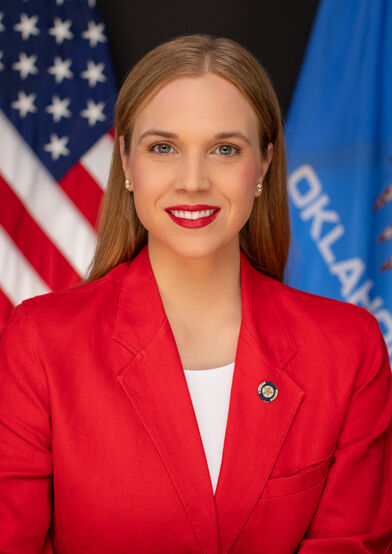
Nikki Nice
Nikki Nice Senate · District 48
D
Strong +
80% 5
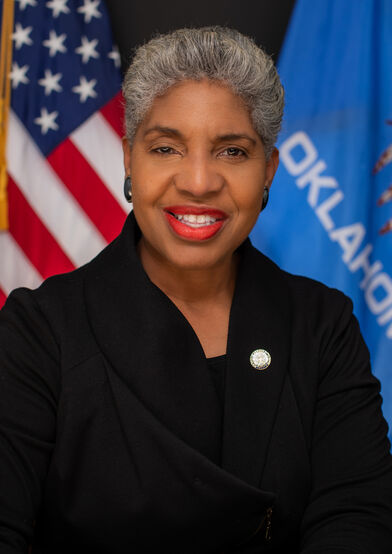
Regina Goodwin
Regina Goodwin Senate · District 11
D
Strong +
80% 5
Carri Hicks
Carri Hicks Senate · District 40
D
Support
75% 4
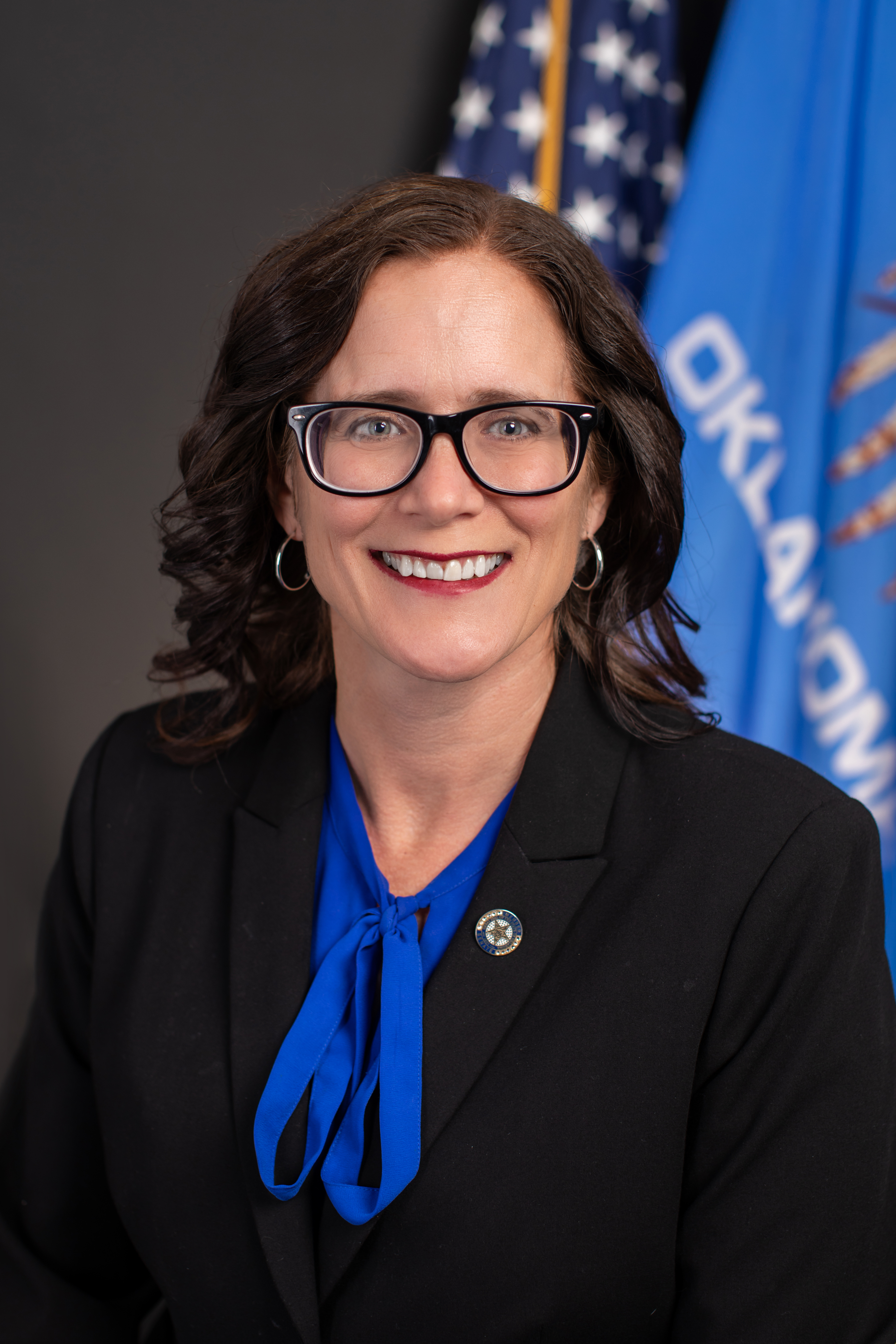
Julia Kirt
Julia Kirt Senate · District 30
D
Support
75% 4
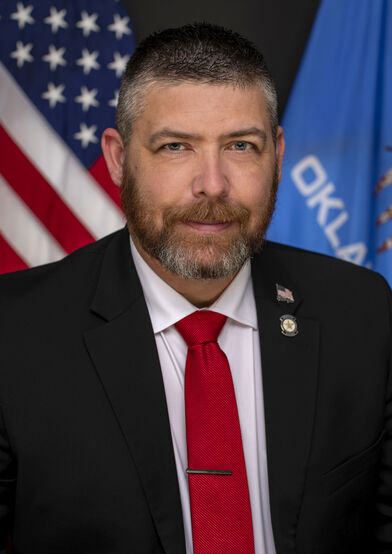
George Burns
George Burns Senate · District 5
R
Strong −
17% 6
Dana Prieto
Dana Prieto Senate · District 34
R
Strong −
20% 5
Darrell Weaver
Darrell Weaver Senate · District 24
R
Strong −
20% 5
Jonathan Wingard
Jonathan Wingard Senate · District 13
R
Strong −
20% 5
Kendal Sacchieri
Kendal Sacchieri Senate · District 43
R
Strong −
20% 5
Showing 1–10 of 22 bills

All criminal justice bills

signed · Oklahoma · House May 15, 2025

HB 1597: Crimes and punishments; making certain acts unlawful; codification; effective date.

This Oklahoma bill amends existing criminal laws to clarify that intentionally distracting emergency responders from their official duties is unlawful. The key change replaces the term "intentionally" with "distracts the" and adds specific language stating that the act must prevent responders from performing their official duties. This provision directly affects individuals who might interfere with police, fire, or medical personnel by focusing on their ability to carry out critical tasks. The bill became law without the governor's signature on May 15, 2025, and applies to all emergency response situations within the state.
Sub-Topics Policing
in committee · Oklahoma · House Feb 3, 2026

HB 3555: Public safety; making certain exception for municipal police departments; providing for application for roadway designation as a safety corridor; effective date.

This bill amends Oklahoma law to clarify the law enforcement authority of the Department of Public Safety, specifically the Oklahoma Highway Patrol, by explicitly designating its officers as state peace officers with broad powers to enforce traffic and vehicle-related laws. The legislation allows the department to pursue violators across state lines, inspect vehicles for safety and registration compliance, seize unsafe or stolen vehicles, and enforce regulations on commercial motor carriers and fuel taxes. It also establishes a process for designating certain roadways as safety corridors where the department may have special enforcement authority, while ensuring these expanded powers do not limit the authority of local sheriffs or other peace officers.
Sub-Topics Law Enforcement Policing Roads & Highways Tags Public Safety
signed · Oklahoma · Senate May 6, 2026

SB 2072: Conveyances; prohibiting charging fee for certain filing; requiring certain notice to certain law enforcement agencies. Effective date.

SB 2072 prevents property title theft by requiring county clerks to accept and record notices of fraudulent property transfers without charging a filing fee. It directly affects victims of title theft (people whose property titles were stolen), county clerks, and local law enforcement agencies. The bill mandates that after filing such a notice, county clerks must send a copy to the district attorney and local police for investigation. The law takes effect November 1, 2026, and allows victims to seek court enforcement if a clerk unjustly refuses to record a valid notice.
in committee · Oklahoma · Senate Feb 26, 2026

SB 1926: Protection from Domestic Abuse Act; authorizing filing of certain petition in any county. Effective date.

SB 1926 allows victims of domestic abuse in Oklahoma to file protective order petitions in any county, removing previous restrictions that required filing in the victim's county, the abuser's county, or the location of the abuse. This change makes it easier for victims to seek protection without being limited by geographic location. The bill also requires victims to file a police report first if they are not family members or in a dating relationship before filing a petition. It becomes effective November 1, 2026.
in committee · Oklahoma · Senate Feb 3, 2026

SB 1467: Criminal justice data; requiring sharing of certain information upon request. Effective date.

SB 1467 requires Oklahoma criminal justice agencies (like police departments, courts, and correctional facilities) to share specific public criminal justice data with approved researchers upon request. This includes information on law enforcement stops, arrests, court proceedings, and corrections, but only if the data is already available to the public under Oklahoma's Open Records Act. Researchers must prove they are "bona fide" (with institutional review board approval and agreements to use data solely for research, without public disclosure) and agencies may charge reasonable fees for search and copying. The law takes effect January 1, 2027, with requests not accepted before July 1, 2027, and the Attorney General must provide compliance guidance.
in committee · Oklahoma · House Feb 3, 2026

HB 4416: Pretrial data; creating the Pretrial Data Collection Act; requiring certain entities to collect specific data; codification; effective date.

HB 4416, the "Pretrial Data Collection Act," requires Oklahoma police departments, sheriff offices, and county jails to collect standardized data on individuals in pretrial detention starting January 1, 2027. It mandates monthly reporting of specific details including demographic information (race, age, ZIP code), arrest and charge details, health conditions (mental illness, substance use disorders), jail costs, and facility capacity to the Oklahoma State Bureau of Investigation. The bill also requires the Bureau to publish this data in a public, searchable, machine-readable format on its website by July 1, 2027, for agencies with 500+ employees. This legislation aims to create transparency around pretrial detention practices through standardized data collection and public access.
in committee · Oklahoma · Senate Feb 3, 2026

SB 1788: Law enforcement; requiring certain record and verification procedure. Emergency.

SB 1788 requires Oklahoma law enforcement agencies (like county sheriff's offices and city police departments) to verify and accurately record a person's race during the booking process. This involves using government-issued ID, birth certificates, or observable physical traits, followed by a second officer's review of the entry against the person's photo and documentation. Agencies must annually audit 10% of booking records to correct inaccuracies within 30 days and report findings to the Department of Public Safety. Violations may result in civil penalties up to $50,000 per audit cycle or loss of state funding.
in committee · Oklahoma · House Feb 3, 2026

HB 2990: Law enforcement officers; prohibiting use of face coverings while interacting with the public; codification; effective date.

HB 2990 prohibits Oklahoma law enforcement officers from wearing face coverings that conceal their identity during public interactions while performing official duties, with specific safety exceptions (like medical masks, helmets for hazardous conditions, or SWAT operations). It requires officers to visibly display their name, agency, and badge number during public contact, except during undercover assignments. All law enforcement agencies must create and publicly post written policies detailing these identification requirements and limited undercover exceptions. The bill takes effect November 1, 2026, and directly affects all Oklahoma police and sheriff's departments.
in committee · Oklahoma · House Feb 12, 2026

HB 3760: Revenue and taxation; Law Enforcement Strategic Support Act; income tax credits; law enforcement support; foundations; procedures; reporting requirements; effective date.

HB 3760 creates tax credits for Oklahomans who donate to certified law enforcement foundations supporting local police departments. Taxpayers can claim credits up to $5,000 annually (single filers) or $10,000 (married/joint filers), with a total annual cap of $75 million statewide and $3 million per foundation. Foundations must be certified by the state, and donations must fund specific officer needs like training, equipment, or joint emergency response teams - *not* regular salaries. The bill requires foundations to report spending and sets strict limits to ensure credits don’t exceed state revenue goals.
died · Oklahoma · Senate Feb 26, 2026

SB 1335: Oklahoma Campus Security Act; requiring certain campus police officers to complete certain training. Effective date. Emergency.

SB 1335 requires campus police officers at Oklahoma's public universities, community colleges, and public school districts to complete six hours of evidence-based sexual assault and sexual violence training. Existing officers must complete this training within one year of the bill's effective date (July 1, 2026). The bill updates Oklahoma's Campus Security Act to mandate this training for all campus police officers employed by governing boards of higher education institutions and public school districts. It does not change other officer duties or requirements, focusing solely on this specific training obligation.
Sub-Topics Policing Violent Crime
Showing 1 to 10 of 22 bills
1 2 3 Next