Issue · Budget & Taxes

Budget & Taxes

Every budget & taxes bill, vote, and legislator stance in Oklahoma, automatically classified by Maddy, our AI policy reader.

Total bills
751
2026 Regular Session
Top supporter
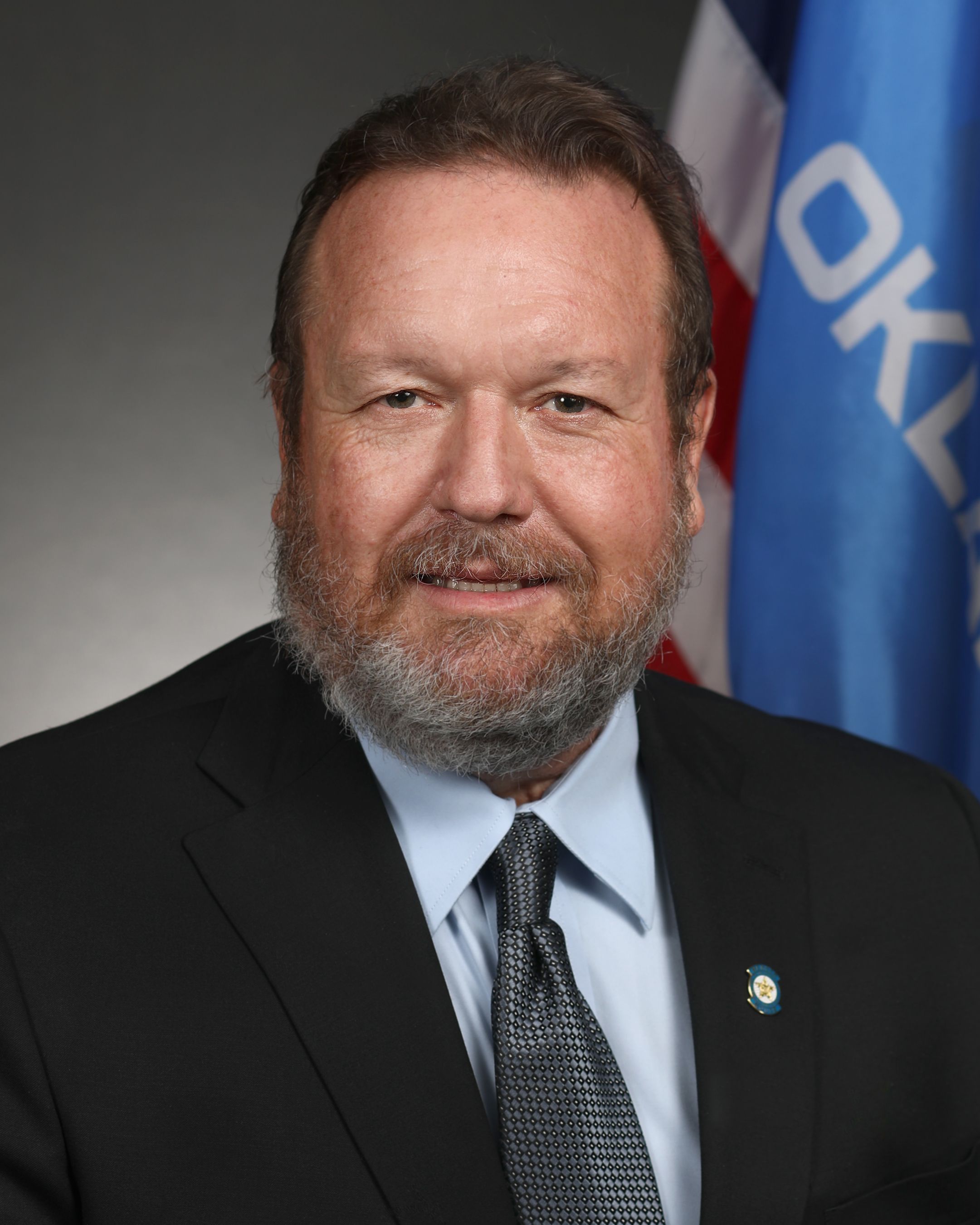
Chris Kannady
88% support rate
Top opponent
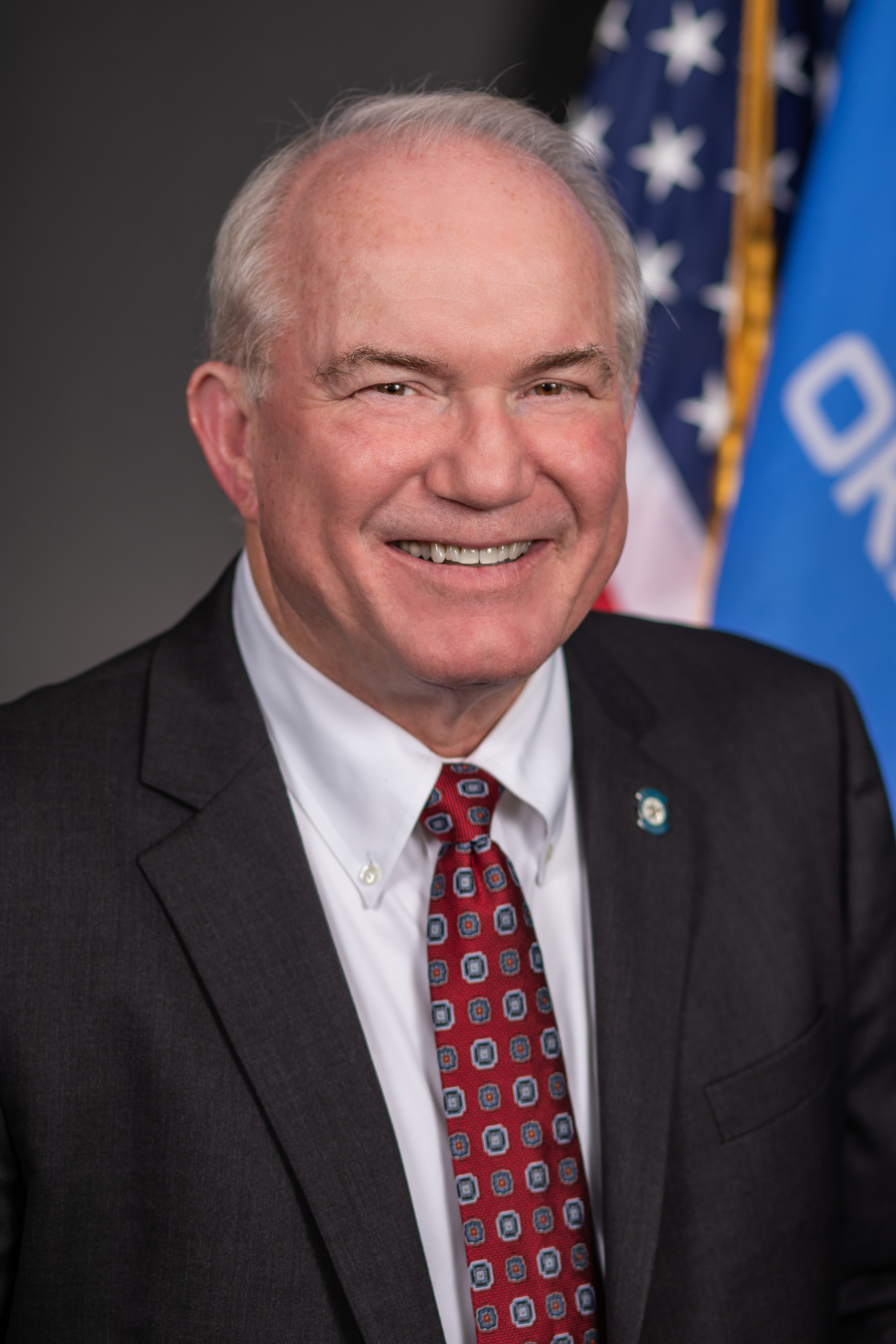
Tom Gann
20% support rate
Ranked legislators
10
5 support · 5 oppose
Key legislators

Who's moving budget & taxes in Oklahoma

Legislators moving budget & taxes in Oklahoma
Legislator Party Stance Support rate Votes
Chris Kannady
Chris Kannady House · District 91
R
Strong +
88% 138
Eddy Dempsey
Eddy Dempsey House · District 1
R
Strong +
88% 235
John Haste
John Haste Senate · District 36
R
Strong +
87% 312
Aaron Reinhardt
Aaron Reinhardt Senate · District 37
R
Strong +
87% 337
Mike Kelley
Mike Kelley House · District 60
R
Strong +
87% 286
Tom Gann
Tom Gann House · District 8
R
Strong −
20% 280
Molly Jenkins
Molly Jenkins House · District 33
R
Oppose
23% 269
Rick West
Rick West House · District 3
R
Oppose
24% 264
Jim Shaw
Jim Shaw House · District 32
R
Oppose
26% 297
Justin Humphrey
Justin Humphrey House · District 19
R
Oppose
28% 175
Showing 121–130 of 751 bills

All budget & taxes bills

in committee · Oklahoma · House Feb 3, 2026

HB 4456: Revenue and taxation; Vapor Products Tax Code; defining terms; excise tax; e-liquid; Oklahoma Tax Commission; allocation of revenue; revolving fund; effective date.

HB 4456 establishes a 30% excise tax on the wholesale cost of e-liquid sold in Oklahoma. Manufacturers, distributors, or retailers who first receive e-liquid in the state must pay this tax and remit it electronically by the 15th of each month. The tax is structured as a direct cost to consumers, though collected from businesses, and revenue is split: 50% to a new Vapor Products Regulation Revolving Fund and 50% to the General Revenue Fund until 2028, after which 75% goes to the General Fund and 25% to the revolving fund for future regulation. The bill directly affects businesses selling e-liquids and ensures tax collection through retained invoices and Commission oversight.
in committee · Oklahoma · Senate Feb 3, 2026

SB 1702: Firearms; prohibiting law enforcement from taking certain action. Effective date.

SB 1702, the Firearm Preservation Act, requires Oklahoma law enforcement agencies to auction firearms they obtain through legal processes (such as court orders, estate settlements, or forfeiture) instead of destroying them. Auctions must be conducted exclusively to eligible buyers who pass required state and federal background checks, with proceeds funding agency operations like training or equipment. The law shields law enforcement from liability if a purchased firearm is later used to cause harm and mandates agencies to maintain detailed auction records for five years. Violations carry fines of $500 for the first offense and $1,000 for repeat offenses, with funds deposited into the state’s general revenue fund.
in committee · Oklahoma · Senate Feb 3, 2026

SB 1828: Ad valorem tax; providing exception to property included on tax rolls. Effective date.

SB 1828 exempts properties with an assessed value under $200 (after adjustments) from Oklahoma county tax rolls starting in 2027. This applies to all real estate, personal property, and public service accounts valued below this threshold. County assessors must exclude these low-value properties from tax roll listings, simplifying record-keeping for minor holdings. The bill directly affects owners of very low-value properties, such as small parcels or minimal personal assets, by removing them from formal tax roll documentation.
Sub-Topics Property Tax
signed · Oklahoma · House May 11, 2026

HB 3465: Revenue and taxation; Oklahoma Emission Reduction Technology Incentive Act; termination date; effective date.

HB 3465 extends the termination date for Oklahoma's Emission Reduction Technology Rebate Program from July 1, 2027, to July 1, 2029. This change directly affects businesses and entities participating in the rebate program, allowing them to continue receiving incentives for emission-reducing technology through 2029. The bill amends Section 55012 of the Oklahoma Statutes to update the program's end date while maintaining existing rebate mechanisms. It becomes effective November 1, 2026.
in committee · Oklahoma · House Feb 3, 2026

HB 3726: Oklahoma Turnpike Authority; requiring bonds issued after certain date be secured only by certain revenue; effective date.

HB 3726 requires Oklahoma Turnpike Authority bonds issued after a certain date to be secured solely by toll revenue from specific turnpike projects, not general state funds. It prohibits using revenue from one turnpike project to fund other projects or general operations, mandating separate financial accounts for each project's revenue. This directly affects how the Authority finances and manages its turnpike infrastructure, ensuring project-specific funding. The bill amends existing laws (69 O.S. 2021, Sections 1705, 1709, 1711, 1717, 1719) to enforce these financial safeguards.
Sub-Topics Debt & Bonds
in committee · Oklahoma · House Feb 3, 2026

HB 3602: Health care-related tax; Oklahoma Health Care Authority; report; publicly post; net patient revenue; exception; tax revenue; tax rate; effective date.

HB 3602 requires the Oklahoma Health Care Authority (OHCA) to annually report on health care-related taxes and publicly post the report online by October 1 each year. The bill prohibits increasing the percentage of health care providers' net patient revenue subject to these taxes above the 2025 level, and mandates a phased reduction - from 5.5% in 2028 down to 3.5% by 2032 and beyond - except for specific tax categories. It also bans tax rates that vary based on Medicaid service volume. This bill directly affects Oklahoma health care providers and the OHCA, taking effect November 1, 2026.
Sub-Topics Revenue Medicaid
in committee · Oklahoma · Senate Feb 3, 2026

SB 1900: Development incentives; requiring business entity receiving certain funds to pay specified amounts to certain political subdivisions. Effective date.

SB 1900 requires businesses receiving specific state incentives or direct funding (like tax credits or grants under programs such as the Oklahoma Quality Jobs Program or Filmed in Oklahoma Act) to pay 5% of the incentive value to the local government where their project is located. This payment must go to the town, city, or county based on the project’s location, with specific rules for areas outside municipalities but using municipal infrastructure. Funds received must be spent exclusively on infrastructure projects like roads, utilities, or public facilities. The bill applies to businesses receiving incentives under 10 specific Oklahoma statutes and takes effect November 1, 2026.
Sub-Topics Tax Incentives Tags Economic Development
in committee · Oklahoma · House Feb 3, 2026

HB 4424: Revenue and taxation; ad valorem; exemption; manufacturing facilities; data center; effective date.

HB 4424 exempts qualifying manufacturing facilities and data centers from property taxes for five years. It directly affects businesses meeting specific criteria, including data centers operational by January 1, 2027, with at least 50% out-of-state revenue, and facilities investing $500,000+ (adjusted annually for inflation) in new or expanded operations. Key provisions require annual verification of eligibility with the Oklahoma Tax Commission, including wage standards tied to the Oklahoma Quality Jobs Program for facilities seeking exemption after 2022. The bill also defines qualifying facilities to include certain data centers, distribution centers meeting investment and employment thresholds, and custom manufacturing under specific industry codes.
in committee · Oklahoma · House Mar 5, 2026

HB 3973: Office of Juvenile Affairs; facilities; Southwest Oklahoma Juvenile Center; Southwest Oklahoma Juvenile Center Reestablishment Revolving Fund; repealer; codification; effective date.

HB 3973 creates a "Southwest Oklahoma Juvenile Center Reestablishment Revolving Fund" in the state treasury to support the Office of Juvenile Affairs (OJA) in restoring the Southwest Oklahoma Juvenile Center in Manitou. The fund allows OJA to use these monies, along with other available funds, to plan, develop, and improve the facility for providing secure care and specialty residential services to Oklahoma youth. It authorizes the Office of Management and Enterprise Services (OMES) to accept properties (like the former facility) offered as gifts or at minimal cost to aid reestablishment. The bill repeals the prior governing section (10A O.S. 2021, Section 2-7-618) and takes effect July 1, 2026.
in committee · Oklahoma · Senate Feb 3, 2026

SB 1664: Court recording; requiring the Supreme Court to establish certain guidelines and standards; providing allowable sources of funding for certain equipment. Effective date.

SB 1664 requires Oklahoma's Supreme Court to establish rules for court audio/video recording systems, including storage, retention, and transcription standards. It mandates that all equipment and system funding come from state appropriations or statewide contracts - not local court funds - and directs the Legislature to provide annual funding for implementation. The bill updates the Oklahoma Court Information System Revolving Fund to allow supplemental use for recording systems while prohibiting it as the sole funding source. These changes affect district courts, court clerks, and court reporters by requiring standardized technology deployment and secure record-keeping.
Sub-Topics Courts
Showing 121 to 130 of 751 bills
Previous 1 12 13 14 76 Next