

Improving Cybersecurity of Small Businesses, Nonprofits, and Local Governments Act of 2021 This bill requires reporting and other efforts to improve the cybersecurity of small entities. These include small businesses, governments (or certain governmental bodies) that represent populations of less than 50,000, and small nonprofits. Specifically, the Cybersecurity and Infrastructure Security Agency (CISA) must periodically report on and make recommendations about cybersecurity policies and controls for small entities. CISA, the Small Business Administration (SBA), and the Minority Business Development Agency must (1) promote the report, including by making it available through their respective websites; and (2) make voluntary training and technical assistance available to employees of small entities concerning cybersecurity recommendations identified in the report. In addition, the Department of Commerce must report to Congress about improving the cybersecurity of small entities. Further, the SBA must collect information from small businesses concerning cybersecurity matters and report to Congress about the cybersecurity of small businesses.
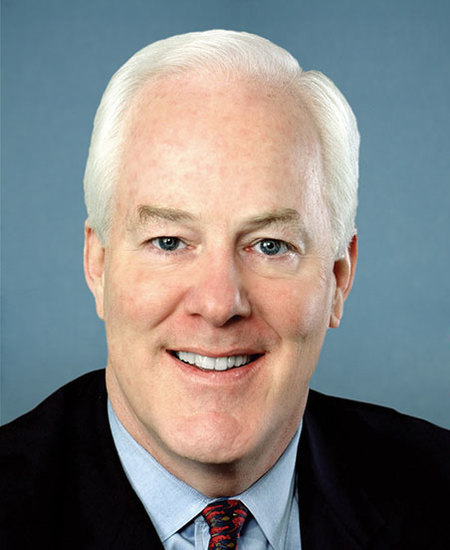
Sponsored bills
This act designates the facility of the United States Postal Service located at 1304 4th Avenue in Canyon, Texas, as the Gary James Fletcher Post Office Building.
Hydrogen for Industry Act of 2021 This bill requires the Department of Energy (DOE) to establish grant programs to support the use of hydrogen in energy. Specifically, DOE must establish a grant program for projects that demonstrate the uses of hydrogen in heavy industry (e.g., steel, cement, glass, and chemical manufacturing). It also directs DOE to establish a grant program for (1) carrying out projects that demonstrate the end uses of hydrogen; (2) constructing a new commercial-scale facility that will use hydrogen as a fuel or feedstock; or (3) retooling, retrofitting, or expanding an existing facility to enable the use of hydrogen as a fuel or feedstock in industrial end-use applications of hydrogen.
Maddy summarySRES 810 is a symbolic Senate resolution designating October 2-8, 2022, as "National Community Policing Week." It does not create new laws or allocate funds but formally recognizes community policing efforts. The resolution highlights how community policing builds trust between law enforcement and residents, reduces crime, and addresses public safety concerns through collaboration. It encourages all Americans, law enforcement agencies, and officials to support community policing initiatives during this designated week. The resolution was introduced by Senators Shaheen, Cornyn, Hassan, and Peters and referred to the Judiciary Committee.
Maddy summaryThis bill grants a federal charter to the National American Indian Veterans, Incorporated, establishing it as a legally recognized nonprofit organization. It directly affects American Indian veterans by creating a formal entity to unite them, advocate for their needs with government agencies, and support tribal veterans services through outreach and training. Key provisions include requiring the organization to maintain tax-exempt status, prohibiting stock or dividends, mandating annual congressional reports on its activities, and granting exclusive rights to its name and emblems. The charter imposes strict governance rules to ensure the organization remains focused on veteran advocacy without distributing assets to members.
Maddy summarySRES 844 is a non-binding Senate resolution congratulating the Houston Astros on winning the 2022 Major League Baseball World Series. It recognizes the team's players, coaches (including Manager Dusty Baker), front office (led by General Manager James Click), and staff for their championship victory, which marked the Astros' second World Series title. The resolution includes ceremonial language expressing pride in the team's achievement and directs copies to Astros leadership (Chairman Jim Crane, GM James Click, and Manager Dusty Baker). As a commemorative resolution, it has no legal effect or policy impact.
Federal Data Center Enhancement Act of 2022 This bill modifies requirements relating to data centers of federal agencies and extends the sunset of provisions regarding the federal data center consolidation initiative. Specifically, the General Services Administration (GSA) must establish minimum requirements for new data centers, including regarding the availability and use of new data centers; the use of sustainable energy sources; uptime percentage; protections against power failures, including on-site energy generation and access to multiple transmission paths; protections against physical intrusions and natural disasters; and information security protections. During the development and planning lifecycle of a new data center, an agency must report to the GSA and Congress upon determining it is likely to make a management or financial decision relating to such center. An agency must (1) regularly assess the application portfolio of the covered agency and ensure that each legacy application is updated, replaced, or modernized, as appropriate, to take advantage of modern technologies; and (2) prioritize and, to the greatest extent possible, leverage commercial cloud environments rather than acquiring, overseeing, or managing custom data center infrastructure. An agency must oversee and manage the data center portfolio and the information technology strategy of the agency in accordance with federal cybersecurity guidelines and directives.
Hazard Eligibility and Local Projects Act This bill makes an entity seeking assistance under a hazard mitigation assistance program eligible to receive such assistance for certain projects already in progress. A covered project means a project that is an acquisition and demolition project for which an entity began implementation, including planning or construction, before or after requesting assistance for the project under a hazard mitigation assistance program; and qualifies for a categorical exclusion under the National Environmental Policy Act of 1969. The authority provided under this bill terminates three years after its enactment.
IRS Funding Accountability Act This bill delays for a 60-day period funding for the Internal Revenue Service (IRS) enforcement activities enacted by the Inflation Reduction Act (except for eliminating return processing backlogs and reducing call wait times) until an annual spending plan for such activities is submitted to the congressional tax and appropriation committees. Congress may enact a joint resolution of disapproval of the spending plan before the end of the 60-day period requiring the IRS to submit a new spending plan. The IRS and the Department of the Treasury must make quarterly reports to the committees on expenditures for enforcement activities. The bill requires reductions in appropriations to the IRS for any failure to submit required reports.
Electoral Count Reform and Presidential Transition Improvement Act of 2022 This bill revises the process of casting and counting electoral votes for presidential elections. The bill also revises provisions related to the presidential transition process. The bill specifies that the choice of electors must occur in accordance with the laws of the state enacted prior to election day. Additionally, the bill identifies each state's governor (unless otherwise identified in the laws or constitution of a state in effect on election day) as responsible for submitting the certificate of ascertainment identifying the state's electors. Further, the bill provides for expedited judicial review for any action brought by an aggrieved presidential or vice-presidential candidate arising under the U.S. Constitution or U.S. laws with respect to the issuance or transmission of such a certificate. The bill revises the framework for the joint session of Congress to count electoral votes and make a formal declaration of which candidates have been elected President and Vice President. Among other changes, the bill (1) specifies that the role of the Vice President during the joint session shall be ministerial in nature, and (2) raises the objection threshold in Congress to at least one-fifth of the duly chosen and sworn members of both the House of Representatives and the Senate. The bill also revises the presidential transition process, including to (1) allow more than one candidate to receive federal transition resources under certain circumstances, and (2) require additional reporting by the General Services Administration.