

Maddy summaryThe Build the Wall Now Act (S 422) requires the immediate resumption of border barrier construction along the U.S.-Mexico border that was underway or planned before January 20, 2021, prohibiting cancellation of existing contracts and directing use of previously appropriated funds for this purpose. The bill mandates honoring agreements with states, local governments, and tribes related to border barrier construction and amends existing law to change definitions of border barriers and construction requirements. It grants the Secretary of Homeland Security broad waiver authority to bypass numerous environmental, historical, and other legal requirements that would otherwise apply to border barrier construction. This legislation directly affects border communities, environmental regulations, and the Department of Homeland Security's operations along the southern border.
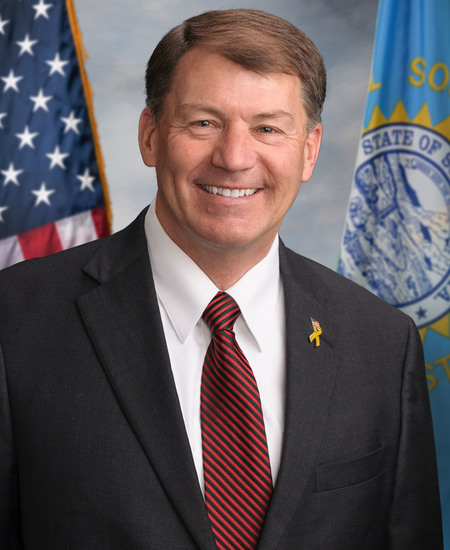
Sen. Mike Rounds
Sponsored bills
Maddy summaryThis joint resolution (SJRES 7) seeks congressional disapproval of a 2023 rule defining "Waters of the United States" (WOTUS), which would have changed how federal agencies regulate wetlands and waterways. It targets a rule jointly issued by the Army Corps of Engineers, EPA, and other agencies (88 Fed. Reg. 3004, Jan. 18, 2023), directly affecting landowners, developers, and environmental regulators by altering jurisdiction over water resources. If passed, the resolution would nullify the rule under a specific disapproval process in Title 5 of U.S. Code, preventing it from taking effect. The resolution does not create new regulations but aims to block an existing federal rule. This is a procedural step, not a new law.
Maddy summaryThis joint resolution (SJRES 12) seeks congressional disapproval of the District of Columbia Council’s approval of the Revised Criminal Code Act of 2022 (D.C. Act 24-789). It directly affects D.C. residents and local government, as the resolution targets the District’s newly enacted criminal code. The mechanism is a formal congressional disapproval under the District of Columbia Home Rule Act, requiring passage by both chambers to block the D.C. law from taking effect. The resolution does not alter the D.C. code itself but aims to halt its implementation through federal action.
Maddy summarySRES 45 is a non-binding Senate resolution introduced on February 9, 2023, by a group of senators expressing the Senate's view that the current migration levels at the U.S. southern border constitute a crisis. This resolution does not create new laws or policies, nor does it directly affect any individuals or groups - it serves solely as a symbolic statement of the Senate's position. It contains no concrete policy mechanisms or implementation plans, as resolutions of "sense" are typically used for expressing opinions rather than enacting change. The resolution was referred to the Senate Judiciary Committee but has no legal effect.
Maddy summaryThis bill provides targeted support for smaller and very small poultry and meat processing facilities to comply with federal food safety regulations. It requires the USDA to create a free database of validation studies and publish model HACCP plans tailored to different facility types (slaughter-only, processing-only, and both), while increasing federal funding for state inspection programs from 50% to 65%. The bill also establishes a $20 million annual grant program to help small processors improve safety, capacity, and resilience, with priority given to facilities serving farmers within 200 miles. Additionally, it creates training programs for meat processing workers at community colleges and through simplified grant applications for small facilities. These provisions aim to make compliance with food safety standards more accessible for small local processors.
Maddy summaryThis bill changes asylum procedures for people entering the U.S. from Mexico or Canada after traveling through other countries. It requires such individuals to first get an interview at a U.S. embassy in Mexico or Canada to prove they face credible fear of persecution or torture before being allowed to apply for asylum in the U.S. The bill also blocks asylum eligibility for those who transited through other nations without seeking protection there, unless they meet specific exceptions like being trafficked or traveling through countries without refugee treaties. Additionally, it creates criminal warrants for immigration violations and removes limits on detaining asylum seekers under the Flores agreement. These changes primarily affect asylum seekers crossing the southern border after traveling through other countries.
WALL Act of 2023 This bill appropriates $25 billion for the construction of a wall on the U.S.-Mexico border and addresses other issues related to immigration. As offsets to this spending, the bill restricts the child tax credit, earned income credits, and lifetime learning credits to those with Social Security numbers and not prohibited from employment in the United States. Also, individuals who file taxes using an individual taxpayer identification number (ITIN) instead of a Social Security number must pay a fee ($300 for each individual on the tax return using an ITIN). The bill restricts eligibility for certain federally-funded benefits, including unemployment compensation, supplemental nutrition assistance, and housing benefits, to those eligible to work in the United States. Agencies administering such benefits must use the E-Verify program to confirm the eligibility of applicants for such benefits. This bill also sets fines for non-U.S. nationals ( aliens under federal law) who improperly enter the United States or overstay their visas.
Maddy summaryThis bill allows veterans with combat-related disabilities and less than 20 years of service to receive both military retired pay and VA disability compensation simultaneously. Previously, such veterans had their retired pay reduced to avoid "concurrent receipt" of both benefits. The bill removes the 20-year service requirement for this group, applying specifically to those retired under Chapter 61 of Title 10 with a combat-related disability as defined in existing law. It does not change eligibility for veterans with non-combat disabilities or those with 20+ years of service.
Maddy summaryThe Keep Our Communities Safe Act of 2023 amends immigration detention procedures to extend the length of detention for certain aliens without time limits, except as specified in the bill. It changes terminology from "parole" to "recognizance" throughout the process and establishes new criteria that make it more difficult for certain aliens to be released on bond during removal proceedings. The bill adds specific circumstances under which detention can continue beyond the standard removal period, including for aliens convicted of certain crimes, those deemed a threat to national security, or those who fail to cooperate with removal efforts. These changes primarily affect immigrants facing removal proceedings who may be held in detention for extended periods without bond eligibility.
Maddy summaryThe TAILOR Act of 2023 requires federal banking regulators (like the FDIC and Federal Reserve) to adjust rules based on each financial institution’s specific risk level and business model, particularly reducing regulatory burdens for smaller community banks. It mandates that regulators document how they tailor rules in rulemaking notices and submit annual reports to Congress on implementation. The bill also directs a review of existing regulations issued over the past seven years to apply these tailoring principles retroactively. A key provision simplifies reporting requirements for community banks eligible under the Community Bank Leverage Ratio framework. This aims to make oversight more practical for smaller institutions while maintaining regulatory oversight.