Maddy summaryThis bill amends the Bank Holding Company Act to require a minimum 15-year holding period for merchant banking investments. Banks would need to hold these investments - where they make equity stakes in non-financial companies - for at least 15 years before selling, applying to both new investments and existing ones held on the bill's enactment date. The change directly affects banks engaged in merchant banking activities by altering the regulatory timeframe for holding such investments. It modifies specific provisions of the Bank Holding Company Act without creating new programs or altering eligibility.
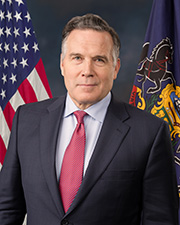
Sen. David McCormick
Sponsored bills
Maddy summaryThe International Trafficking Victims Protection Reauthorization Act of 2025 reauthorizes U.S. efforts to combat human trafficking globally. It requires U.S. representatives at multilateral development banks to ensure anti-trafficking strategies are included in projects in countries identified as having significant trafficking problems (Tier 2 Watch List, Tier 3, or Special Cases in the annual Trafficking in Persons Report). The bill clarifies which foreign assistance can be withheld from countries not meeting anti-trafficking standards and expands protections for domestic workers employed by diplomatic personnel (A-3 and G-5 visa holders), including requiring wage reporting and providing information about workers' rights. It also extends funding for programs to end modern slavery and mandates regular congressional briefings on trafficking reports and waiver decisions.
Maddy summaryThis bill prohibits noncitizens from voting in all District of Columbia elections, including local elections for public office and ballot initiatives. It directly affects noncitizen residents of Washington D.C. who previously could vote under the repealed 2022 law. The bill repeals the Local Resident Voting Rights Amendment Act of 2022, restoring the prior rule that limited voting in D.C. elections to U.S. citizens. This change would require noncitizen D.C. residents to obtain citizenship to vote in local elections.
Maddy summaryThis bill prohibits broker-dealers and investment advisers with significant Chinese government ties from operating in the U.S. financial system. Specifically, it bans membership in national securities associations for firms controlled by entities organized under China’s laws, Chinese nationals residing in China, or affiliates providing essential services (like software or customer support) from China. The prohibition applies if a firm is controlled by more than 25% of voting shares by such Chinese entities, with enforcement through mandatory examinations by regulators. The ban expires automatically 5 years after the bill becomes law. It directly affects financial firms with substantial Chinese ownership or operational control.
Maddy summaryThis resolution (SRES 342) is a symbolic gesture honoring small firearm manufacturers in the U.S., recognizing their economic contributions and role in recreational shooting traditions. It specifically designates August 2025 as "National Shooting Sports Month" and commends these businesses for supporting 380,000 jobs and $91 billion in annual economic output. The resolution does not create new laws or funding but formally acknowledges small manufacturers’ role in preserving Second Amendment-related activities and outdoor culture. It is a commemorative statement with no binding policy impact.
Maddy summaryS 2506, the SkyFoundry Act of 2025, establishes a Department of Defense program to rapidly develop and produce small unmanned aircraft systems (UAS). It mandates two key facilities: an Army-operated innovation hub for R&D/testing and a production facility capable of manufacturing 1 million UAS annually, prioritizing existing Army depots meeting specific land and infrastructure requirements (15,000 acres, 8 million sq. ft. facilities). The bill authorizes streamlined acquisition methods like "other transaction authority" and Defense Production Act tools to accelerate development, while ensuring the U.S. government retains intellectual property rights for developed systems. This directly affects the Department of Defense, Army Materiel Command, contractors, and Army depots selected for facility sites.
Maddy summaryThe Primacy Certainty Act of 2025 sets clear deadlines for the EPA to review state applications for primary control over Class VI wells (used for carbon dioxide storage). It requires the EPA to provide detailed written explanations if it misses a 180-day deadline for reviewing applications, and automatically approves applications if the EPA fails to act within 30 days after that deadline. States seeking control must already have primary enforcement authority for other well types, and the bill mandates EPA transfer of pending permits to states once approval is granted. This directly affects states applying to manage Class VI well regulations, reducing uncertainty in the approval process.
Maddy summaryThis bill expands Medicare Part B coverage to include specific pharmacist services, directly affecting Medicare beneficiaries and pharmacists who provide these services. It defines "pharmacist services" as evaluations and treatments for illnesses like COVID-19, flu, RSV, or strep throat, or services addressing public health emergencies, requiring collaboration with physicians as state law permits. Medicare would pay 80% of the lower of the actual charge or 85% of the physician payment rate (100% for public health emergencies), and prohibits balance billing for these services. The changes take effect January 1, 2026.
Maddy summaryThis bill amends two existing banking regulations by increasing a numerical threshold from 15 to 20 in two specific sections: the Revised Statutes (12 U.S.C. 24) and the Federal Reserve Act (12 U.S.C. 338a). It makes a technical adjustment to banking rules without creating new programs or directly affecting citizens, businesses, or government programs. The change modifies how certain financial provisions are calculated under current law but does not alter the underlying policy or impact any specific groups. As a procedural amendment to existing statutes, it has no direct public-facing effect.
Maddy summaryThis bill extends tax deferral for company stock sold to employee stock ownership plans (ESOPs) and fixes a rule that previously caused small businesses to lose government benefits after 49% ownership transferred to an ESOP. It creates a new Treasury Department office to provide education and technical assistance for companies adopting ESOPs, and establishes a Labor Department Advocate for Employee Ownership to coordinate federal efforts and promote employee ownership. These changes directly affect S corporations considering ESOPs, current ESOP-owned businesses, and small businesses seeking to maintain eligibility for government programs. The bill focuses on removing barriers to employee ownership through concrete tax, eligibility, and support mechanisms.