Maddy summaryThis joint resolution seeks to disapprove a specific rule issued by the Environmental Protection Agency regarding pollution standards for small off-road engines in California. If passed, the measure would nullify the federal regulation, preventing it from taking legal effect. The bill directly impacts the EPA and manufacturers of small off-road equipment operating under California's environmental standards. It is a procedural action that relies on the Congressional Review Act to overturn an existing administrative decision.
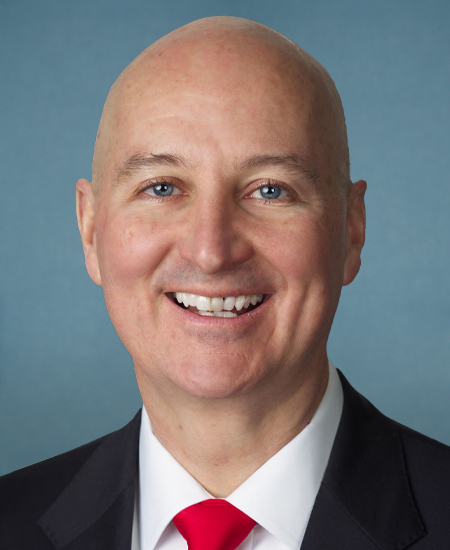
Sen. Pete Ricketts
Sponsored bills
Maddy summaryThe Karly Rain Wood Act establishes a national system requiring individuals convicted of multiple serious violent crimes or a combination of violent and drug offenses to register with state and federal authorities for life. These "repeat violent felons" must provide detailed personal information, including DNA samples, fingerprints, and travel itineraries, and are required to appear in person every 90 days to verify their status. The bill mandates that states create public websites listing these individuals' details, which will be aggregated into a national database accessible by the public, law enforcement, schools, and employers. To ensure compliance, the legislation authorizes federal grants to help jurisdictions implement the program while imposing financial penalties on states that fail to substantially adopt the new registration requirements.
Maddy summaryThe Protect College Sports Act of 2026 establishes new rules to protect student athletes and regulate college sports broadcasting by amending existing federal laws. It requires colleges and athletic associations to allow athletes to earn money from their name, image, and likeness without losing eligibility, while mandating that athletes disclose agreements worth more than $600 annually. The bill also introduces stricter health and safety standards, including independent medical authority for return-to-play decisions and expanded medical coverage for injuries sustained during competition. Additionally, it creates a new commission to study the future of college athletics and modifies broadcasting laws to ensure local market access for games and prevent large conferences from merging in ways that reduce the number of participating schools.
Maddy summaryThe Kids Online Safety Act (S 1748) requires major social media platforms, online video games, and other "covered platforms" to implement specific safety features for minors (under 17). These features include default privacy settings that limit harmful design features like infinite scrolling and auto-play, parental controls for managing minors' accounts, and restrictions on advertising illegal products to minors. The bill also mandates annual transparency reports about how platforms are used by minors and requires platforms to provide clear notices about their content algorithms. It creates a Kids Online Safety Council to advise Congress on online safety issues for children. The law applies to platforms with more than 10 million monthly users in the U.S. and takes effect 18 months after enactment.
Maddy summaryThis Senate resolution commemorates the 100th anniversary of the Sporting Arms and Ammunition Manufacturers' Institute, Inc. (SAAMI), a non-profit organization founded in 1926 to set safety and reliability standards for firearms and ammunition. The bill does not create new laws or change regulations; instead, it formally acknowledges SAAMI's century-long work in developing technical guidelines that ensure different gun and ammo brands work safely together. By recognizing the institute's role in promoting public safety and responsible industry practices, the resolution serves as a tribute to its contributions rather than a policy change.
Maddy summaryThis Senate resolution honors small businesses that manufacture firearms and accessories, acknowledging their role in the U.S. economy and recreational traditions. It highlights how these companies support hundreds of thousands of jobs and anchor rural communities while facilitating access to shooting sports like hunting and target practice. The bill formally recognizes August 2026 as National Shooting Sports Month to celebrate these activities. As a symbolic measure, it does not change any laws or regulations but serves to express appreciation for the industry.
Maddy summaryThe Title IX Clarification Act of 2026 amends the federal law prohibiting sex discrimination in education to explicitly define "sex" based on biological characteristics. Specifically, it states that sex refers to an individual's biologically determined status as male or female. The bill further defines "female" as someone with a reproductive system that produces ova and "male" as someone with a reproductive system that produces sperm, regardless of congenital anomalies or accidents. These definitions apply to all education programs receiving federal financial assistance starting on the date the law is enacted.
Maddy summaryThis bill creates a streamlined process for transferring specific U.S. military supplies, such as artillery shells and rocket munitions, to Ukraine without requiring the usual case-by-case approval from Congress. It allows these items to be sold to designated allied nations like NATO members, Australia, Japan, and others, who can then transfer them directly to the Ukrainian government. To ensure control, the law requires Ukraine to promise in writing that it will not send these weapons to other countries without U.S. permission and must take physical possession of the items by December 31, 2030, a deadline that can be extended annually as long as Russia continues its invasion.
Maddy summaryThe UNLOCK AUKUS Act amends federal export control laws to allow the transfer of specific defense articles and services to partners under the AUKUS security pact. By modifying the Arms Export Control Act, the bill removes certain restrictions that previously limited what technology and equipment could be shared with these allied nations. This change directly impacts the U.S. Department of State and the Department of Defense, enabling them to facilitate the collaboration required for next-generation nuclear-powered submarine programs. The legislation does not alter the core requirements for these transfers but adjusts the regulatory framework to support the partnership's goals.
Maddy summaryThe Expanded Consular Fellows Act of 2026 aims to address staffing shortages at U.S. embassies and consulates by allowing the Department of State to hire more temporary workers for consular roles. Specifically, the bill amends existing laws to permit these limited non-career appointments to last up to eight years, an increase from the previous five-year limit, and adds a new option for two-year appointments. These changes are intended to help manage the growing volume of visa applications and security checks required for upcoming major international events, such as the FIFA World Cup and the Olympic Games. By expanding the ability to recruit temporary staff, the legislation seeks to reduce recruitment delays and ensure that consular services can continue to operate efficiently for Americans abroad and international travelers.