

Maddy summaryThe Freedom to Travel for Health Care Act of 2026 prohibits any person or government entity from restricting, sanctioning, or discriminating against individuals who travel to another state to receive reproductive health care that is legal there. It also protects those who assist travelers and reproductive health care providers from facing penalties for offering services to out-of-state patients, effectively overriding any conflicting state laws. The bill establishes a private right of action allowing affected individuals, organizations, and providers to sue in federal or state court for violations, with provisions for damages and attorney's fees. Additionally, it removes state sovereign immunity defenses for officials enforcing laws that interfere with this travel right, ensuring federal courts can hear such cases directly.
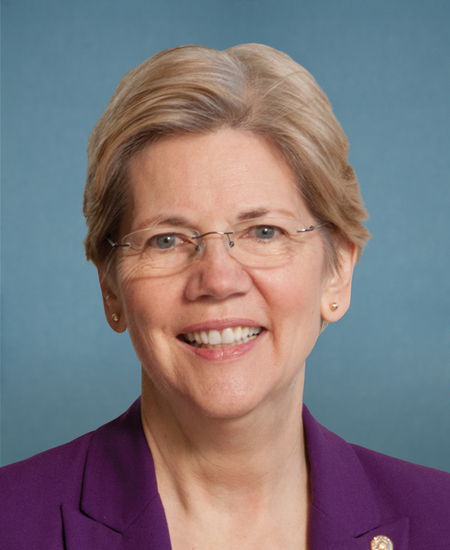
Sen. Elizabeth Warren
Sponsored bills
Maddy summaryThe Complete America's Great Trails Act creates a new federal tax credit to encourage donations of land that includes National Scenic Trails or their surrounding corridors. This provision allows taxpayers to claim a credit equal to the fair market value of the donated land, provided the property meets specific width requirements and is used for conservation purposes. The bill also permits continued recreational or agricultural use of the donated land as long as such activities do not harm significant conservation interests. Additionally, the legislation requires the Secretary of the Interior to study the credit's effectiveness and report back to Congress within four years regarding potential changes like making the credit refundable.
Maddy summaryThe Protecting American Consumers Act establishes a minimum funding level for the Bureau of Consumer Financial Protection to ensure it has sufficient resources to operate. Specifically, the bill mandates that the federal government must transfer at least 12 percent of the Federal Reserve System's total operating expenses to the Bureau each fiscal year. This provision directly affects the Bureau's budget and its ability to enforce financial regulations on lenders and other entities that impact consumers. By setting a fixed floor for funding, the legislation aims to prevent the Bureau's budget from being reduced below this threshold in future years.
Maddy summaryThis Senate resolution honors the life and legacy of Donald W. Riegle, Jr., a former U.S. Senator from Michigan who passed away in April 2026. The bill formally acknowledges his nearly three decades of public service, including his roles as a Representative and Senator, and highlights his significant contributions to legislation on banking, housing, and veterans' health. It also expresses the Senate's condolences to his family and directs officials to share the resolution with the House of Representatives and send a copy to Riegle's family. Finally, the Senate will stand in adjournment as a mark of respect for the former senator when the session concludes.
Maddy summaryThis bill requires defense contractors and subcontractors to disclose information about their beneficial owners when bidding for Department of Defense contracts. It updates existing regulations to ensure that any individual with significant ownership in a bidding company is identified for government review. Additionally, the bill lowers the financial threshold for reporting foreign influence risks from $5 million to $500,000, expanding the scope of companies subject to scrutiny. These changes aim to increase transparency regarding foreign ownership within the defense industrial base without altering the underlying acquisition process.
Maddy summaryThis resolution designates May 2026 as "Older Americans Month" to honor the contributions and well-being of U.S. citizens aged 65 and older. It encourages the public and government to recognize the achievements of older adults and provide opportunities for them to share their wisdom with younger generations. The bill highlights the significant role older individuals play in society through work, volunteering, and community engagement. By promoting public awareness, the measure aims to foster a supportive environment that values the experiences and assets of the aging population.
Maddy summaryThe Homeowners' Escrow Savings Act requires mortgage servicers to pay interest on funds held in escrow accounts for federally related loans, aiming to ensure borrowers receive a fair return on their prepaid taxes and insurance. To determine how much interest to pay, the bill mandates that servicers use the average yield on one-year U.S. Treasury securities as the baseline rate. Additionally, the law clarifies how servicers must estimate future tax payments and requires them to make these estimates as accurate as possible based on available information. While the federal rule sets a minimum standard, it explicitly allows states to enforce stricter requirements or alternative payment methods if they choose.
Maddy summaryThe Federal Death Penalty Prohibition Act bans the imposition of the death penalty for any federal crime committed on or after the date the law takes effect. It directly affects individuals currently facing or serving federal death sentences by requiring that all such cases be resentenced to a penalty other than death. This legislation removes the death penalty as a sentencing option for federal offenses and mandates a review for those already sentenced to die before the bill becomes law.
Maddy summaryThe All Students Count Act of 2026 requires schools to break down educational data into more specific categories for Asian American and Native Hawaiian and Pacific Islander students, moving beyond broad groupings to include distinct ethnicities like Chinese, Vietnamese, and Samoan. This change mandates that states report performance metrics for these detailed subgroups within their existing accountability systems to better reflect the diverse backgrounds of these communities. The bill takes effect 18 months after enactment, allowing time for states to adjust their data collection and reporting processes to accommodate the new requirements.
Maddy summaryThis joint resolution seeks to reject a specific rule issued by the Department of Education concerning the William D. Ford Federal Direct Loan Program. If passed, it would nullify the rule and prevent it from taking effect, directly impacting federal student loan policies. The measure uses a congressional disapproval process under Title 5 of the United States Code to override the department's regulatory decision. It does not create new policies but instead stops an existing proposed regulation from being implemented.