

Maddy summarySRES 288 is a Senate resolution condemning recent ideologically motivated attacks on Jewish individuals, including a violent assault in Boulder, Colorado, on June 1, 2025, and other incidents like the attack on Israeli Embassy staff in Washington, D.C., and fires at the Pennsylvania Governor’s Residence. The resolution formally expresses the Senate’s condemnation of these acts as part of a growing pattern of antisemitism and politically motivated violence. It reaffirms the Senate’s commitment to protecting peaceful assembly and religious practice, while urging federal, state, and local law enforcement to thoroughly investigate such incidents and calling on community leaders to publicly oppose antisemitism. This resolution has no legal effect but serves as a formal statement of the Senate’s position.
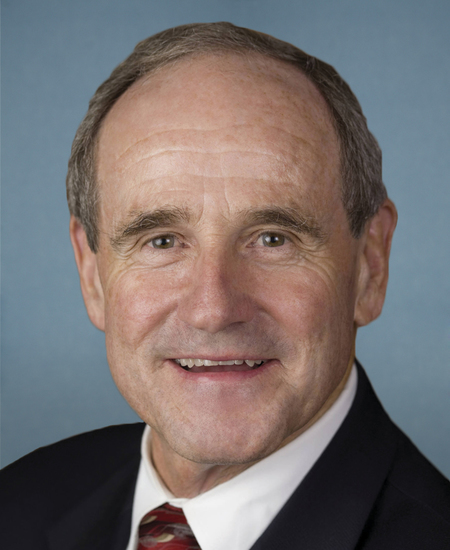
Sen. James E. Risch
Sponsored bills
Maddy summaryThis is a Senate resolution (SRES 573), not a legislative bill, expressing the Senate's position on U.S. leadership in religious freedom. It reaffirms the U.S. commitment to promoting religious freedom globally, encourages the Secretary of State to use diplomatic tools to address foreign violations, and supports existing roles like the Ambassador-at-Large for International Religious Freedom. The resolution does not create new laws or change policies but serves as a symbolic statement urging continued U.S. engagement on this issue. It directly affects U.S. diplomatic efforts and messaging toward countries with religious freedom concerns, such as China and Nicaragua, as cited in the resolution's background.
Maddy summaryThis bill requires the VA to provide telehealth services, mail-order pharmacy benefits, and mandatory beneficiary travel payments to veterans residing in the Freely Associated States (including Palau, the Marshall Islands, and Micronesia) within one year of enactment. It mandates quarterly reporting to Congress on implementation progress and associated costs. The law directly affects veterans in these Pacific Island nations by expanding access to critical healthcare and travel support services previously not uniformly guaranteed.
Secure Rural Schools Reauthorization Act of 2025 This act extends and modifies the Secure Rural Schools (SRS) program, under which states and counties containing certain federal land may receive payments from the Forest Service or the Bureau of Land Management (BLM) for schools, roads, and certain other municipal services. The act modifies the SRS program, including by extending payments made to states and counties containing federal land through FY2026, providing lapsed payments for FY2024 and FY2025, extending the authority of counties to initiate projects using such funds through FY2028, and extending the authority to initiate projects proposed by resource advisory committees through FY2028.
Maddy summaryThis bill allows state veterans homes certified by the Department of Veterans Affairs (VA) to be automatically deemed compliant with Medicare’s nursing home standards, eliminating redundant inspections. It requires the VA to provide documentation of inspections, undergo biennial joint reviews with Medicare officials to confirm alignment, and maintain the same care and safety standards as Medicare requires. The bill also mandates that VA inspection data for these homes be publicly reported on the Nursing Home Care Compare website. This applies to all state veterans homes meeting the defined standards, effective 90 days after enactment.
Maddy summaryThis bill requires that public comments on federal land management rules (administered by the Bureau of Land Management) must come only from U.S. citizens, replacing the previous standard. It mandates that agencies implement CAPTCHA systems to prevent artificial intelligence from submitting comments, explicitly stating this is to deter AI-driven public involvement. The changes apply to rulemaking under the Federal Land Policy and Management Act, affecting how the public can participate in decisions about national public lands. The bill does not alter land management policies but modifies the process for gathering public input.
Maddy summaryThis bill corrects a technical error in funding language related to the Shoshone-Paiute Tribes' water rights settlement. It specifically adjusts the authorized amount for interest payments into the Development Fund from an incorrect figure to $5,124,902.12, as required by the 2009 Public Land Management Act. The change directly affects the administrative processing of funds for the Duck Valley Reservation water rights settlement and has no new policy implications.
Maddy summarySRES 545 designates December 6, 2025, as "National Miners Day" to honor miners' contributions to U.S. economic strength and safety efforts, while commemorating the 1907 Monongah mining disaster (the deadliest industrial accident in U.S. history). The resolution encourages public participation in local and national activities celebrating miners' sacrifices. It has no binding effect and serves as symbolic recognition, not a policy change. The bill directly affects miners and the public through this annual observance.
Maddy summaryThe Federal Reserve Transparency Act of 2025 requires the Comptroller General of the United States to audit the Federal Reserve System's Board of Governors and Federal Reserve banks within 12 months of the law's enactment. The audit must be completed within that timeframe, and a detailed report of findings, conclusions, and recommendations must be submitted to Congress within 90 days of completion. This report will be shared with congressional leaders and made available to any member of Congress who requests it. The bill directly affects the Federal Reserve System by imposing new transparency requirements for its operations and financial activities.
Maddy summaryThis bill requires federal agencies to report detailed payment information - including the purpose, funding source, and payment type - to the Treasury before disbursing funds. It mandates agencies to verify recipient bank account details and cross-check payment records to prevent errors or fraud. The Treasury gains access to databases like the National Directory of New Hires and tax/Social Security data (with privacy safeguards) to identify and recover improper payments. These requirements apply to all agencies using Treasury payment systems, aiming to improve transparency and reduce wasteful spending.