Maddy summaryThis Senate resolution (SRES 28) honors women who have served in combat roles in the U.S. Armed Forces. It recognizes their contributions, bravery, and sacrifices, specifically highlighting their service since 9/11 - including over 3,000 women earning combat badges - and acknowledges the Department of Defense opening all military roles to women in 2015. The resolution has no binding policy effect; it is a symbolic gesture to celebrate their service and inspire future generations.
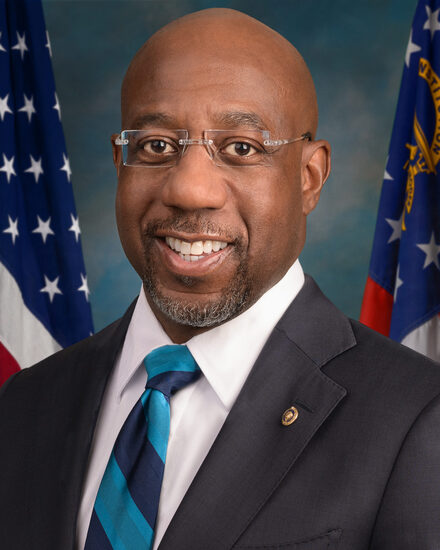
Sen. Raphael G. Warnock
Sponsored bills
Maddy summaryThe Whole-Home Repairs Act of 2025 establishes a federal pilot program to fund repairs that improve accessibility, safety, and energy efficiency in homes owned by low-income individuals or rented as affordable housing. It directly affects eligible homeowners (with income at or below 80% of area median income who occupy their primary residence) and eligible landlords (small-scale owners of affordable rental properties with specific income and ownership criteria). The program provides grants to homeowners and forgivable loans to landlords for repairs covering accessibility modifications, habitability fixes, and energy efficiency upgrades, with landlords required to maintain affordability for three years and cap rent increases. Administered by local or state entities using up to $25 million in existing HUD funds, the pilot runs until 2030 and mandates coordination with other housing programs to avoid duplication.
Maddy summaryThis bill, the VA Home Loan Awareness Act of 2025, requires lenders using the Uniform Residential Loan Application to add a specific disclaimer below the military service question. The disclaimer states: "If yes, you may qualify for a VA Home Loan. Consult your lender regarding eligibility." It directly affects lenders nationwide who use this standard loan form. The bill mandates this change within six months of enactment and includes a requirement for the GAO to study whether at least 80% of lenders comply within 18 months. The goal is to increase veteran homebuyers' awareness of VA loan programs.
Maddy summaryThe FASD Respect Act (S 139) establishes a federal program within the Public Health Service Act to improve support for individuals with fetal alcohol spectrum disorders (FASD) and their families. It creates FASD Centers for Excellence to expand diagnostic capacity, develop culturally appropriate interventions, and build state/Tribal partnerships for prevention, screening, and treatment. The law requires funding for public awareness campaigns, training for healthcare and social service professionals, and a national directory of FASD resources. This directly affects individuals with FASD, their families, healthcare providers, and state/Tribal health programs through new federal grants and coordination requirements.
Maddy summaryS 141, the Connected MOM Act, requires the U.S. Health and Human Services Secretary to report to Congress within 18 months on Medicaid coverage of remote health monitoring devices (like pulse oximeters and blood pressure cuffs) for pregnant and postpartum women. The report must identify barriers to coverage under state Medicaid programs and assess their impact on maternal and child health outcomes. Six months after the report is submitted, HHS must update state Medicaid resources, such as telehealth toolkits, to align with the report's recommendations. This bill directly affects Medicaid-enrolled pregnant and postpartum women by aiming to improve access to remote health monitoring. It focuses on gathering data and updating state resources, not on direct funding or new coverage mandates.
Maddy summaryThis bill authorizes Congress to award a single Congressional Gold Medal to wildland firefighters collectively, recognizing their service in protecting forests, grasslands, and communities. It directs the Secretary of the Treasury to strike the medal with input from the National Interagency Fire Center, with the medal to be displayed at that center for public access and research. The bill also permits the sale of bronze duplicates at cost to cover production expenses, but does not create new benefits or policy changes for firefighters. The medal honors all federal, state, local, and contract wildland firefighters who serve in high-risk conditions, including those who have died or been injured in service.
Maddy summarySRES 19 is a Senate resolution honoring former President Jimmy Carter's life and legacy, commending his decades of public service, humanitarian work, and diplomatic achievements including the Camp David Accords and founding The Carter Center. The resolution specifically recognizes his Nobel Peace Prize, efforts to combat diseases like Guinea worm, and 30+ years of Habitat for Humanity homebuilding. It formally mourns his passing and extends condolences to his family, while highlighting his role in establishing U.S.-China diplomatic relations and creating the Departments of Education and Energy. As a symbolic resolution with no policy impact, it directly affects no individuals or entities but serves as a formal Senate tribute to Carter's historical contributions.
Maddy summaryThis bill creates a new federal grant program to prevent child trafficking and support victims. It authorizes $50 million for grants to states, tribes, local governments, and nonprofits to focus on preventing the smuggling of girls and young women aged 12-24 across U.S. borders and providing services to those already trafficked or at risk. The program specifically targets child sex trafficking and severe trafficking in persons, requiring grant funds to address both prevention and victim support. The funds remain available until expended, with the Attorney General and Health and Human Services Secretary administering the program.
Maddy summaryThis bill adjusts tax credit rules for health insurance under the Affordable Care Act to make coverage more affordable for lower-income households. It replaces a flat income threshold with a sliding scale, reducing the percentage of income people pay for premiums based on their household income relative to the poverty line (e.g., 0% for incomes up to 150% of poverty, rising to 8.5% at 400%+). The change directly affects individuals buying insurance through health insurance marketplaces who qualify for tax credits. It takes effect for tax years beginning after 2025, modifying how the IRS calculates subsidy eligibility.
Maddy summaryThis bill establishes a 13-member Commission to study the historical and ongoing impacts of slavery and discrimination on African Americans, and to develop reparation proposals. The Commission will examine the institution of slavery from 1619-1865, discriminatory practices like redlining and Jim Crow, and current disparities in wealth, incarceration, and employment. It will identify evidence of these harms, study their lingering effects, and recommend educational approaches and potential remedies, including compensation calculations and eligibility. The Commission must submit its findings and recommendations to Congress within one year of its first meeting. The bill authorizes $12 million for the Commission's work and requires it to terminate 90 days after submitting its report.