

Maddy summaryThe Hazard Pay for Health Care Heroes Act establishes a grant program to provide financial compensation and safety resources to essential health care workers during declared emergencies or disasters. This legislation directly affects medical providers, support staff, and other frontline workers whose jobs cannot be performed remotely, such as orderlies and janitors in health care settings. Under the bill, eligible facilities can receive federal funds to pay workers an additional hourly rate of up to $13 for hazardous duties, with a yearly cap of $25,000 per employee, while also allowing funds for protective equipment and alternative transportation. The program is triggered by various federal or state emergency declarations and authorizes the necessary funding to implement these hazard pay measures.
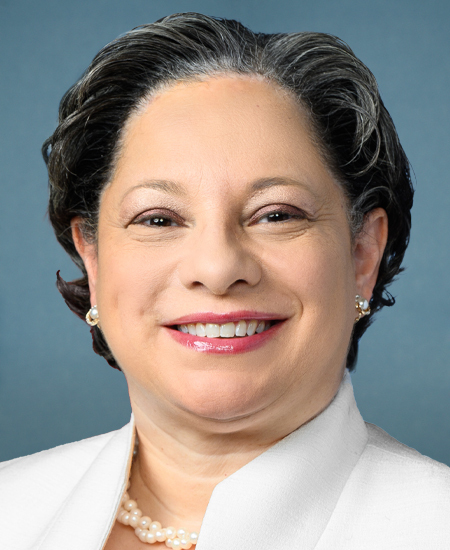
Rep. Jennifer L. McClellan
Sponsored bills
Maddy summaryHouse Resolution 1208 expresses the House of Representatives' support for honoring Earth Day and its historical role in promoting environmental protection and action. It encourages American citizens to engage in environmental stewardship and urges the President and the U.S. Government to take immediate action to address climate change, environmental injustices, and rejoin international climate agreements.
Maddy summaryThis bill creates a new program to connect people leaving farming with those wanting to become farmers. The Secretary of Agriculture would set up a database to match these individuals and help transfer farm businesses and properties between them. The program would run for five years unless extended by the Secretary and requires regular reports to Congress on its progress and results.
Maddy summaryThis bill establishes a grant program to help vulnerable mothers and babies in areas with high climate-related health risks, such as extreme heat and air pollution. It directs the Department of Health and Human Services to award up to $105 million over four years to community groups, healthcare providers, and local organizations for initiatives that provide cooling resources, health education, and support services. The program prioritizes areas with high rates of maternal and infant health disparities and requires grantees to address racial and ethnic inequities. Additionally, the bill creates a research consortium at the National Institutes of Health to study climate impacts on birth outcomes and funds training programs for health profession schools to better prepare providers for these risks.
Maddy summaryThis bill reauthorizes the First Responder Network Authority (FRNA) through September 30, 2037, extending its operations beyond the previous 15-year sunset. It places the FRNA under the oversight of the National Telecommunications and Information Administration (NTIA), requiring NTIA approval for key decisions and actions. The bill establishes new requirements for the FRNA board composition (including at least five public safety professionals) and creates an Associate Administrator position to manage operations and serve as a liaison with NTIA. These changes strengthen oversight of FirstNet, the nationwide public safety broadband network used by police, firefighters, and emergency medical services across the country.
Maddy summaryThe Momnibus Act is a comprehensive legislative bill designed to improve maternal health outcomes across the United States by addressing social determinants of health, expanding access to care, and reducing disparities among pregnant and postpartum individuals. The bill establishes a federal task force to coordinate efforts between agencies and stakeholders to eliminate preventable maternal mortality and severe morbidity, while providing sustained funding to community-based organizations to address nonclinical factors like housing, nutrition, and transportation. Key provisions include extending WIC eligibility to 24 months postpartum, creating grants to grow and diversify the perinatal workforce, implementing respectful maternity care training for all healthcare employees, and establishing compliance programs to track and address bias in maternity care settings. The legislation also includes specific measures for incarcerated mothers, veterans, and vulnerable populations affected by climate change, alongside funding for maternal mental health services and technology-enabled care models to expand access in underserved areas.
Maddy summaryThis House Resolution supports designating the week of April 11 through April 17, 2026, as "Black Maternal Health Week." The resolution aims to bring national attention to the maternal and reproductive health crisis in the United States, specifically highlighting the importance of reducing maternal mortality and morbidity among Black women and birthing people.
Maddy summaryThe Senior Hunger Prevention Act of 2026 aims to reduce food insecurity among older adults and people with disabilities by modifying and expanding federal nutrition assistance programs. It streamlines the Supplemental Nutrition Assistance Program (SNAP) by extending certification periods to 36 months for these groups, creating simplified application processes, and establishing a standard medical expense deduction. The bill also expands eligibility for the Commodity Supplemental Food Program and the Seniors Farmers' Market Nutrition Program to include adults with disabilities, while increasing funding and benefits for these programs. Additionally, it establishes a pilot program for SNAP enrollment outreach, creates a new program to reimburse retail food stores for grocery delivery to eligible participants, and provides funding for farmers' market infrastructure and local produce procurement.
Maddy summaryThis bill seeks to block a specific rule issued by the Department of Education that affects the William D. Ford Federal Direct Loan Program. If passed, it would prevent the rule from taking effect, meaning the proposed changes to federal student loans would not be implemented. The measure uses a legislative process known as a joint resolution of disapproval to override agency regulations. It directly impacts students, families, and institutions that rely on federal student loans by stopping the Department of Education from enforcing the new policy.
Maddy summaryThe Power for the People Act of 2026 requires the Federal Energy Regulatory Commission to create a special approval process for data centers, which are defined as facilities using more than 50 megawatts of electricity. Under this system, data centers must offset their energy consumption by bringing their own clean power sources to the grid or agreeing to flexible power usage that can be reduced when needed. The bill also directs states to establish separate electricity rates for data centers so these facilities pay their full share of grid upgrade costs rather than spreading those expenses across all customers. Additionally, the legislation mandates that data center construction use prevailing wages and registered apprenticeship programs, while requiring greater transparency in how data center energy demands are forecasted and approved.