

Maddy summaryThe CONSTRUCTS Act of 2025 creates a federal grant program to fund training programs at community colleges and career schools focused on residential construction careers. It targets rural areas and underserved populations - including veterans, low-income individuals, and groups with historically low representation in construction - to develop skills in trades like carpentry, plumbing, electrical work, and HVAC. Grants, totaling $20 million annually from 2026-2030, require flexible scheduling, partnerships with construction employers, and plans to increase affordable housing supply through workforce development. The bill directly affects community colleges in rural or underserved regions and their students seeking residential construction careers.
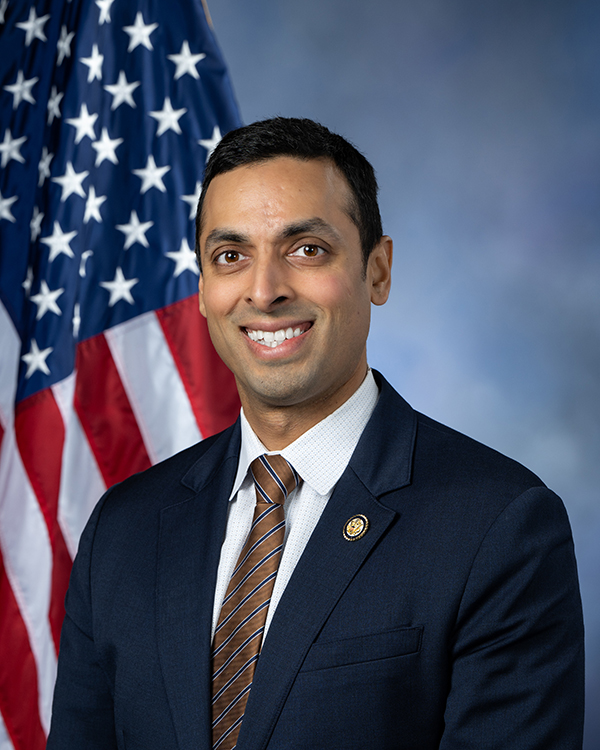
Rep. Suhas Subramanyam
Sponsored bills
Maddy summaryThe QUIET Act (HR 1027) requires that robocalls or text messages using artificial intelligence to mimic human communication must disclose at the beginning that AI is being used. It doubles penalties for violations involving AI impersonation intended to defraud, cause harm, or obtain value, applying to automated calls sent to stored numbers or generated randomly. The bill excludes calls requiring substantial human intervention, focusing on transparency and deterrence in AI-driven automated communications.
Maddy summaryHR 211, the Equal Access to Contraception for Veterans Act, eliminates out-of-pocket costs for specific contraceptives for veterans using VA healthcare. It amends Section 1722A of Title 38 to prohibit the VA from charging veterans copayments for contraceptive items that must be covered without cost-sharing under federal law (as required by Section 2713(a)(4) of the Public Health Service Act). This means veterans will not pay any amount for contraceptives covered by the federal mandate, such as birth control pills or IUDs, when obtained through the VA system. The bill directly affects veterans enrolled in VA healthcare seeking contraceptive services, ensuring no additional costs beyond what is already mandated for these items.
Maddy summaryHRES 116 is a non-binding House resolution condemning pardons granted to individuals convicted of assaulting Capitol Police officers. It expresses the House's disapproval of such pardons but does not alter any laws or affect legal proceedings. The resolution has no legal force and serves only as a formal statement of disapproval by the sponsoring lawmakers. It directly addresses the pardons of specific individuals found guilty in criminal cases related to the January 6, 2021, Capitol breach.
Maddy summaryHR 989 would turn Executive Order 11246 into law, requiring federal contractors and subcontractors to follow its equal employment nondiscrimination rules. This bill directly affects businesses working with the U.S. government by making these requirements legally binding. The key provision ensures the existing order has the full force of law, rather than being subject to executive changes.
Maddy summaryThis bill establishes a federal right to access contraception, protecting individuals' ability to obtain contraceptives and health care providers' ability to offer them without government interference. It prohibits states from banning or restricting contraceptive services, products, or information, including laws that force providers to deny care based on personal beliefs or limit access to specific methods. The law immediately overrides conflicting state regulations and ensures that contraception remains available regardless of factors like race, income, disability, or location. It applies to all individuals and providers, building on existing federal protections like the Affordable Care Act's coverage requirements.
National Origin-Based Antidiscrimination for Nonimmigrants Act or the NO BAN Act This bill imposes limitations on the President's authority to suspend or restrict aliens from entering the United States. It also prohibits religious discrimination in various immigration-related decisions, such as whether to issue an immigrant or nonimmigrant visa, unless there is a statutory basis for such discrimination. The President may temporarily restrict the entry of any aliens or class of aliens after the Department of State determines that the restriction would address specific and credible facts that threaten U.S. interests such as public safety. The bill also imposes limitations on such restrictions, such as requiring the President, State Department, and the Department of Homeland Security (DHS) to (1) only issue a restriction when required to address a compelling government interest, and (2) narrowly tailor the suspension to use the least restrictive means to achieve such an interest. Before imposing a restriction, the State Department and DHS shall consult with Congress. The State Department and DHS shall report to Congress about the restriction within 48 hours of the restriction's imposition. If such a report is not made, the restriction shall immediately terminate. Individuals or entities present in the United States and unlawfully harmed by such a restriction may sue in federal court. The bill transfers the authority to suspend the entry of aliens traveling to the United States on a commercial airline that failed to comply with regulations related to detecting fraudulent travel documents from the Department of Justice to DHS.
Maddy summaryThis resolution expresses the House of Representatives' position that Congress should take steps to prevent the privatization of the United States Postal Service (USPS), ensuring it remains a federal independent agency. It highlights USPS’s constitutional role, self-sustaining nature (relying on service revenue, not taxpayer funds), and critical functions - serving 168 million addresses daily, supporting rural communities, and underpinning e-commerce. The resolution opposes privatization, noting it would raise prices, reduce services, and harm the $1.9 trillion mailing industry. As a non-binding resolution, it reflects the House’s stance but does not create new law or policy.
Maddy summaryHRES 75 is a symbolic resolution recognizing the cultural and historical significance of Lunar New Year (celebrated as the Year of the Snake in 2025). It acknowledges Lunar New Year's origins in China over 4,000 years ago, its global celebration as Seollal (Korea) and Tết (Vietnam), and its importance to Asian American communities in the U.S. The resolution expresses respect for Asian Americans and others celebrating the holiday and wishes them a happy new year, but it creates no new laws, funding, or obligations. As a ceremonial resolution, it has no direct policy impact.
Sustainable Cardiopulmonary Rehabilitation Services in the Home Act This bill permanently allows services relating to cardiac rehabilitation programs, intensive cardiac rehabilitation programs, and pulmonary rehabilitation programs to be furnished via telehealth at a beneficiary's home under Medicare.