

In committee Sep 24, 2026
1 co-sponsor
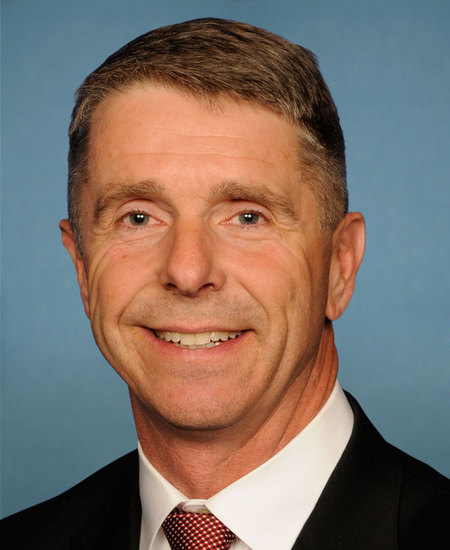
Rep. Robert J. Wittman
Total votes
2,837
all sessions
Attendance
97%
85 missed
Near the chamber average
With party
96%
of cast votes
Near the chamber average
Bipartisan score
2%
crosses aisle rarely
Near the chamber average
Sponsored
933
bills & resolutions
Near the chamber average
Committees
6
assignments
933 bills and resolutions
Sponsored bills
Total
933
Primary
88
Co-sponsor
845
This page
933
matching current filters
In committee Sep 24, 2026
1 co-sponsor
Ratepayer Protection Act
Maddy summaryThis bill, known as the Ratepayer Protection Act, modifies federal energy laws to ensure that large industrial customers pay for the specific infrastructure upgrades needed to serve their high electricity demands. It directly affects non-residential facilities with a peak power usage of 100 megawatts or more, requiring utilities to charge these customers the full incremental cost of any necessary generation, transmission, or distribution improvements. Under the new rules, large customers must also provide financial guarantees or contributions before such upgrades are made, ensuring utilities can recover costs even if the customer leaves the contract early. State regulators have two years to implement these standards, though the bill exempts utilities in states that have already enacted similar measures or are actively considering them.
Passed Sep 24, 2026
1 co-sponsor
To designate the facility of the United States Postal Service located at 1225 Kempsville Road in Virginia Beach, Virginia, as the "Colonel Edward Shames Post Office Building".
This bill designates the facility of the United States Postal Service located at 1225 Kempsville Road in Virginia Beach, Virginia, as the "Colonel Edward Shames Post Office Building".
Passed Sep 17, 2026
1 co-sponsor
Wintergreen Emergency Egress Act
Wintergreen Emergency Egress Act This bill directs the Department of the Interior to issue a right-of-way through the Blue Ridge Parkway for an additional emergency exit from Wintergreen in Nelson County, Virginia, once certain requirements have been met. Specifically, Interior must grant the right-of-way if it reports to specified congressional committees that the following have been completed: (1) an evaluation of alternatives to the right-of-way for exiting Wintergreen that do not cross federal land, including an evaluation of whether existing trails can be converted to roads; (2) an analysis of expected fire ecology behavior in the event of a fire emergency with respect to the right-of-way; and (3) any required reviews under the National Environmental Policy Act of 1969 and the National Historic Preservation Act.
Passed Sep 17, 2026
1 co-sponsor
Supporting the designation of the week of September 20 through September 26, 2026, as "Gold Star Families Remembrance Week".
Maddy summaryThis House resolution supports designating the week of September 20 through September 26, 2026, as "Gold Star Families Remembrance Week." It aims to honor the families of service members and veterans who have died in the line of duty. The bill encourages Americans to observe this annual week by performing acts of community service and celebrating the lives of those who made the ultimate sacrifice.
In committee Sep 16, 2026
1 co-sponsor
Nitrous Oxide Safety Act of 2026
Maddy summaryThe Nitrous Oxide Safety Act of 2026 would classify consumer products containing nitrous oxide as banned hazardous items under federal law, except for specific exceptions. The bill prohibits the sale of nitrous oxide products for recreational use while allowing continued sales for medical and dental treatments, food production in commercial kitchens, research and development activities, and food propellant applications. This legislation directly affects manufacturers, retailers, and consumers by restricting access to nitrous oxide in consumer products after 180 days from enactment. The law defines nitrous oxide as the gas known as laughing gas or whippits and specifies which entities and activities are exempt from the ban.
In committee Sep 16, 2026
1 co-sponsor
High-Capacity Grid Act
Maddy summaryThis bill requires public utilities to use the most efficient and high-capacity power line conductors available when building new transmission lines or making major upgrades to existing lines under federal jurisdiction. It creates a legal presumption that costs for these "best-available" conductors will be approved in rate cases, while costs for less efficient conductors will likely be denied. The rule applies only to projects overseen by the Federal Energy Regulatory Commission (FERC). FERC must issue specific rules within 180 days to define what qualifies as a "best-available" conductor based on capacity, efficiency, and thermal performance.
EnergySupports EnergyRequires efficient conductors for grid upgrades, promoting energy efficiency and supporting renewable integration through improved infrastructure.
EnvironmentSupports EnvironmentMandates efficient conductors reducing energy loss, lowering emissions from power generation. FERC oversight ensures grid efficiency aligns with environmental protection goals.
Passed Sep 16, 2026
1 co-sponsor
ASAP Act
Maddy summaryThis bill would require Medicare to cover early detection screening tests for Alzheimer's disease and related dementias starting January 1, 2028. It defines eligible tests as FDA-cleared genomic blood tests, blood product analyses, or equivalent medical imaging methods (like protein expression or whole genome sequencing) that detect pre-symptomatic or early-stage conditions. Medicare beneficiaries would receive this coverage without cost-sharing for these specific screenings. The bill amends Medicare coverage rules to explicitly include these tests under Section 1861(nnn) of the Social Security Act.
In committee Sep 16, 2026
1 co-sponsor
TRAPS Act
Maddy summaryThe TRAPS Act establishes a federal Task Force on Payment Scams, chaired by the Treasury Secretary, to coordinate efforts across agencies like the FTC, Federal Reserve, and consumer groups. The Task Force will study current scam tactics (such as fake text messages or fraudulent payment platforms), evaluate prevention strategies, and develop recommendations to help consumers avoid and report scams. It must submit an initial report within one year and annual updates, focusing on improving federal-state coordination and education programs. This bill directly affects government agencies and stakeholders participating in the Task Force, with the goal of protecting consumers from evolving payment scams.
In committee Sep 16, 2026
1 co-sponsor
Ask Maddy
·
AI policy assistant
Ask Maddy about Robert J. Wittman
Scope: ohio
Hi! I can help you understand Robert J. Wittman's legislative record. What would you like to know?
Try one of these
i
Maddy answers using official bill text and legislative records. Always verify before sharing.
Sources cited inline