Maddy summaryHR 909, the Crime Victims Fund Stabilization Act of 2025, modifies how funds from the False Claims Act are deposited into the Crime Victims Fund. It specifies that from 2025 through 2029, certain False Claims Act proceeds (specifically those for qui tam plaintiff payments and government damage reimbursements) cannot be deposited into the fund. This change directly affects the composition of the Crime Victims Fund by excluding these specific revenue streams during the specified period. The bill does not create new benefits or alter victim services; it only adjusts fund allocation rules for existing False Claims Act revenues.
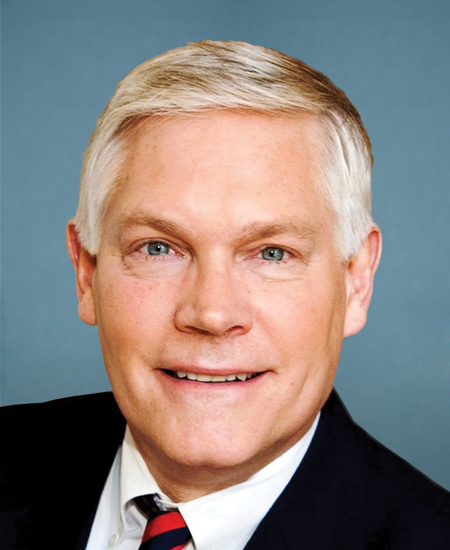
Rep. Pete Sessions
Sponsored bills
Maddy summaryHR 580 amends the 1995 Unfunded Mandates Reform Act to strengthen requirements for federal agencies issuing significant regulations. It requires agencies to conduct detailed cost-benefit analyses for "major rules" (those costing $100 million annually or more) before finalizing them, including assessing impacts on state/local governments and small businesses. The bill mandates agencies to consult with affected state/local officials and private sector stakeholders early in the rulemaking process and select the regulatory alternative that maximizes net benefits. These changes directly affect federal agencies, state/local governments, and businesses, particularly small enterprises, by increasing transparency and accountability for major federal regulations.
Maddy summaryHR 6908, the Blue Envelope Awareness Act, creates a new program to help people with speech, hearing, or developmental disabilities communicate more effectively with police during traffic stops. The bill directs federal Byrne grant funds to support "blue envelope programs," which provide individuals with blue envelopes containing disability documentation to show officers and train law enforcement on interacting with these individuals. It amends existing law to define "blue envelope program" and add this funding authorization to the Omnibus Crime Control and Safe Streets Act. The bill directly affects people with disabilities who interact with police and law enforcement agencies receiving Byrne grants.
Maddy summaryThis bill removes regulatory barriers for certain investment funds. It amends the Investment Company Act of 1940 to allow "closed-end companies" (investment funds that don't issue new shares after launch) to invest all their assets in "private funds" (like venture capital or hedge funds) without SEC restrictions, provided the restriction isn't related to the fund's nature. It also prevents stock exchanges from blocking the listing or trading of these funds' securities. The bill preserves existing fiduciary duties, valuation rules, and liquidity requirements for these funds.
Miracle on Ice Congressional Gold Medal Act This act provides for the award of Congressional Gold Medals to the members of the 1980 U.S. Olympic men's ice hockey team in recognition of the team's achievement at the 1980 Winter Olympic Games.
Maddy summaryThis bill establishes new requirements for pharmacy benefit managers (PBMs) working with Medicare Part D prescription drug plans and Medicaid programs. It mandates that PBMs pay pharmacies a specific reimbursement amount based on drug acquisition costs plus a fixed fee, pass through manufacturer rebates directly to beneficiaries at the point of sale, and prohibits steering practices that direct patients to specific pharmacies. The bill applies to Medicare Part D plans and Medicaid managed care organizations beginning January 1, 2027, affecting how PBMs interact with pharmacies and handle drug rebates. Violations could result in criminal penalties of up to $1 million or 10 years in prison for willful noncompliance. The bill aims to increase transparency and fairness in pharmacy drug pricing for Medicare and Medicaid beneficiaries.
Maddy summaryHR 6643, the American Border Story Memorial Act, authorizes a nonprofit organization ("The American Border Story") to establish a commemorative memorial on federal land in Washington, D.C., to honor U.S. citizens and legal residents who died due to crimes committed by individuals unlawfully present in the U.S. The bill prohibits the use of federal funds for the memorial's creation or maintenance, requiring all costs to be covered by private donations. Any remaining funds after project costs must be deposited into specific federal or National Park Foundation accounts, as outlined in the Commemorative Works Act. This is a procedural memorial bill with no direct policy or regulatory changes.
Maddy summaryThe REAL Act (HR 6571) requires federal agencies and officials to clearly label public content created or altered using generative artificial intelligence with a plain-language disclaimer. The label must state that AI was used, explain briefly how the content was generated, and describe the technology, while being visible and easy to understand. Exceptions include minor visual edits (like brightness adjustments), routine drafts reviewed by staff before publication, personal social media posts unrelated to work, and classified content. Agencies must follow OMB guidelines within 180 days and submit annual compliance reports to Congress.
Maddy summaryHR 6534 repeals Section 907 of the FREEDOM Support Act, which previously prohibited U.S. economic and military assistance to Azerbaijan. This change directly affects U.S. foreign aid programs by removing a longstanding restriction on providing aid to Azerbaijan. The bill cites congressional findings that Azerbaijan is a U.S. ally, has supported peace efforts in the South Caucasus, and reached a border agreement with Armenia. The repeal would allow the U.S. government to resume aid to Azerbaijan without legal barriers.
Maddy summaryThis bill amends the Natural Gas Act to give the Federal Energy Regulatory Commission (FERC) exclusive authority to approve U.S. LNG export terminal projects, requiring FERC to deem such exports consistent with the public interest. It directly affects natural gas companies seeking to build or expand export facilities and streamlines FERC's review process by removing prior requirements for interagency coordination. The bill clarifies that FERC's decisions won't override existing sanctions laws, including restrictions on trade with countries designated as state sponsors of terrorism under current law. This change aims to accelerate domestic LNG export projects while maintaining legal safeguards for national security and foreign policy.