Maddy summaryThis bill would prohibit federal laws from requiring manufacturers to install emissions control devices or onboard diagnostic systems on diesel trucks and other motor vehicles. It removes the Environmental Protection Agency's authority to enforce existing emissions regulations and eliminates liability for anyone who manufactures, sells, or modifies vehicles without these devices. The legislation also repeals current federal regulations related to emissions controls and would erase criminal or civil penalties for past violations of these rules.
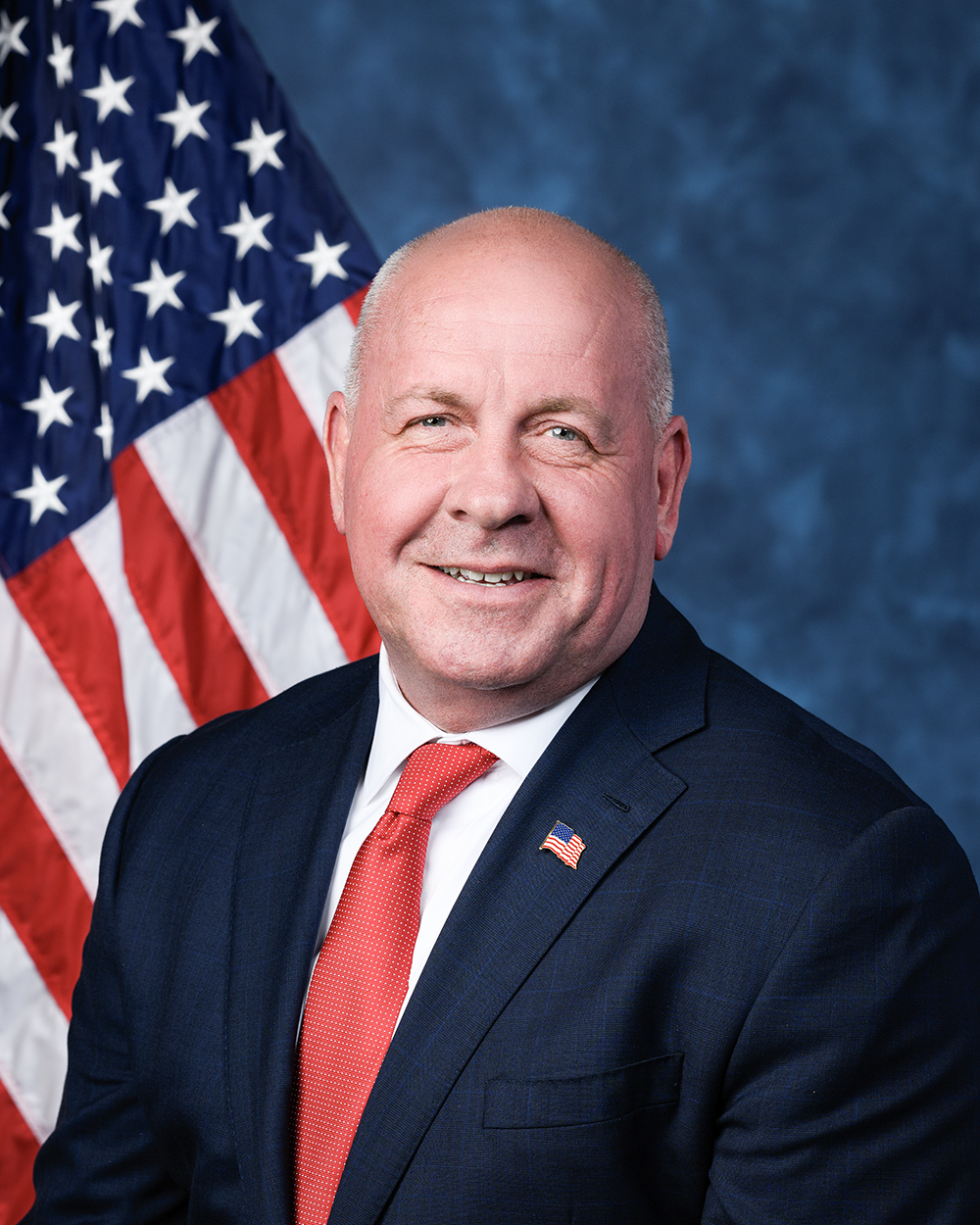
Rep. David J. Taylor
Sponsored bills
Maddy summaryThe Airport Regulatory Relief Act of 2025 allows the federal government to use state highway standards instead of federal aviation standards for pavement construction at smaller airports. It directly affects nonprimary airports serving aircraft weighing 60,000 pounds or less, which are typically smaller community airports. The bill requires states to notify the federal Secretary of Transportation if they want to use their highway standards, and the Secretary must confirm the standards won’t compromise safety. This change simplifies construction requirements for eligible airports by aligning them with existing state infrastructure rules.
Expanding Appalachia’s Broadband Access Act This bill requires the Government Accountability Office to study and report to Congress on the Appalachian Regional Commission’s capability to incorporate low-orbit satellites in broadband projects. Specifically, the study must review and analyze the capacity and cost-effectiveness of using satellite broadband service for business purposes and economic development.
Maddy summaryThis resolution formally recognizes and honors six members of the Ohio Air National Guard who died in a KC-135 Stratotanker crash over Iraq on March 12, 2026. The bill specifically names the deceased service members and acknowledges their sacrifice during a refueling mission supporting Operation Epic Fury. It expresses the House's condolences to the families of the fallen and pledges that their service will not be forgotten.
Maddy summaryThis bill extends the funding period for existing USDA water and wastewater infrastructure grants from 2019-2023 to 2026-2031. It directly affects rural communities and tribal areas that rely on these federal grants to upgrade drinking water systems, sewage treatment, and waste disposal facilities. The key provision amends a specific section of the Consolidated Farm and Rural Development Act to adjust the grant program's authorization period. This change ensures continued access to funding for critical water infrastructure improvements without altering the program's scope or eligibility.
Maddy summaryThis bill requires all states to submit detailed data on Supplemental Nutrition Assistance Program (SNAP) fraud to the Department of Agriculture. The data must include information on fraud cases, enforcement actions, recoveries, and specific instances involving deceased individuals or false social security numbers. States must provide this information within 180 days of enactment for historical data and annually thereafter, with funds withheld if they fail to comply. The Secretary of Agriculture will compile and publish annual reports to Congress based on the submitted data.
Deporting Fraudsters Act of 2026 This bill makes certain acts related to public benefits fraud grounds for (1) barring a non-U.S. national ( alien under federal law) from admission into the United States, or (2) deporting the individual. The bill also makes such an individual ineligible for immigration enforcement relief, including relief for an individual in danger of subjection to torture. Specifically, this bill applies to individuals who have been convicted of, admit to having committed, or admit to acts which constitute certain offenses. Offenses covered by this bill include (1) fraud involving Supplemental Nutrition Assistance Program (SNAP) benefits, (2) fraud involving Social Security benefits, (3) fraud involving programs that receive federal funds, and (4) the production of fraudulent identification documents.
Maddy summaryHR 5688, the Non-Domiciled CDL Integrity Act, changes rules for issuing commercial driver's licenses (CDLs) to people who don't live in the state where the license is issued. It allows states to issue CDLs to foreign nationals with lawful U.S. immigration status and work-related visas (valid for up to one year or until their stay ends), requiring states to verify status before issuing and keep records for two years. For residents of U.S. territories like Puerto Rico, it requires proof of U.S. citizenship or permanent residency before issuing CDLs, with similar verification and record-keeping rules. The bill directly affects commercial drivers from foreign countries and U.S. territories seeking CDLs in states where they are not residents.
Enhanced Iran Sanctions Act of 2025 This bill imposes sanctions on certain foreign persons (individuals and entities) that are involved in Iran's petroleum sector as well as certain associated persons. The bill also requires or authorizes actions to facilitate the enforcement of sanctions on Iran. Specifically, the bill requires the President to impose visa- and property-blocking sanctions on any foreign person that, after the bill's enactment, knowingly engages in any transaction related to the processing, export, or sale of oil, condensates, gas, liquefied natural gas, or other petrochemical products in whole or in part from Iran. The President must also impose sanctions on certain foreign persons associated with a sanctioned individual or entity. For example, the President must sanction the subsidiaries and corporate officers of a sanctioned business. The bill provides certain exceptions to these sanctions, including specifying that sanctions do not apply to the importation of goods or to conducting or facilitating transactions for humanitarian assistance. The Department of State must establish an interagency working group that shall seek to establish a multilateral contact group to coordinate international efforts to enforce sanctions on Iran. The bill expands the State Department rewards program to authorize a reward payment to any individual who furnishes information leading to the identification of a person (1) subject to sanctions under this bill, or (2) that has attempted or is attempting to evade sanctions under this bill.
Maddy summaryThis bill, known as the State Veterans Homes Inspection Simplification Act, would allow certain State Veterans Homes that are already certified by the Department of Veterans Affairs to be automatically considered compliant with Medicare and Medicaid nursing home standards. Under this proposal, facilities meeting specific VA inspection and certification requirements would not need to undergo separate reviews by the Centers for Medicare & Medicaid Services, reducing duplication of effort. The legislation maintains oversight by requiring the VA to submit its inspection standards for review every two years, allowing CMS to conduct targeted surveys or complaints investigations, and mandating public reporting of inspection data on the Nursing Home Care Compare website. A Government Accountability Office report would be required three years after enactment to evaluate the bill's impact on survey efficiency, enforcement outcomes, and resident care quality.