Maddy summaryHR 4210, the "Accountability Doesn’t Expire Act," extends the deadline for the Pandemic Response Accountability Committee from 2025 to 2030 under the CARES Act. It requires this committee to submit a report by September 30, 2030, analyzing how extending the time limit for prosecuting fraud in Paycheck Protection Program (PPP) loans has impacted enforcement. The bill directly affects oversight of PPP loan fraud investigations, as it mandates evaluation of how longer statute of limitations periods (under the PPP and Bank Fraud Enforcement Harmonization Act of 2022) have been applied. The key mechanism is the extension of the committee’s mandate and the requirement for a detailed impact report on fraud prosecution timelines.
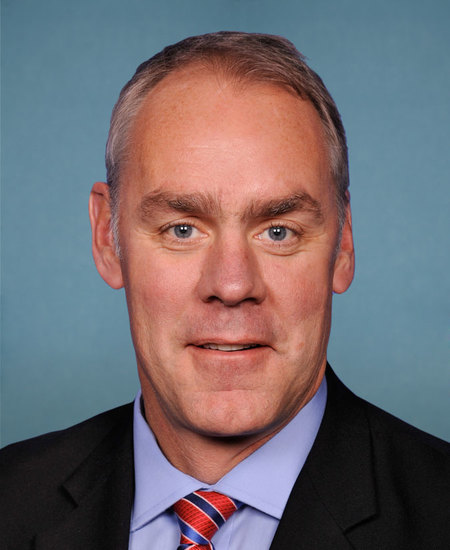
Rep. Ryan K. Zinke
Sponsored bills
Maddy summaryThis bill proposes a constitutional amendment that would grant Congress the power to pass laws banning the physical desecration of the U.S. flag (such as burning, trampling, or defacing it). If ratified, it would directly affect individuals who engage in such acts by making them subject to federal criminal penalties under new laws Congress could create. The amendment would add a specific clause to the Constitution stating: "Congress shall have power to prohibit the physical desecration of the flag of the United States." Ratification would require approval by 3/4 of state legislatures within seven years of submission.
Maddy summaryHR 3946, the FIGHT Act of 2025, amends the Animal Welfare Act to specifically prohibit gambling on animal fighting events and restrict the interstate transport of roosters used in such ventures. It defines "rooster" as male chickens over six months old and makes it unlawful to sponsor, exhibit, attend (for those under 16), or gamble on animal fighting events - whether in-person or broadcast. The bill creates a civil enforcement mechanism allowing any person to file a lawsuit to stop violations after providing 60 days' notice to authorities, with potential fines up to $5,000 per violation. It also establishes seizure of property used to facilitate violations and clarifies that state laws on animal fighting remain in effect unless directly conflicting with federal provisions.
Maddy summaryHR 3998, the Firearms Congressional Notification Modernization Act, raises the financial threshold requiring congressional notification for certain firearm exports. It modifies the Arms Export Control Act to increase the notice requirement from $1 million to $4 million for defense articles classified as Category I firearms under the U.S. Munitions List. This change directly affects firearm exporters by reducing the number of transactions needing prior congressional review. The bill makes a specific procedural update to the existing notification process without altering export regulations or policy.
Maddy summaryHR 3860, the "No Passports for Terrorists and Traffickers Act," denies or revokes U.S. passports for individuals charged with or convicted of providing material support to terrorism under federal law (18 U.S.C. §§2339A/B) or determined by the Secretary of State to have aided designated foreign terrorist organizations. It directly affects people meeting these criteria by preventing passport issuance or requiring passport cancellation, though limited exceptions allow return travel to the U.S. or humanitarian travel. Key mechanisms include the Secretary of State’s authority to act, a 60-day appeal process for affected individuals, and mandatory reports to Congress on each denial or revocation. The bill explicitly excludes medicine and religious materials from its definition of "material support," which covers items like money, training, transportation, or weapons. This law changes passport policy for specific terrorism-related cases without altering broader constitutional rights.
Maddy summaryThis bill would require the Attorney General to annually identify state or local governments that fail to comply with federal immigration cooperation laws, such as sharing immigration status information or honoring detainer requests. Jurisdictions found non-compliant would lose eligibility for all federal financial assistance (including grants and programs) for at least one year. The law mandates annual reports to Congress and allows any member of Congress to request compliance reports on specific jurisdictions. It directly affects cities, counties, and states that do not follow federal immigration enforcement directives.
Maddy summaryHR 3870, the COAL POWER Act, repeals a specific Environmental Protection Agency (EPA) rule issued on May 7, 2024, which set emission standards for coal- and oil-fired power plants. This bill directly affects coal and oil-fired electric utilities by removing their requirement to comply with that particular EPA regulation (89 Fed. Reg. 38508). The key mechanism is a straightforward repeal, treating the rule as if it never took effect. The bill does not create new rules or alter existing environmental standards beyond this specific EPA action.
Maddy summaryThis bill would make non-citizens deportable if they incite or participate in riots during civil unrest involving assaults on law enforcement or military personnel, or destruction of public property, and who were unlawfully present, had DACA, or were lawful permanent residents at the time of the offense. It permanently bars such individuals from reentering the U.S. or accessing any relief from deportation, including asylum, cancellation of removal, or future DACA benefits. During declared emergencies (such as national disasters or state emergencies), the law mandates expedited removal and mandatory detention for those covered, with no discretion for enforcement.
Maddy summaryHR 1948 authorizes the International Boundary and Water Commission (IBWC) to accept funds from federal or non-federal entities - including grants or agreements - to study, design, construct, operate, or maintain wastewater treatment facilities, water conservation projects, and flood control works along the U.S.-Mexico border. The bill requires these funds to be deposited into a specific U.S. Treasury account and imposes a $5 million annual limit on reimbursing non-federal partners for project costs. It also prohibits accepting funds from entities tied to "foreign countries of concern" (as defined in other law) and mandates annual reports to Congress detailing how funds were used. This bill directly affects the IBWC’s funding mechanisms and entities providing financial support for border water infrastructure projects.
Maddy summaryHR 3773 (PROTECT Act of 2025) amends federal law to recognize tribal courts as having authority equivalent to state courts for certain electronic evidence cases. It requires that warrants for electronic communications stored 180 days or less must follow procedures from the Indian Civil Rights Act (25 U.S.C. 1302(a)(2)) when issued by tribal courts. The bill also expands tribal jurisdiction over controlled substance offenses (like drug trafficking or possession) and firearms offenses (such as possession by domestic violence offenders) by defining these terms for tribal courts. This directly affects tribal courts and tribal law enforcement by standardizing legal procedures for evidence handling and broadening their authority under federal law. The changes align tribal court processes with federal and state standards for digital evidence and criminal jurisdiction.