

Maddy summaryHR 8761, the Ensuring Distance Education Act, amends the Higher Education Act to clarify that revenue from distance education programs (offered wholly or partially online, regardless of location) counts toward the 90/10 rule. This directly affects colleges and universities that receive federal financial aid, as it changes how their revenue from online programs is calculated for compliance with the 90/10 rule. The key provision inserts a specific phrase into the law, explicitly including distance education funds in the calculation of the 90% revenue limit from federal aid. This ensures institutions cannot avoid the 90/10 rule by shifting programs online. The bill does not create new programs or alter funding levels, only clarifies existing revenue treatment.
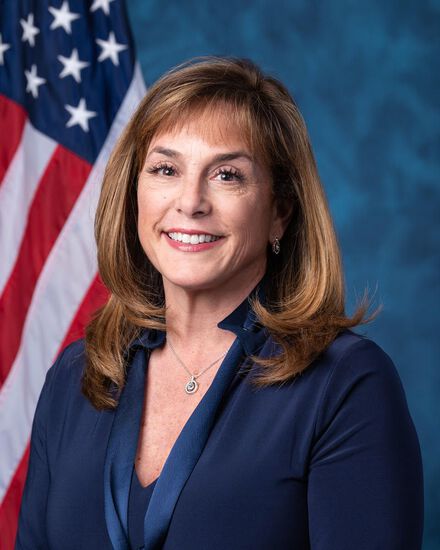
Rep. Lisa C. McClain
Sponsored bills
Maddy summaryThis bill amends the Northern Border Security Review Act to establish a new annual deadline for threat analysis (September 2, 2025, and each year after) and requires the Department of Homeland Security to update its northern border strategy within 90 days of each analysis. It mandates that the Secretary provide a classified briefing to congressional committees within 30 days of each threat analysis and develop performance measures for U.S. Customs and Border Protection's Air and Marine Operations to secure the northern border in air and maritime areas within six months of enactment. The bill directly affects the Department of Homeland Security and congressional committees by imposing specific reporting deadlines and review requirements. These changes focus on improving the frequency and structure of security assessments without altering existing border security operations.
Maddy summaryHR 2964, the WIPPES Act, requires clear "Do Not Flush" labeling on specific premoistened wipes to prevent wastewater pollution. It directly affects manufacturers, retailers, and sellers (covered entities) of wipes marketed as baby wipes or certain household/personal care wipes containing petrochemical fibers with flush potential. The bill mandates that these products display both the text "Do Not Flush" and a standardized symbol on packaging in highly visible locations meeting specific size and contrast requirements, while banning "flushable" marketing claims. Violations would be enforced by the Federal Trade Commission as deceptive practices, with daily penalties up to $2,500 per violation.
Maddy summaryThis bill would allow Czech citizens to apply for E-1 business visas to work in the United States for trade and business, but only if the Czech Republic grants similar visa access to U.S. citizens. It directly affects Czech nationals seeking to conduct business in the U.S. and U.S. citizens traveling to the Czech Republic for business. The bill conditionally adds the Czech Republic to the list of countries eligible for E-1 visas, requiring reciprocity in visa treatment between the two nations. This change would expand E-1 visa eligibility for Czech citizens if the Czech government meets the reciprocity condition.
Maddy summaryHRES 1283 is a symbolic resolution designating June 6, 2024, as National Naloxone Awareness Day. It does not create new laws or funding but formally recognizes naloxone's role in reversing opioid overdoses and saving lives. The resolution encourages federal, state, local, and private organizations to collaborate on increasing naloxone access, education, and distribution efforts. It specifically urges agencies like the CDC and SAMHSA to continue public awareness and harm reduction initiatives. This designation directly affects public awareness efforts, not individuals or policies.
Maddy summaryThis bill (HR 8644) amends the Water Resources Development Act of 2022 to expand eligibility for federal funding for harbor projects in underserved communities. It clarifies that "projects" include single-cycle maintenance dredging, beneficial dredged material placement, or breakwater maintenance at these harbors, regardless of prior federal authorization. The bill also mandates that at least 25% of annual funds for these projects must support harbors in the Great Lakes Navigation System. This directly affects small, underserved coastal communities seeking federal assistance for harbor maintenance and infrastructure.
Maddy summaryHJRES 166 is a joint resolution seeking congressional disapproval of a Department of Labor rule that would have changed overtime exemption standards for certain salaried workers. The rule, published in April 2024, aimed to redefine how executive, administrative, professional, outside sales, and computer employees are classified for overtime pay under federal law. If enacted, this resolution would block the rule from taking effect, preserving the existing classification system for these workers.
Maddy summaryThis resolution elects specific members to serve on four House standing committees. It assigns Mr. Higgins of Louisiana to the Armed Services Committee, Mr. Zinke and Mr. Moylan to the Foreign Affairs Committee, and Mr. Fong to both the Science, Space, and Technology Committee and the Transportation and Infrastructure Committee. As a procedural resolution, it formalizes committee membership without creating new policy. The changes directly affect the composition of these committees for the 118th Congress.
Maddy summaryHR 5403, the CBDC Anti-Surveillance State Act, prohibits the Federal Reserve from issuing or facilitating central bank digital currency (CBDC) directly or indirectly to individuals through financial institutions. It specifically bans Federal Reserve banks from offering digital products to individuals, maintaining individual accounts, or using CBDC for monetary policy implementation. The bill also clarifies that its restrictions do not apply to existing physical cash or private, permissionless digital payment systems. This bill directly affects the Federal Reserve's ability to develop or deploy a government-run digital dollar. The law aims to prevent the Federal Reserve from creating a digital currency that could enable transaction tracking or government oversight of personal financial activity.
Maddy summaryHRES 1255 is a non-binding House resolution introduced on May 23, 2024, that calls on all Americans to observe Memorial Day 2024 as a day of remembrance for military personnel who died in service. The resolution specifically honors "the men and women of the Armed Forces who have died in the pursuit of freedom and peace" and urges the public to demonstrate appreciation for their sacrifices. It does not create new laws or policies but serves as a symbolic expression of national gratitude, emphasizing respect for those who died while defending democratic values. The resolution was co-sponsored by multiple House members and aligns with the traditional observance of Memorial Day.