

Repeal Existing Policies that Encourage and Allow Legal HIV Discrimination Act of 2021 or the REPEAL HIV Discrimination Act of 2021 This bill concerns the burdens that federal and state laws, policies, and regulations may place upon people living with human immunodeficiency virus (HIV). The bill directs the Department of Justice (DOJ), the Department of Health and Human Services (HHS), and the Department of Defense (DOD) to initiate a national review of federal (including military) and state laws, policies, regulations, and judicial precedents and decisions regarding criminal and related civil commitment cases involving people living with HIV. DOJ must transmit to Congress and make publicly available the results of such review with related recommendations. DOJ and HHS must (1) develop and publicly release guidance and best practice recommendations for states, and (2) establish an integrated monitoring and evaluation system to measure state progress. DOJ, HHS, and DOD must transmit to the President and Congress any proposals necessary to implement adjustments to federal laws, policies, or regulations. This bill shall not be construed to discourage the prosecution of individuals who intentionally transmit or attempt to transmit HIV to another individual.
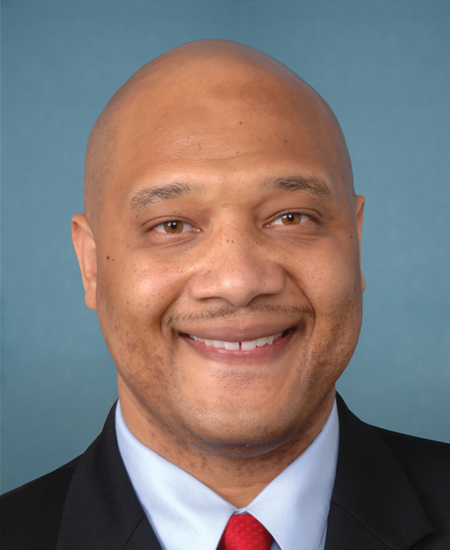
Rep. André Carson
Sponsored bills
Protection of Kids in Immigrant Detention Act or PROKID Act This bill establishes the Office of the Ombudsperson for Immigrant Children in Government Custody within the Department of Health and Human Services (HHS). The office shall ensure that if government detention of an immigrant child is necessary, that child is held in the least restrictive setting. The office shall also advocate for (1) the quick and safe release of such a detained child, and (2) a child who was detained with family to be released concurrently with a parent or legal guardian. The office's duties shall include (1) monitoring facilities with immigrant children held in government custody to ensure compliance with applicable laws and standards, (2) investigating claims of mistreatment and complaints against foster care providers, (3) reviewing contested decisions about the placement of an immigrant child, and (4) reviewing data from HHS and the Department of Homeland Security (DHS) relating to such children. The office may also offer individual case assistance to such a detained child who requires expedited processing or elevated attention. The office may also issue subpoenas with HHS approval. DHS and HHS must ensure that the office has the ability to conduct investigative and monitoring activities, including by providing unobstructed access to any detention facility with immigrant children. The office and DHS shall enter into a memorandum of understanding to coordinate oversight between DHS and HHS. The bill also establishes an expert advisory committee to assist the office and an interagency working group to identify and discuss concerns related to detained immigrant children.
Confronting and Correcting Historical Injustices Act This bill establishes the Commission for Review and Correction of Historical Injustices to identify, investigate, and review instances of discrimination and other historical injustices carried out by federal agencies. The commission must also periodically recommend legislative or executive action to resolve such instances. In carrying out its duties, the commission must set up a mechanism to allow for public comment and input on instances of discrimination. In addition, the bill grants the commission authority to issue a subpoena to any agency that the majority of the commission deems necessary.
U.S. Citizenship Act This bill establishes a path to citizenship for certain undocumented individuals. The bill also replaces the term alien with noncitizen in the immigration statutes and addresses other related issues. Specifically, the bill establishes a new status of lawful prospective immigrant . This status shall be available to an applying noncitizen who meets certain requirements, including being continually present in the United States from January 1, 2021, and passing background checks. After at least five years with this status, an eligible noncitizen may apply for and receive permanent resident status. The bill also provides permanent resident status to certain applying noncitizens, specifically for eligible noncitizens who (1) entered the United States as a minor, (2) were eligible for temporary protected status or deferred enforced departure on January 1, 2017, or (3) worked a certain amount of agricultural labor in the five years prior to applying. Among other things, the bill also redefines for immigration purposes the term conviction to exclude convictions that have been expunged or vacated, requires the Department of State to implement a strategy to advance reforms in Central America and address key factors contributing to migration from the region to the United States, requires the State Department to establish refugee processing centers in Central America, requires Customs and Border Patrol sectors and stations to have a certain number of employees with certain qualifications such as paramedic training, generally prohibits religious discrimination in granting or denying immigration benefits, and establishes grant programs for providing training and services to immigrants.
Lenders Offer Assistance Now Act or the LOAN Act This bill requires the discharge of a private education loan in the event of the student borrower's disability. Such a discharge is not considered income for tax or other purposes. Additionally, the bill prohibits the automatic default of a private education loan due to the disability of a loan cosigner. Furthermore, the bill generally permits the discharge of student loans in bankruptcy. Under current law, student loans are not dischargeable in bankruptcy unless repayment would be an undue hardship to the debtor and the debtor's dependents.
Civil Rights Legacy Protection Act This bill makes it a crime to deface, damage, or destroy certain memorials that commemorate civil rights events or figures. An individual convicted under this act must pay restitution and is subject to additional penalties that vary based on the cost of the defacement, damage, or destruction.
Domestic Violence Public Health Emergency Guidance Act This bill requires the Department of Justice to issue guidance to law enforcement agencies on model practices for addressing domestic violence and protecting the safety of law enforcement officers during the COVID-19 (i.e., coronavirus disease 2019) public health emergency.
White Supremacy in Law Enforcement Information Act of 2021 This bill requires the Department of Justice (DOJ), in coordination with the Federal Bureau of Investigation (FBI), to prepare and release an intelligence assessment describing the relationship between white supremacy and law enforcement. The assessment must include information on white supremacist links to and infiltration of law enforcement agencies. The bill also requires DOJ, in coordination with the FBI, to release (1) past intelligence assessments related to white supremacist links to and infiltration of law enforcement agencies, and (2) actions to address such links and infiltration.
Consortia-Led Energy and Advanced Manufacturing Networks Act This bill requires the Department of Commerce to carry out a grant program for establishing consortia to enhance U.S. economic, environmental, and energy security by promoting domestic research and commercial application of clean technologies and advanced manufacturing processes. Clean technology means technologies, production processes, or methodologies that produce energy from renewable energy sources; transmit, distribute, or store energy more efficiently; enhance energy efficiency for buildings and industry; enable the development of a Smart Grid; produce an advanced or sustainable material with energy or energy efficiency applications; improve energy efficiency for transportation; or enhance water security through improved water management, conservation, distribution, or end use applications.
This resolution urges (1) the President to issue a proclamation recognizing Earth Day; and (2) governments and people to continue building upon the Paris Agreement and other efforts to ensure that future generations inherit a livable, sustainable, and ecologically rich planet. The resolution reaffirms that immediate action is needed to reduce greenhouse gas emissions and ameliorate environmental injustices in order to protect our planet, public health, and overall well-being of all people and wildlife. In addition, it encourages the American people to mark Earth Day by working to address environmental challenges, educate others about the need for year-round action, and honor the stewardship ethic for which Senator Gaylord Nelson stood.