Maddy summaryHR 7134, the "Destroy Zombie Guns Act," requires businesses that destroy firearms to dismantle and destroy every component of a firearm during the destruction process. It directly affects licensed firearm destruction companies that handle weapons for disposal, ensuring no parts remain usable. The bill amends federal law to prohibit partial destruction, defines "engaged in the business" for these companies, and adds penalties including fines, up to two years in prison, and license suspension or revocation for violations. This policy change aims to prevent firearms from being reassembled after destruction.
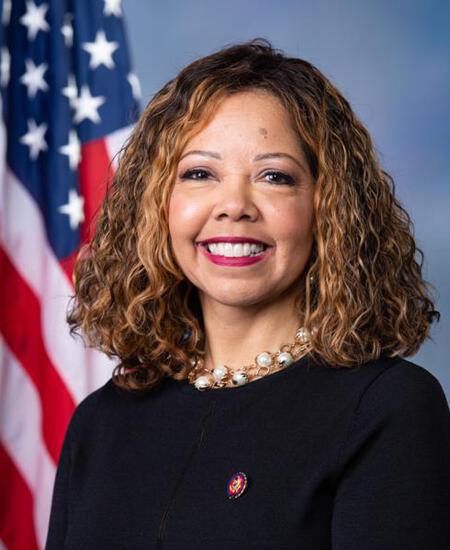
Rep. Lucy McBath
Sponsored bills
Maddy summaryThis bill requires U.S. Department of Homeland Security (DHS) law enforcement officers and agents to follow a new department-wide policy on use of force. It mandates that officers use only objectively reasonable force, prioritize de-escalation, ban chokeholds and carotid restraints, and complete regular training. The policy also requires DHS components to establish internal review teams to analyze incidents and report detailed data every six months - including incidents causing injury, death, or involving deadly force - to the public via the DHS website. Additionally, DHS must brief Congress and inform the public within 24 hours of any incident resulting in hospitalization or death.
Maddy summaryHRES 1004 is a symbolic House resolution honoring Dr. Martin Luther King, Jr.'s legacy by celebrating diversity and condemning hate. It specifically calls for the House to celebrate his 97th birthday on January 19, 2026, and to condemn harassment, discrimination, or prejudice targeting Black Americans, Indigenous people, Jewish, Asian-American/Pacific Islander, Muslim, Hispanic/Latino communities, and LGBTQ+ individuals. The resolution affirms Dr. King’s teachings on unity and equality but does not create new laws or impose obligations on any entity. As a ceremonial resolution, it has no legal effect and directly affects no individuals or groups.
Maddy summaryHRES 996 is a resolution introduced by multiple House members to impeach Kristi Lynn Arnold Noem, the Secretary of Homeland Security, for alleged violations of law and the Constitution. It outlines three articles of impeachment: obstructing congressional oversight by denying access to detention facilities and withholding funds, violating public trust through warrantless arrests and excessive force (including tear gas on children), and self-dealing by awarding federal contracts to associates without competitive bidding. If approved by the House, this resolution would formally charge Noem, triggering a Senate trial to determine her removal from office. The resolution itself does not enact new policy but initiates the constitutional impeachment process against a sitting Cabinet official.
Maddy summaryThis bill amends the definition of "adequate consideration" in retirement law to clarify how Employee Stock Ownership Plans (ESOPs) value company stock. It allows ESOP fiduciaries (plan managers) to rely on independent appraisals that follow IRS guidelines (Revenue Ruling 59-60) when determining the fair value of company stock for retirement decisions. The change directly affects ESOPs and the companies that use them to provide employee retirement benefits. It simplifies the valuation process for these plans by establishing a clear standard for acceptable appraisals.
Maddy summaryHRES 990 is a resolution recognizing the 113th anniversary of Delta Sigma Theta Sorority, Incorporated, founded in 1913 at Howard University. It honors the sorority's century of community service and global initiatives, including its focus on education, economic development, and international outreach. The resolution is symbolic and non-binding, celebrating the organization's legacy without creating new policy or affecting specific groups. It was introduced by multiple House members in January 2026.
Maddy summaryHR 6088, the *Restoring Food Security for American Families and Farmers Act of 2025*, repeals specific sections (10101-10108) from a prior reconciliation law. This action revives previous provisions related to food security programs that were modified by those repealed sections. The bill directly affects federal food assistance and agricultural support programs by restoring their prior legal framework. It does not create new policies but reverses recent changes to existing food security measures.
Maddy summaryHR 909, the Crime Victims Fund Stabilization Act of 2025, modifies how funds from the False Claims Act are deposited into the Crime Victims Fund. It specifies that from 2025 through 2029, certain False Claims Act proceeds (specifically those for qui tam plaintiff payments and government damage reimbursements) cannot be deposited into the fund. This change directly affects the composition of the Crime Victims Fund by excluding these specific revenue streams during the specified period. The bill does not create new benefits or alter victim services; it only adjusts fund allocation rules for existing False Claims Act revenues.
Maddy summaryThis bill amends the Higher Education Act to require colleges and universities receiving federal funds to implement evidence-based programs preventing alcohol and substance misuse among students and staff, replacing outdated terms like "drug abuse" with "substance misuse." It establishes a $15 million annual grant program (2027-2031) to fund recovery support services, integrated mental health and substance use care, overdose prevention, and campus-wide crisis response training. Institutions must certify compliance with these programs and report on implementation to Congress. The law directly affects all eligible higher education institutions, mandating updated prevention frameworks and collaboration with health agencies.
Maddy summaryThis concurrent resolution (HCONRES 69) commemorates the 15th anniversary of the January 8, 2011, Tucson shooting that killed six people and injured 13, including former Congresswoman Gabby Giffords. It honors the victims, survivors, and Giffords - now a prominent advocate for gun violence prevention - and recognizes her leadership in promoting civility and reducing gun violence. The resolution also commends Tucson residents and first responders for their resilience and reaffirms Congress’s commitment to respectful dialogue and opposing political violence. As a ceremonial resolution, it does not create new laws or policies.