

Maddy summaryThe Water Infrastructure Modernization Act of 2025 amends federal water law to define and support "intelligent water infrastructure technology," including real-time monitoring systems, AI-driven wastewater optimization tools, leak detection sensors, and advanced metering for conservation. It directly affects municipal water systems and utilities by expanding eligible uses for federal grants - allowing funds for implementing these technologies (like predictive aquifer recharge systems) while prohibiting grants for planning or maintenance. The bill increases annual grant funding from $25 million to $50 million (starting in 2028) and requires annual reports to Congress on funded projects and their resiliency improvements. This creates a clear pathway for communities, especially disadvantaged ones, to access federal support for modernizing aging water infrastructure through data-driven solutions.
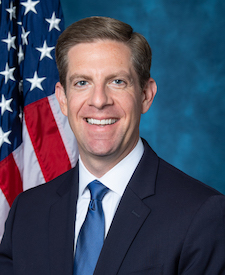
Rep. Mike Levin
Sponsored bills
Maddy summaryHR 5894, the RESTRAIN Act, prohibits the United States from conducting any explosive testing of nuclear weapons or other nuclear explosions. It directly affects U.S. nuclear weapons programs by banning such testing using federal funds for fiscal year 2026 and beyond. The bill's key mechanism is a funding restriction: no money authorized for fiscal year 2026 or later may be used for explosive nuclear testing or other nuclear explosions. However, it explicitly excludes subcritical nuclear tests (which do not sustain a chain reaction) from this prohibition. The law aims to enforce a permanent ban on nuclear detonations while preserving the ability to conduct certain non-explosive testing.
Maddy summaryHR 6097, the Transition Improvement by Estimating Risk Act of 2025 (TIER Act), modifies the military's Transition Assistance Program (TAP) to better support service members transitioning to civilian life. The bill requires TAP counselors to consider four new factors when designing individual transition pathways: child care needs (including Exceptional Family Member Program enrollment), employment status of other household adults, duty station location (including separation from family), and impacts of operational tempo on the member and household. These additions aim to create more personalized transition plans addressing specific family and service-related challenges. The bill directly affects active-duty service members and their families during the separation process. It changes the TAP planning process by mandating these specific considerations be integrated into individualized transition assistance.
Maddy summaryHR 6056, the International Human Rights Defense Act of 2025, establishes a permanent Special Envoy at the State Department to lead U.S. foreign policy efforts addressing discrimination and violence against LGBTQI+ people globally. The bill requires the U.S. government to develop and update a biannual global strategy to prevent criminalization and violence against LGBTQI+ individuals, mandate detailed reporting on such abuses in annual country reports, and ensure all U.S. foreign assistance programs include inclusive nondiscrimination policies. This legislation directly affects U.S. foreign policy implementation, federal agencies receiving funding, and LGBTQI+ communities facing persecution worldwide. The bill aims to coordinate U.S. government efforts across departments and with international partners to advance LGBTQI+ rights globally through concrete policy mechanisms.
Maddy summaryThis bill requires adding the names of 74 crew members of the USS Frank E. Evans (killed in a 1969 incident) to the Vietnam Veterans Memorial Wall within one year of enactment. It directly affects the memorial's inscription and honors the families of those lost. The Secretary of Defense must consult on placement due to space limits and is exempt from standard memorial rules under the Commemorative Works Act.
Maddy summaryThis bill ensures continuous funding for SNAP (food assistance) and WIC (nutrition program for mothers/children) during government funding gaps. It authorizes emergency Treasury funds to cover SNAP/WIC benefits and reimburse states for costs if Congress fails to pass regular appropriations for the Department of Agriculture by September 30, 2025. The funding covers missed payments retroactively from September 30, 2025, through the bill’s enactment date, and continues until either regular appropriations pass or September 30, 2026. It directly affects low-income households relying on these programs and state agencies administering them during funding lapses.
Maddy summaryThis bill, HR 5973, requires federal immigration enforcement personnel to follow strict limits on force use, including proportional application, mandatory de-escalation efforts, and prohibitions on equipment like flash bangs or rubber bullets except for specific public safety threats. It mandates body-worn and vehicle cameras for all operations, with footage retained for one year (three years for force incidents or complaints), and grants affected individuals the right to inspect recordings. The law also requires annual training on force policies, First Amendment compliance, and racial bias avoidance, while demanding detailed quarterly reports to Congress on force usage, assaults on agents, and equipment approvals. These provisions directly affect all federal immigration agents conducting enforcement actions, aiming to increase transparency and accountability during operations.
Maddy summaryThe American Energy Independence and Affordability Act extends multiple clean energy tax credits that were set to expire between 2025 and 2026. It specifically extends residential clean energy credits through 2034, clean electricity investment credits for wind and solar through 2032, and clean vehicle credits for electric vehicles through 2032. The bill also reinstates special rates for sustainable aviation fuel and modifies requirements for energy-efficient home improvements. These provisions directly affect homeowners installing solar panels, businesses investing in clean energy infrastructure, and manufacturers producing clean energy equipment.
Maddy summaryHR 5835, the REPO Implementation Act of 2025, establishes a mechanism to use frozen Russian sovereign assets held abroad for Ukraine's benefit. It creates a "Ukraine Support Fund" to hold these assets without confiscation and requires the U.S. Treasury to invest them in U.S. government obligations. The bill mandates quarterly transfers of at least $250 million from the fund to Ukraine for assistance, with final amounts spent when less remains. It also requires the President to report to Congress on Russian assets held by foreign countries (including G7/EU members) and urges diplomatic efforts to secure similar asset repurposing from those nations.
Maddy summaryHRES 824 is a ceremonial House resolution recognizing the religious and historical significance of Diwali, the festival of lights. It acknowledges Diwali’s meaning across Hindu, Sikh, and Jain traditions - symbolizing light over darkness, good over evil, and marking spiritual milestones like Guru Hargobind’s release and Lord Mahavira’s Nirvana. The resolution expresses respect for Indian-Americans and the global Indian diaspora, highlighting Diwali’s role in U.S. religious diversity. As a non-binding recognition, it does not create new laws, policies, or funding, but formally honors the cultural observance.