

NDO Fairness Act This bill makes various changes to the procedures and requirements with respect to delayed notification orders. Current law authorizes the government to compel providers of electronic communication services or remote computing services to disclose certain records and information pertaining to subscribers and customers. Further, a provider may notify subscribers or customers of the government's request for records and information unless the government obtains a delayed notification order. With respect to delayed notification orders, the bill raises the standard for courts to grant a delayed notification order, requires courts to issue delayed notification orders only after issuing a written determination based on specific facts, requires orders to be narrowly tailored, and shortens the duration of delayed notification orders. Finally, the bill requires the Department of Justice to report annually on data related to delayed notification orders, including the number of customers targeted; the number of applications for orders; the number of orders granted, extended, or denied; and the number of orders targeting members of the media or conduct related to certain protected activities.
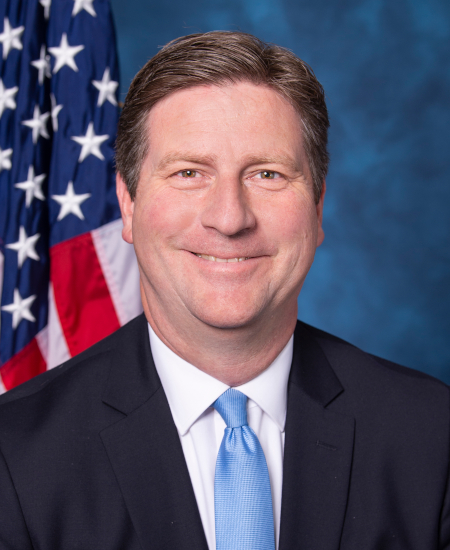
Rep. Greg Stanton
Sponsored bills
Hmong Congressional Gold Medal Act This bill provides for the award of a Congressional Gold Medal to the Hmong people in recognition of their highly distinguished service in the Vietnam War and the fight against communism.
Sergeant First Class Heath Robinson Honoring our Promise to Address Comprehensive Toxics Act of 2022 or the Honoring our PACT Act of 2022 This bill addresses health care, presumption of service-connection, research, resources, and other matters related to veterans who were exposed to toxic substances during military service. TITLE I--EXPANSION OF HEALTH CARE ELIGIBILITY Conceding Our Veterans' Exposure Now and Necessitating Training Act of 2022 or the COVENANT Act of 2022 Subtitle A--Toxic-Exposed Veterans (Sec. 103) This section provides eligibility for Department of Veterans Affairs (VA) medical care, including mental health services and counseling, to veterans who (1) participated in a toxic exposure risk activity (e.g., a qualifying activity that requires a corresponding entry in an exposure tracking record system, such as the Individual Longitudinal Exposure Record); (2) served in specified locations on specified dates; or (3) deployed in support of a specified contingency operation. (Sec. 104) The VA must complete an assessment to determine (1) the personnel and material resources necessary to implement the expanded provision of care to the veterans specified in Section 103 of this bill (e.g., veterans who participated in a toxic exposure risk activity), and (2) the total number of veterans who served in specified locations on specified dates and receive hospital care or medical services from the VA, disaggregated by priority group. Subtitle B--Certain Veterans Of Combat Service And Other Matters (Sec. 111) This section extends the eligibility period for VA hospital care, medical services, and nursing home care for combat veterans who served after September 11, 2001, and are toxic-exposed veterans, including those who did not enroll to receive VA care during the eligibility period. TITLE II--TOXIC EXPOSURE PRESUMPTION PROCESS Toxic Exposure in the American Military Act of 2022 or the TEAM Act of 2022 (Sec. 202) This section prescribes the procedures for establishing or removing presumptions of service-connection based on toxic exposure, including by providing for public notice and comment periods and the establishment of a working group to advise and make recommendations regarding toxic exposures during military service. (Sec. 203) The VA must conduct outreach to certain claimants when a law establishes or modifies a presumption of service-connection. Specifically, the VA must identify and conduct outreach for all claims for compensation for a service-connected disability that (1) were submitted to the VA, (2) were evaluated and denied before the new law went into effect, and (3) might have been evaluated differently if the modification had been applicable to the claim. (Sec. 204) The VA must conduct outreach to certain claimants when a law establishes or modifies a presumption of service-connection in relation to dependency and indemnity compensation. Specifically, the VA must identify and conduct outreach for all claims for dependency and indemnity compensation related to service-connected conditions that (1) were submitted to the VA, (2) were evaluated and denied before the new law went into effect, and (3) might have been evaluated differently if the modification had been applicable to the claim. TITLE III--IMPROVING THE ESTABLISHMENT OF SERVICE CONNECTION PROCESS FOR TOXIC-EXPOSED VETERANS Veterans Burn Pits Exposure Recognition Act of 2022 (Sec. 302) This section establishes a presumption that veterans were exposed to certain substances, chemicals, and airborne hazards during military service in specified locations in specified time frames (e.g., on or after August 2, 1990, in Bahrain). (Sec. 303) The VA must provide a veteran with a medical examination regarding the nexus between a disability and toxic exposure risk activity if a veteran submits a disability compensation claim for a service-connected disability with insufficient evidence. TITLE IV--PRESUMPTIONS OF SERVICE CONNECTION Mark Takai Atomic Veterans Healthcare Parity Act of 2022 (Sec. 401) This section includes veterans who participated in the cleanup of Enewetak Atoll in the Marshall Islands between January 1, 1977, and December 31, 1980, as radiation-exposed veterans for purposes of the VA presumption of service-connection for specified cancers. Palomares or Thule Veterans Act of 2022 (Sec. 402) This section includes veterans who participated in the cleanup of radioactive materials at Palomares, Spain, or in the response effort following the on-board fire and crash of a U.S. Air Force B-52 bomber in the vicinity of Thule Air Force Base, Greenland, as radiation-exposed veterans for purposes of the presumption of service-connection for specified cancers. Veterans Agent Orange Exposure Equity Act of 2022 (Sec. 403) This section expands the presumption of service-connection for diseases associated with exposure to certain herbicide agents for veterans who served in Vietnam between January 9, 1962, and May 7, 1975. Specifically, the bill expands the presumption to cover veterans who served during specified time frames in Thailand at any U.S. or Royal Thai bases, Laos, Cambodia, Guam or American Samoa or the waters thereof, or on Johnson Atoll. Under the bill, such veterans are eligible for VA hospital care, medical services, and nursing home care. Fair Care for Vietnam Veterans Act of 2022 (Sec. 404) This section provides a presumption of service-connection for hypertension and monoclonal gammopathy of undetermined significance (MGUS) for veterans who performed service specified in Section 403 of this bill (e.g., in Thailand). (Sec. 405) This section addresses disability compensation and care issues for Persian Gulf War veterans, including by expanding who qualifies as a Persian Gulf Veteran. Presumptive Benefits for War Fighters Exposed to Burn Pits and Other Toxins Act of 2022 (Sec. 406) This section establishes a presumption of service-connection for specified diseases associated with exposure to specified substances, chemicals, or airborne hazards becoming manifest in veterans who served in specified locations during specified times (e.g., Iraq on or after August 2, 1990). TITLE V--RESEARCH MATTERS (Sec. 501) The VA must collaborate with various entities, such as the Department of Defense (DOD), to establish the Toxic Exposure Research Working Group to (1) identify collaborative research activities and resources and conduct such research related to health consequences of toxic exposure during military service, and (2) develop a five-year strategic plan for collaborative research activities. (Sec. 502) The VA must continually analyze all clinical data obtained in connection with its provision of hospital care, medical services, and nursing home care for toxic-exposed veterans that is likely to be scientifically useful in determining the association between a veteran's medical condition and a toxic exposure. (Sec. 503) The VA must conduct an updated analysis of total and respiratory disease mortality in veterans who served in specified locations at specified times, such as in Kuwait on or after August 2, 1990. (Sec. 504) The VA must conduct an epidemiological study on the health trends of veterans who served in the Armed Forces after September 11, 2001. (Sec. 505) The VA must study the incidence of cancer in veterans to determine trends in the rates of incidence of cancer in veterans. (Sec. 506) The VA must enter into an agreement with the National Academies of Sciences, Engineering, and Medicine (NASEM) to study the health trends of veterans who, during active service, participated in activities relating to the Manhattan Project or resided near specified locations proximate to waste arising from activities in connection with the Manhattan Project. (Sec. 507) The VA must enter an agreement with NASEM to study possible relationships between toxic exposures experienced during service in the Armed Forces and mental health conditions. (Sec. 508) The Government Accountability Office must study the state of access and barriers to benefits and services furnished by the Veterans Benefits Administration (VBA) and the Veterans Health Administration (VHA) to veterans in territories and Freely Associated States of the United States. (Sec. 509) The VA must establish and maintain a publicly accessible website to serve as a clearinghouse for the publication of all toxic exposure research carried out or funded by the executive branch of the federal government. (Sec. 510) The VA must report to Congress on the health effects of jet fuels used by the Armed Forces. TITLE VI--IMPROVEMENT OF RESOURCES AND TRAINING REGARDING TOXIC-EXPOSED VETERANS Fairly Assessing Service-related Toxic Exposure Residuals Presumptions Act of 2022 or the FASTER Presumption Act of 2022 (Sec. 602) The VA must publish a list of its resources for toxic-exposed veterans and veterans who report toxic exposure, families and caregivers of such veterans, and survivors of such veterans who are receiving death benefits. The VA must also develop an informative outreach program for veterans on illnesses that may be related to toxic exposures. (Sec. 603) The VA must incorporate a screening to help determine potential toxic exposures during active military service as part of the health care screening furnished to veterans enrolled in the VA health care system. (Sec. 604) The VA must provide its health care personnel with education and training to identify, treat, and assess the impact on veterans of illnesses related to toxic exposures. Additionally, the VA must incorporate an annual training program for processors of claims for disability benefits relating to service-connected disabilities based on toxic exposures. TITLE VII--RESOURCING (Sec. 701) The VA is authorized to use funds appropriated to the Cost of War Toxic Exposures Fund to continue the modernization, development, and expansion of capabilities and capacity of information technology systems and infrastructure of the VBA to support expected increased claims processing for newly eligible veterans. The VA must submit a plan to Congress for the modernization of the information technology systems of the VBA. (Sec. 702) This section authorizes the VA to carry out various medical facility leases at specified amounts in FY2023 (e.g., an outpatient clinic in Allentown, Pennsylvania). (Sec. 703) This section prohibits funds from being appropriated, obligated, or expended for any major VA medical facility lease unless the congressional veterans affairs committees each adopt a resolution approving the lease. Additionally, this section (1) modifies the requirements for the prospectus that must be submitted regarding a request for funding a major medical facility lease, and (2) authorizes the VA to carry out interim leasing actions as it considers necessary for approved major medical facility leases and replacement leases that do not require approval. (Sec. 704) The VA may enter into a lease with an academic affiliate or other specified entity to acquire space for the purpose of providing health care resources to veterans. (Sec. 705) This section modifies the enhanced-use lease authority of the VA, including by permanently authorizing such authority and extending the maximum term of such leases from 75 to 99 years. This section also provides appropriations for entering into enhanced-used leases and authorizes the VA to deposit unutilized funds received under an enhanced-use lease in the Medical Facilities or the Construction, Minor Projects accounts. (Sec. 706) This section prescribes the authority for joint leasing actions between DOD and the VA. (Sec. 707) This section provides specified appropriations for major medical facility leases through FY2031. TITLE VIII--RECORDS AND OTHER MATTERS (Sec. 801) The VA must conduct an epidemiological study on the health trends of veterans who served at Fort McClellan at any time between January 1, 1935, and May 20, 1999. (Sec. 802) DOD must brief Congress on the quality of its databases that provide the information presented in the Individual Longitudinal Exposure Record and the usefulness of the record in supporting members of the Armed Forces and veterans in receiving health care and benefits. (Sec. 803) The VA must provide a means for veterans to update their records as necessary to reflect exposures to occupational or environmental hazards in the Individual Longitudinal Exposure Record. Camp Lejeune Justice Act of 2022 (Sec. 804) This section provides a federal cause of action for individuals who resided, worked, or were otherwise exposed (including in utero) for not less than 30 days to water at Camp Lejeune, North Carolina, between August 1, 1953, and December 31, 1987. (Sec. 805) This section establishes the Cost of War Toxic Exposures Fund in the Treasury to be administered by the VA to invest in the delivery of veterans' health care and benefits associated with exposures to environmental hazards during military services and medical and other research relating to exposure to environmental hazards. (Sec. 806) This section provides appropriations to the Cost of War Toxic Exposures Fund to remain available through FY2024. The VA must submit a plan for expending such amounts. (Sec. 807) This section authorizes the VA to provide notice related to claims in an electronic format upon the election of the claimant, including for decisions by the Board of Veterans' Appeals. (Sec. 808) The VA must annually submit a report related to veterans who submit a disability claim for a service-connected disability and were deployed at specified locations at specified times. Additionally, the VA must ensure that VA medical professionals inform a veteran of the Airborne Hazards and Open Burn Pit Registry if a veteran seeks treatment at a VA medical facility for issues related to, or ancillary to, the exposure to toxic airborne chemicals and fumes caused by open burn pits. TITLE IX--IMPROVEMENT OF WORKFORCE OF DEPARTMENT OF VETERANS AFFAIRS (Sec. 901) The VA must develop and implement a national rural recruitment and hiring plan for the VHA to, among other purposes, recruit health care professionals for rural and highly rural community-based outpatient clinics and medical centers. (Sec. 902) The VA may buy out a non-VA service contract of certain health care professionals to whom the VA has offered employment in exchange for the individual agreeing to be employed at a rural or highly rural facility for at least four years. (Sec. 903) The VA must establish qualifications for each of its human resources positions and establish standardized performance metrics for such positions. The VA must also establish or enhance its systems to monitor human resources actions that occur at local, regional, and national levels to improve performance of those actions. The VA must also submit a plan to Congress for the recruitment and retention of human resources employees within the VA. (Sec. 904) This section increases the pay cap for certain employees of the VHA. (Sec. 905) This section expands employment opportunities for housekeeping aides by removing the requirement that competition for VA housekeeping aide positions is restricted to preference eligibles. (Sec. 906) This section modifies the authority of the VA related to hours, conditions and employment, and pay for certain employees of the VHA, specifically certain appointees and Senior Executive Service positions. Additionally, the section authorizes the VA to establish an awards program for certain appointed personnel, such as physicians. (Sec. 907) The VA is authorized to waive any annual premium or aggregate limitation on pay for an employee of the VHA during the calendar year in which the official duty station of the employee is closed or the office, facility, activity, or organization of the employee is realigned. Similarly, the VA may waive any annual premium or aggregate limitation on pay for an employee whose primary duties include providing expanded care for veterans exposed to open burn pits. (Sec. 908) This section eliminates the limitation on aggregate amounts for awards and bonuses for employees of the VA. (Sec. 909) Among other elements, this section provides additional authority for the VA to provide recruitment and relocation bonuses, retention bonuses, merit awards, incentives for critical skills, and student loan repayments. The section increases the cap on the number of college graduates and post-secondary students the VA may hire through an expedited process. The VA may authorize the fixing of the rate of pay for critical positions in the VA, with some limitations. Additionally, the VA may establish a rate for special pay and may waive the limitation on certain payments, such as bonuses.
Recovering America’s Wildlife Act of 2022 This bill provides funding for the conservation or restoration of wildlife and plant species of greatest conservation need, including endangered or threatened species, and establishes related requirements. TITLE I--WILDLIFE CONSERVATION AND RESTORATION (Sec. 101) This title establishes and funds a subaccount of the Wildlife Conservation and Restoration Account, which was established under the Pittman-Robertson Wildlife Restoration Act. The subaccount must be used to support efforts of states, territories, or the District of Columbia to recover and manage wildlife and plant species of greatest conservation need. The Department of the Interior must use a portion of the funding from the subaccount for grants to state fish and wildlife departments, the District of Columbia fish and wildlife department, fish and wildlife departments of territories, nonprofit organizations, or regional associations of fish and wildlife departments. The grants must be used for innovative recovery efforts for species of greatest conservation need, species listed as endangered or threatened species, or the habitats of such species. Funding for the subaccount must supplement existing funds available to the states from funds distributed under the Dingell-Johnson Sport Fish Restoration Act and the Wildlife Conservation and Restoration Account. Recipients of the funding from the subaccount must match federal funds as specified by the title. The Government Accountability Office must study and report on the progress of states, territories, the District of Columbia, and Indian tribes in protecting species of greatest conservation need, endangered species, and threatened species. TITLE II--TRIBAL WILDLIFE CONSERVATION AND RESTORATION (Sec. 201) This title establishes and funds a Tribal Wildlife Conservation and Restoration Account to support Indian tribes' efforts to recover and manage wildlife and plant species of greatest conservation need. Indian tribes are not required to provide matching funds. TITLE III--ENDANGERED SPECIES RECOVERY AND HABITAT CONSERVATION LEGACY FUND (Sec. 301) This title establishes and funds through FY2026 the Endangered Species Recovery and Habitat Conservation Legacy Fund. The U.S. Fish and Wildlife Service must use the fund to (1) implement an Endangered Species Recovery Grant Program; (2) address its interagency consultation responsibilities under the Endangered Species Act of 1973; (3) work with nonfederal entities to conserve wildlife habitat and at-risk species, threatened or endangered species, or species proposed to be listed as threatened or endangered species; or (4) address the development and permitting of voluntary conservation agreements under such act. Amounts made available under the fund must supplement other federal amounts made available to carry out such activities. The President must annually submit to Congress, together with the annual budget of the United States, a list of threatened species and endangered species for which recovery plans will be developed or implemented with amounts from the Endangered Species Recovery and Habitat Conservation Legacy Fund. TITLE IV--REPORT (Sec. 401) Interior must also report on information concerning the amount of grants and contracts that were awarded or are allocated under this bill to Historically Black Colleges and Universities, Hispanic-serving educational institutions, tribally controlled colleges and universities, minority-serving educational institutions, minority-owned business enterprises, women-owned business enterprises, and community-based organizations that are principally administered by, operated by, or serving minority communities.
Advanced Aviation Infrastructure Modernization Act or the AAIM Act This bill establishes a pilot grant program to support advanced air mobility (AAM) infrastructure. AAM infrastructure refers to an air transportation system that transports individuals and property between points in the United States in both controlled and uncontrolled airspace using certain aircraft, including remotely piloted, autonomous, or vertical take-off and landing aircraft. The Department of Transportation (DOT) must award planning grants for AAM infrastructure to (1) state, local, or tribal governments; (2) airport sponsors; (3) transit agencies; (4) port authorities; (5) metropolitan planning organizations; or (6) consortia of such entities. Entities that receive these grants must develop a comprehensive plan for AAM infrastructure, including vertiports (sites that support the landing, takeoff, loading, and other operations of vertical take-off and landing aircraft). Topics covered in the plan must address matters such as identifying locations for AAM infrastructure and available sources of funding. DOT must brief Congress about the plans it receives. The briefing must include an evaluation of the planned or proposed locations for vertiports and a description of best practices or lessons learned through the review of comprehensive plans. If the Federal Aviation Administration issues type certificates for at least two aircraft models designed to provide AAM transportation and other requirements are met, DOT may award construction grants to entities that submitted comprehensive plans. Recipients may use grant funds for design, environmental studies, and other capital costs related to the construction of a public-use vertiport or associated infrastructure. Grants may not be awarded after September 30, 2023.
Commission To Study the Potential Creation of a National Museum of Asian Pacific American History and Culture Act This bill establishes a Commission to Study the Potential Creation of a National Museum of Asian Pacific American History and Culture. The commission must (1) report recommendations for a plan of action for the establishment and maintenance of a National Museum of Asian Pacific American History and Culture in Washington, DC; (2) develop a fundraising plan to support the establishment, operation, and maintenance of the museum through public contributions; (3) obtain an independent review of this fundraising plan, including an analysis of the resources necessary to fund the construction of the museum and its operations and maintenance in perpetuity without reliance on federal funds; and (4) submit a legislative plan of action to establish and construct the museum. The commission may convene a national conference relating to the museum. The commission shall be solely responsible for acceptance of contributions to it and payment of its expenses. No federal funding may be obligated to carry out this bill.
Military Spouse Hiring Act This bill expands the Work Opportunity Tax Credit (WOTC) to include the hiring of a qualified military spouse. (The WOTC permits employers who hire individuals who are members of a targeted group such as qualified veterans, ex-felons, or long-term unemployment recipients to claim a tax credit equal to a portion of the wages paid to those individuals.) A qualified military spouse is any individual who is certified by the designated local agency as being (as of the hiring date) a spouse of a member of the Armed Forces.
Federal Extreme Risk Protection Order Act of 2022 This bill authorizes and establishes procedures for federal courts to issue federal extreme risk protection orders. Additionally, the bill establishes grants to support the implementation of extreme risk protection order laws at the state and local levels, extends federal firearms restrictions to individuals who are subject to extreme risk protection orders, and expands related data collection. Extreme risk protection order laws, or red flag laws, generally allow certain individuals (e.g., law enforcement officers or family members) to petition a court for a temporary order that prohibits an at-risk individual from purchasing and possessing firearms. Among its provisions, the bill authorizes a family or household member, or a law enforcement officer, to petition for a federal extreme risk protection order with respect to an individual who poses a risk to themselves or others; directs the Department of Justice to establish a grant program to help states, local governments, Indian tribes, and other entities implement extreme risk protection order laws; extends federal restrictions on the receipt, possession, shipment, and transportation of firearms and ammunition to individuals who are subject to extreme risk protection orders; and requires the Federal Bureau of Investigation to compile records from federal, tribal, and state courts and other agencies that identify individuals who are subject to extreme risk protection orders.
Maddy summaryHR 301 would amend U.S. law to officially designate "Lift Every Voice and Sing" as the national hymn of the United States. This change would add the song's full composition (words and music) to Title 36 of the U.S. Code, replacing the current designation of "The Star-Spangled Banner" as the sole national anthem for formal recognition purposes. The bill directly affects federal law and official government ceremonies where the national hymn is performed, though it does not alter the status of "The Star-Spangled Banner" as the national anthem. The policy change is purely procedural, establishing a new official designation without impacting any other laws or rights.
Keep Infant Formula Safe and On the Shelves Act of 2022 This bill requires the Food and Drug Administration (FDA) to periodically inspect infant formula manufacturing facilities and addresses related issues. The FDA must periodically conduct inspections, including unannounced inspections, of infant formula manufacturer facilities. If the FDA makes a notable regulatory finding at such a facility, the manufacturer must undergo a comprehensive food safety audit that includes a root cause analysis, enhanced testing, and comprehensive environmental samples. A manufacturer of infant formula or essential medical food must notify the FDA no later than five business days after becoming aware of circumstances that could lead to a shortage of the relevant product in the United States. Further, the FDA must create and annually update a list of U.S. manufacturing facilities that could be converted to manufacture infant formula during a shortage. In the event of a shortage, the FDA may require infant formula manufacturers to provide certain information, such as the quantity of formula in a manufacturer's inventory. The bill also establishes under statute that food, including infant formula, is a critical material essential to the national defense and therefore subject to authorities under the Defense Production Act of 1950. (Such authorities authorize the President to take various actions, such as requiring businesses to prioritize certain government contracts and incentivizing the domestic industrial base to expand the production of critical materials.) The Occupational Safety and Health Administration must issue a fact sheet and provide technical assistance to infant formula manufacturers to promote compliance with occupational health and safety standards.