

Wildfire Response Improvement Act This bill requires the Federal Emergency Management Agency (FEMA) to take specified actions to address issues related to wildfire and drought. Specifically, FEMA must issue such regulations as necessary to update the categories of eligibility and timelines for the fire management assistance program under the Robert T. Stafford Disaster Relief and Emergency Assistance Act to be the same as such categories and timelines under the Public Assistance Program; issue such regulations as necessary to update the Public Assistance Program and Policy Guide to include guidance on the wildfire-specific challenges, including debris removal, emergency protective measures, and the resulting toxicity of drinking water resources; and conduct a review of the benefit cost analysis criteria for mitigation projects under the Stafford Act to consider a broader range of factors, including carbon sequestration, improved water quality, and lessening disaster impact on traditionally underserved communities.
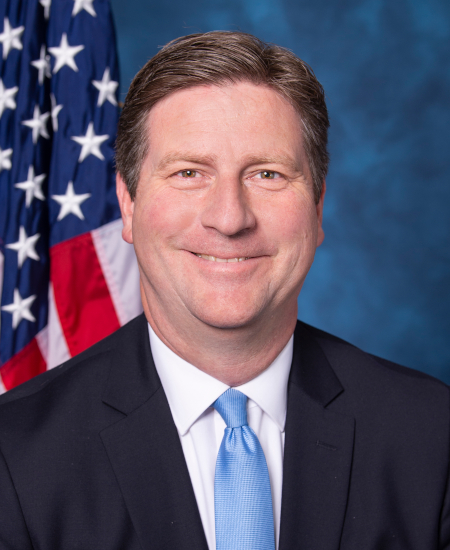
Rep. Greg Stanton
Sponsored bills
Colorado River Drought Response Act This bill authorizes appropriations for the Department of the Interior to reduce the near-term likelihood of Lake Mead (in Arizona and Nevada) and Lake Powell (in Arizona and Utah) declining to critically low water elevations. These reservoirs are part of the Colorado River Basin. The bill also decreases the amount of time Interior has to act on existing requirements to establish grant programs for watershed habitat restoration and large-scale water recycling and reuse in certain western states.
Facilitating Large-Scale Water Recycling and Reuse Projects Act This bill modifies the Bureau of Reclamation's Large-Scale Water Recycling Program, which provides grants to water and power delivery authorities in certain western states for the planning, design, and construction of large-scale water recycling and reuse projects that have a total cost of $500 million or more. Specifically, the bill removes the program's sunset provision and revises eligibility requirements.
Urban Indian Health Confer Act This bill requires the Department of Health and Human Services (HHS) to confer with urban Indian organizations regarding health care for American Indians and Alaska Natives living in urban areas. Currently, only the Indian Health Service (IHS) is required to confer with urban Indian organizations on matters relating to the Indian Health Care Improvement Act. The bill requires HHS to ensure that the IHS and other agencies and offices within HHS confer with urban Indian organizations on (1) matters relating to the Indian Health Care Improvement Act, and (2) other provisions of law relating to health care for American Indians and Alaska Natives.
Elizabeth Dole Home and Community Based Services for Veterans and Caregivers Act of 2022 or the Elizabeth Dole Home Care Act This bill addresses home care and caregiver programs for veterans.
This resolution calls on the government of Rwanda to immediately release Paul Rusesabagina on humanitarian grounds and permit him to return safely to the United States. The resolution calls on the government of Rwanda to ensure Paul Rusesabagina receives access to appropriate, qualified medical professionals and all medical care necessary to guarantee his physical integrity and psychological well-being. The resolution also urges the U.S. government in all interactions with the government of Rwanda to raise the case of Paul Rusesabagina and to press for his immediate release on humanitarian grounds. Finally, the resolution expresses support to the family of Paul Rusesabagina and their commitment to bringing him home.
This resolution expresses support for the designation of Journeyman Lineworkers Recognition Day. (A journeyman lineworker is a person who builds and maintains electrical power systems.)
This resolution calls on the Russian government to immediately release Brittney Griner. The resolution urges the United States, in all interactions with the Russian government, to raise the case of Brittney Griner and to press for her release. The resolution further urges the Russian government to provide consular access to Brittney Griner while she remains in detention and to respect her human rights. Finally, the resolution expresses support to the family of Brittney Griner and a commitment to bringing her home.
My Body, My Data Act of 2022 This bill establishes protections, subject to certain limits, for personal reproductive or sexual health information. This includes information relating to past, present, or future surgeries or procedures, such as the termination of a pregnancy. Specifically, commercial entities, including individuals, nonprofits, and common carriers, may not collect, retain, use, or disclose personal reproductive or sexual health information except (1) with the express written consent of the individual to whom such information relates, or (2) as is strictly necessary to provide a requested product or service. Commercial entities also must provide individuals with access to, and a reasonable mechanism to delete, any of their reproductive or sexual health information upon request. Further, commercial entities must maintain and publish a privacy policy describing their practices with respect to such information. The bill's provisions do not apply to entities that are subject to certain existing health-related privacy regulations, such as the privacy regulations issued under the Health Insurance Portability and Accountability Act of 1996. Additionally, the provisions do not apply to the disclosure of personal reproductive or sexual health information for the publication of newsworthy information of legitimate public concern. The bill provides for enforcement by the Federal Trade Commission and by private civil actions.
Save America’s Forgotten Equines Act of 2021 or the SAFE Act of 2021 This bill prohibits the transporting, receiving, possessing, purchasing, selling, or donation by a person of an equine (e.g., horse) that the person has reason to believe will be slaughtered for human consumption.