Credit Union Board Modernization Act This bill revises the required frequency of meetings held by a credit union's board of directors. Specifically, new credit unions and credit unions with a low soundness rating must meet monthly. All other credit unions must hold at least six meetings annually, with at least one meeting held during each fiscal quarter. Currently, all credit union boards must meet at least once a month.
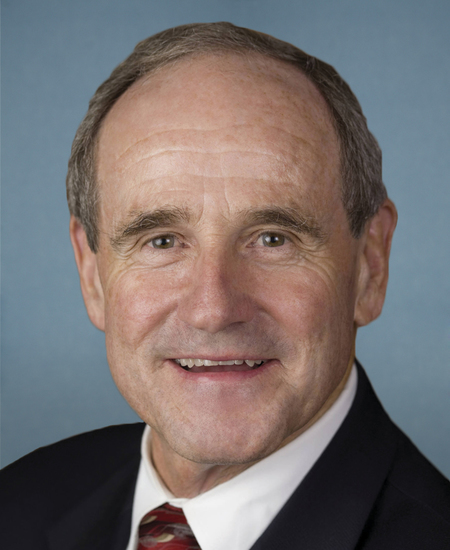
Sen. James E. Risch
Sponsored bills
Maddy summaryS 530, the WEST Act of 2025, repeals a specific Bureau of Land Management (BLM) rule titled "Conservation and Landscape Health" (88 Fed. Reg. 19583, April 3, 2023). The bill directly affects the BLM by nullifying the legal force of this 2023 regulation. It contains no new provisions or policy changes, only the repeal of an existing rule. This is a procedural legislative action with no direct impact on the public, businesses, or other entities.
Maddy summaryThis bill creates new Small Business Administration (SBA) loan programs specifically for nonprofit child care centers that meet strict criteria, such as being tax-exempt 501(c)(3) organizations providing care for children from birth to school age. It makes these eligible centers qualify for standard SBA loans under sections 7(a) and 504, but requires loan guarantees for amounts over $500,000 and prohibits direct SBA lending (requiring partnerships with banks or financial institutions). The bill also mandates annual SBA reports to Congress tracking the number and value of these loans, while prohibiting loan denials based on religious associations and banning the use of funds for religious activities. This directly affects nonprofit child care centers seeking financing for facility improvements, staffing, or program expansion.
Maddy summaryThis joint resolution proposes a constitutional amendment to permanently set the number of justices on the Supreme Court at nine. It would require the Supreme Court to always consist of exactly nine justices, directly affecting the Court's composition. The amendment would become part of the Constitution only if ratified by three-fourths of state legislatures within seven years. This is a procedural change to the Constitution's structure, not a policy affecting other areas.
Maddy summaryS 449, the Expediting Forest Restoration and Recovery Act of 2025, streamlines forest restoration projects by modifying environmental review rules for the U.S. Forest Service. It directs the Forest Service to use categorical exclusions (avoiding full environmental reviews) for hazardous fuel and insect/disease risk reduction projects in designated "insect and disease treatment areas," provided the areas are suitable for timber production or lack timber harvest prohibitions. The bill also requires states to prioritize wildfire/insect risk reduction in these areas and mandates annual public reporting on treated acreage. This primarily affects Forest Service operations and state agencies managing projects under the "Good Neighbor Authority" program, which allows states to use timber sale revenue for additional restoration work.
Supporting Made in America Energy Act This bill requires oil and natural gas lease sales that include certain public land and waters, prohibits lease sales in other areas, and establishes related requirements. Beginning in FY2025, the Department of the Interior must conduct a minimum of four onshore lease sales annually in each state that has federal land available for oil and natural gas leasing. If a lease sale is canceled, delayed, or deferred, Interior must conduct a replacement sale during the same year. Beginning in FY2026, Interior must conduct a minimum of two offshore, region-wide lease sales annually in the Gulf of Mexico Region of the Outer Continental Shelf (OCS) by specified dates. The sales must include the Central Gulf of Mexico Planning Area and the Western Gulf of Mexico Planning Area. Interior must also conduct a minimum of six offshore lease sales of at least 1 million acres each over a 10-year period in the Cook Inlet Planning Area. The bill sets a 12.5% royalty rate for such leases. Interior must plan and approve the subsequent OCS oil and gas leasing programs by specified deadlines. The bill extends through 2035 a moratorium on oil and gas leasing in certain eastern and central portions of the Gulf of Mexico and expands the moratorium to include the South Atlantic Planning Area and the Straits of Florida Planning Area. The bill also requires the President to obtain congressional approval before impeding or circumventing certain federal energy mineral leasing processes.
Maddy summaryThis bill would require federal agencies to submit detailed reports about new regulations to Congress before they take effect. Major rules (defined as those with an annual economic effect of $100 million or more, or significant effects on competition, employment, or public safety) would need congressional approval via a joint resolution before taking effect, with Congress having 70 days to act. Nonmajor rules would have a different, shorter review process. The bill would also require agencies to publish cost-benefit analyses and other supporting documentation, and would mandate that rules be reviewed and potentially reapproved after 10 years.
Maddy summaryS 383 (the JOBS Act of 2025) expands Federal Pell Grant eligibility to students enrolled in certain short-term job training programs at eligible institutions of higher education. The bill creates a "job training Federal Pell Grant" for programs meeting specific criteria: 150-600 clock hours over 8-15 weeks, aligned with high-demand industry sectors, and leading to recognized postsecondary credentials that meet employer hiring requirements or licensure prerequisites. It also lowers the minimum Pell Grant award from 10% to 5% of the full annual amount. This directly affects students seeking career-focused training and institutions offering qualifying programs that validate industry partnerships.
Maddy summaryThe Fair Access to Banking Act (S 401) prohibits large financial institutions ($10 billion+ in assets) and payment networks from denying services to lawful businesses based on political or reputational factors, such as the type of legal business they operate. It requires banks to justify denials using objective, risk-based standards instead of category-based decisions, and mandates written explanations for denials. The law enables lawsuits against violators with treble damages and civil penalties up to 10% of service value (capped at $10,000 per violation). It directly affects major banks, payment processors, and credit unions that serve large-scale customers, ensuring fair access for businesses operating within federal law.
Maddy summaryThis bill would eliminate diversity, equity, and inclusion (DEI) programs across federal agencies by requiring the closure of DEI offices, rescinding related executive orders (including those on racial equity and LGBTQ+ inclusion), and prohibiting federal funds from being used for DEI-related activities. It defines "prohibited diversity, equity, or inclusion practice" as including training that asserts certain groups are inherently superior or inferior, or requiring employees to sign statements about such concepts. The bill affects all federal agencies, personnel, contractors, and grantees by banning DEI training, offices, and related activities while exempting Equal Employment Opportunity offices and disability-related programs. It also creates a private cause of action allowing individuals to sue for violations with penalties of $1,000 per violation per day.