

Maddy summaryThis bill, known as Kayleigh's Law Act of 2026, requires federal courts to issue permanent restraining orders against defendants convicted of certain serious crimes, prohibiting them from contacting their victims for the rest of their lives. The law applies specifically to individuals convicted of violent felonies or felony offenses involving sexual acts, including crimes like child exploitation and human trafficking. Courts must include these orders in sentencing, and violations are treated as contempt of court, while the only way to lift the order is if the conviction is overturned or pardoned. The bill also ensures that victims cannot be charged any fees for obtaining these protective orders and clarifies that the restrictions apply regardless of state laws.
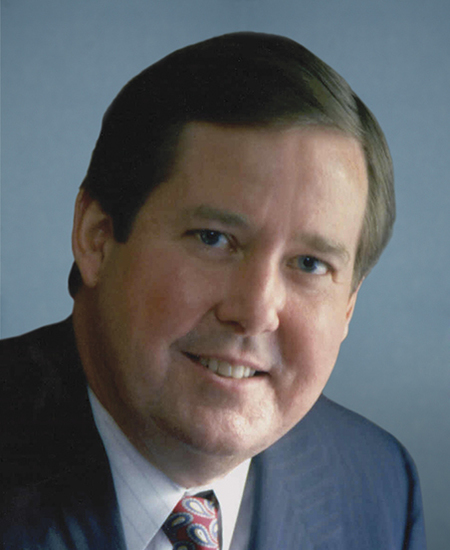
Rep. Ken Calvert
Sponsored bills
This bill designates the facility of the United States Postal Service located at 6444 San Fernando Road in Glendale, California, as the "Paul Ignatius Post Office".
Maddy summaryHR 2175 designates the U.S. Postal Service facility at 130 South Patterson Avenue in Santa Barbara, California, as the "Brigadier General Frederick R. Lopez Post Office Building." The bill updates all official U.S. government references to this location to reflect the new name. This is a ceremonial naming bill with no policy changes or direct impact on residents or services.
Maddy summaryThis bill makes technical adjustments to the legal definition of the Pechanga Band of Luiseño Mission Indians Reservation and clarifies how settlement funds can be used for water quality improvements. Specifically, it updates the list of historical dates used to define reservation boundaries and adds a provision to include any future contiguous land held in trust within the Santa Margarita River Watershed. Additionally, the legislation broadens the scope of allowable activities funded by the Pechanga Water Quality account from just desalination to any water quality issues in the Wolf Valley Basin. The bill also authorizes the Secretary of the Interior to formally update the settlement agreement to reflect these changes while ensuring that existing water rights remain unaffected.
Maddy summaryThis bill resolves water rights claims for the Agua Caliente Band of Cahuilla Indians by confirming their right to use up to 20,000 acre-feet of groundwater annually, held in trust by the U.S. government with priority dating to 1876-1877. It establishes a $500 million settlement trust fund to support water infrastructure projects and authorizes the Tribe to impose water fees while preempting certain local taxes on tribal lands. The bill also transfers approximately 1,500 acres of federal land into tribal trust and requires waivers of legal claims related to water rights between the Tribe and water districts.
Maddy summaryThis bill expands public recreational access to Yosemite's Hetch Hetchy Reservoir and Lake Eleanor Basin areas. It increases annual funding for park improvements from $30,000 to $2 million (adjusted for inflation), prohibits recouping costs from water/power customers, and adds wildfire mitigation to maintenance projects. The bill explicitly permits activities like swimming, non-motorized watercraft, camping above high-water marks, and picnicking, while requiring the National Park Service to report on equitable access funding. The report must analyze whether original recreational access intentions were followed and propose adjustments to San Francisco's water/power pricing or fees to cover maintenance costs.
Maddy summaryThe Rooting Out Mislabeled Agriculture Act directs the Department of Agriculture to create and maintain a database of isotopic signatures for processing tomatoes, modeled after an existing system used to detect cotton grown with forced labor in China. This scientific fingerprinting technique analyzes specific ratios of elements like hydrogen and carbon to identify the geographic origin of tomato products sold as paste or mixed into other foods. The bill requires the agency to conduct research on improving these testing methods and coordinate with U.S. Customs and Border Protection to apply the data during import inspections. Additionally, the Secretary of Agriculture must submit a report to Congress within two years detailing the database's establishment, research results, and recommendations for further action.
Maddy summaryHR 5267, the American Franchise Act, clarifies when franchisors can be considered joint employers of franchisee employees under federal labor laws. It defines "substantial direct and immediate control" over essential employment terms like wages, benefits, hours, hiring, and discipline - requiring franchisors to actively set these terms to be deemed joint employers. The bill explicitly excludes routine brand standards, training, or minimal safety requirements from constituting such control. This directly affects franchisors and franchisees by limiting joint employer liability to cases where franchisors exert significant, ongoing influence over core employment decisions. The law applies prospectively to new cases after enactment, not past disputes.
Maddy summaryThis bill amends the Fair Labor Standards Act to clarify that direct sellers and qualified real estate agents (as defined under IRS rules) are not considered "employees" under federal labor law. It directly affects these workers by excluding them from FLSA protections like minimum wage and overtime pay. The key provision inserts a new definition into the law, changing how these professions are classified for labor rights purposes. This is a technical definitional change, not a new policy or program.
Maddy summaryThis House resolution marks the 25th anniversary of the September 11, 2001 terrorist attacks by formally honoring the memory of the nearly 3,000 victims and recognizing the sacrifices made by first responders, military personnel, and the passengers of United Airlines Flight 93. The bill acknowledges the ongoing health challenges faced by survivors and responders, highlighting the role of the World Trade Center Health Program in providing long-term medical support. It also credits charitable organizations and community groups that have continued to assist victims' families and veterans over the past two decades. Finally, the resolution urges the American public to observe the anniversary with ceremonies and reaffirms Congress's commitment to remembering the events and lessons of that day.