Maddy summarySB 706 restores funding for counties to address scrap tire disposal by increasing the portion of tax revenue allocated to local governments from 50% to 75%. It directs the Department of Environmental Quality to use these funds to grant counties assistance for cleaning up scrap tire disposal sites and managing tire-related waste, prioritizing areas with severe disposal problems and financial need. The bill requires counties to demonstrate higher disposal costs than prior tax reimbursements to qualify for grants and mandates annual reporting on fund usage. This directly affects North Carolina counties struggling with scrap tire accumulation, particularly those with limited resources for waste management.
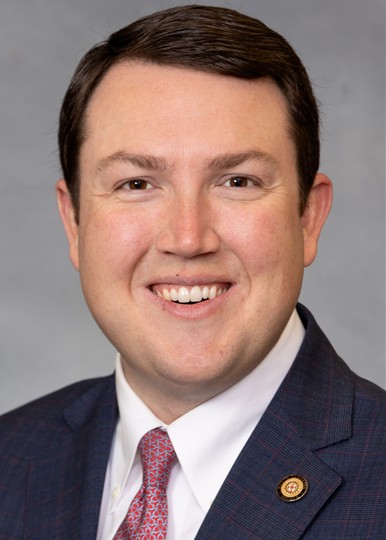
Sen. Dave Craven
Sponsored bills
Maddy summaryThis bill requires North Carolina courts to treat judgments from Catawba Nation tribal courts as valid as out-of-state court orders. It clarifies that counties must have written agreements with the Catawba Nation to provide services on tribal trust lands, beyond basic public health or human services. The bill also authorizes Catawba tribal police to enforce laws within tribal boundaries under specific state statutes, aligning their authority with local law enforcement standards.
Maddy summarySB 690 updates North Carolina's licensing rules for real estate appraisers by incorporating the "Practical Applications of Real Estate Appraisal" (PAREA) program as an approved path to meet experience requirements. It clarifies definitions for key terms like "certified general appraiser," "licensed residential appraiser," and "comparative market analysis" to distinguish formal appraisals from broker price opinions. The bill specifically allows appraisers to use technology-based PAREA training and mentor-supervised case studies instead of traditional supervisor/trainee methods. This directly affects individuals seeking or holding real estate appraiser licenses or certifications in North Carolina. The changes aim to modernize licensing procedures while maintaining standards for valuation work.
Maddy summarySB 639, the North Carolina Farm Act of 2025, updates agricultural water planning, addresses feral swine damage, and strengthens farm conservation protections. It requires the Department of Agriculture to revise the state’s agricultural water plan by 2026, including funding for water infrastructure, conservation practices, and flood mitigation. The bill creates a Feral Swine Working Group with industry and agency representatives to develop control strategies and report annually, while also mandating 100-foot vegetative buffers around protected farm tracts in new subdivisions. Local governments gain authority to deny development permits that would negatively impact agricultural production, directly affecting farmers, landowners, and municipal planning decisions.
Maddy summarySB 248 would allow adopted individuals to obtain their original birth certificates directly from state vital records offices, without requiring a court order. This bill directly affects adults who were adopted, removing a current barrier to accessing their birth records. The key provision eliminates the need for judicial approval, streamlining the process for adopted persons to access their original birth certificates. The bill passed its first reading on March 10, 2025, and is now under review by the Judiciary Committee.
Maddy summaryThis bill provides local boards of education with a new alternative for setting their school calendars, directly affecting public schools and students. It allows schools to start as early as the Monday closest to August 19, provided fall and spring semesters have an equal number of instructional days, and end no later than the Friday before the last Monday in May. The bill also establishes stricter enforcement mechanisms, enabling the State Board of Education to investigate non-compliance and withhold central office administration funds from local boards that fail to follow calendar requirements. Additionally, it permits residents or businesses to file civil actions against non-compliant local boards, potentially leading to court-ordered remedies, attorney's fees, and civil penalties.
Maddy summarySB 145 proposes authorizing Mecklenburg County to levy an additional 0.5% sales tax for transportation funding, subject to voter approval. The bill requires that these funds supplement, not replace, existing transportation budgets and must be used exclusively for financing, building, operating, and maintaining public transportation systems within the county. It specifies that tax revenue must be distributed to Mecklenburg County and its public transportation authorities on a per capita basis, with strict rules against using funds for non-transportation purposes. The measure is currently pending in committee and would require a county referendum before implementation.
Maddy summarySB 584 authorizes counties to use specific sales tax revenue to fund local public transportation systems - including buses, light rail, bike lanes, and transit facilities - while requiring these funds to supplement (not replace) existing transportation budgets. It defines "public transportation system" broadly to include infrastructure like bus lanes, shared-ride services, and integrated fare systems. The bill also creates a new metropolitan public transportation authority for counties with over 1 million residents that border another state and operate light rail systems, giving them regional planning powers under specific rules. This authority would manage funding and coordination for transportation projects within its jurisdiction.
Maddy summaryThis Senate Simple Resolution (SR 260) formally asks the North Carolina Senate to consider confirming Dr. Devdutta Sangvai for appointment as Secretary of the Department of Health and Human Services (DHHS). It follows state law requiring Senate confirmation for the Governor's appointment of a department head. The resolution triggers the Senate's formal review process for this specific nomination, which is pending under North Carolina's constitutional requirements. The bill itself does not change policy or create new rules - it solely addresses the procedural step of confirming a gubernatorial appointment.
Maddy summarySB 481 defines key terms for "advanced recycling" in North Carolina, specifically targeting manufacturers using chemical recycling processes. It establishes "mass balance attribution" (a trackable system for counting recycled materials) and "recycled products" (products made via this method), while requiring "third-party certification" for these processes. Crucially, the bill clarifies that products labeled as "recycled" under these definitions still must comply with all existing air, water, and hazardous waste laws. This bill directly affects chemical recycling manufacturers and the regulatory framework governing their products, without creating new environmental requirements. The definitions aim to standardize how recycled content is measured and reported under current environmental statutes.