Maddy summaryThis bill revises North Carolina's burglary and breaking-and-entering laws to increase penalties when a firearm or deadly weapon is used. It raises the felony classification by one level for offenses like burglary (first/second degree), breaking out of a dwelling at night, or entering a building with intent to commit a felony or terrorize occupants, if a weapon was present during the crime. The law directly affects individuals convicted of these specific offenses when a firearm was involved, not the general public. It does not change sentencing for weapon-free offenses or address police pay, despite the title "Back the Blue Pay Act" suggesting otherwise. The changes take effect December 1, 2025.
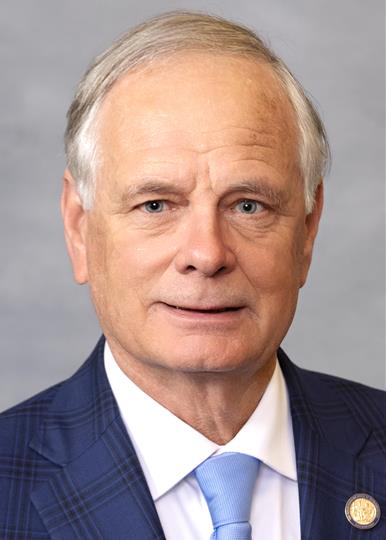
Rep. Steve Tyson
Sponsored bills
Maddy summaryHB 402 requires North Carolina state agencies to assess the financial impact of proposed permanent rules. If a rule would cost affected individuals or businesses $20 million or more over five years, it must be approved by the General Assembly before taking effect. For rules with a $1 million or more annual cost impact, agencies must prepare a fiscal note for review by the Office of State Budget and Management. The bill also mandates a two-thirds vote by agency boards to adopt rules exceeding the $1 million cost threshold. This directly affects state agencies creating regulations and the businesses or residents who would bear the costs of those rules.
Maddy summaryHB 992 creates a new foreclosure process for timeshare owners in North Carolina who fall behind on assessments. It requires managing entities to provide a 30-day written notice detailing delinquency amounts before denying timeshare use or canceling reservations. The bill allows managing entities to rent out the delinquent owner's timeshare to cover unpaid assessments, applying rental proceeds toward the debt while requiring reasonable efforts to secure rentals. It also establishes a lien on the timeshare for unpaid assessments from the due date. The bill additionally references changes to paternity procedures for children born out of wedlock, though specific details on this provision are not provided in the text.
Maddy summaryHB 763, the Neighbor State License Recognition Act, allows professionals licensed in Georgia, South Carolina, Tennessee, Virginia, or West Virginia to obtain a North Carolina license more easily if they move to the state. It applies to most licensed occupations (excluding healthcare, law, architecture, engineering, and others listed in the bill) and requires applicants to have held a current license in one of those states for at least one year, be in good standing, and meet competency standards through their home state's requirements. The bill streamlines the process by eliminating redundant exams or paperwork for qualifying applicants, while requiring licensing boards to publish clear eligibility criteria online. The bill is currently pending in committee and has not yet become law.
Maddy summaryHB 837 is a study bill requiring North Carolina to examine alternative highway funding methods, primarily to address potential revenue gaps as electric/hybrid vehicle adoption grows. It directs the Legislative Services Officer and Transportation Oversight Committee to hire a consultant to study mileage-based fees (VMT) for electric/hybrid vehicles and a new "Access User Fee" for all non-diesel vehicles (replacing gas taxes). The study must be completed by May 2026, with findings reported to key legislative committees. This bill does not implement new fees but assesses options affecting all vehicle owners, particularly electric/hybrid drivers and non-diesel vehicle registrants. It allocates $125,000 from the Highway Fund for the study, effective July 1, 2025.
Maddy summaryHB 612, the "Fostering Care in NC Act," updates North Carolina's laws governing child abuse, neglect, and dependency cases. It expands the definition of "abused juveniles" to include specific offenses like sexual crimes, human trafficking, and certain violent acts, affecting how cases are classified. The bill requires county social services directors to use either a family-centered assessment or a formal investigation when reviewing reports, and to collect military affiliation details of the juvenile's caregiver. It also clarifies that court jurisdiction over juveniles continues until age 18, emancipation, or death. These changes standardize responses to child welfare reports and improve information gathering for safety decisions.
Maddy summaryHB 91 amends North Carolina statutes to include the U.S. Space Force in the definition of "Armed Forces" for state benefits, ensuring Space Force members and their families qualify for military-related tax exemptions, tuition assistance, and residency rules. The bill also changes the name of Fort Bragg to Fort Liberty to align with the U.S. Department of Defense's renaming of the base. These updates reflect the federal establishment of the Space Force and ensure state law matches current military structure and base designations.
Maddy summaryHB 251 prohibits North Carolina state agencies from denying disaster recovery assistance (like grants) based on a person's political affiliation or political speech. It applies to all applicants for state disaster aid, including U.S. citizens, nationals, and qualified aliens, and sets penalties of a Class I felony for violations. The bill also defines "temporary housing" (such as trailers or tents) and adds criminal penalties for stealing such housing during declared emergencies. These changes aim to ensure state disaster aid is distributed fairly and protect emergency housing resources.
Maddy summaryHB 421 clarifies North Carolina's motor vehicle dealer licensing rules. It extends the license renewal grace period from 30 to 60 days after expiration, requiring the Division to issue temporary licenses during this time. The bill also aligns dealer license plate renewals with dealer license cycles (now two years) and mandates that dealer plates be replaced every three to four years. These changes directly affect all licensed motor vehicle dealers in North Carolina who must renew licenses or plates. The bill takes effect October 1, 2025.
Maddy summaryHB 14 allows North Carolina taxpayers who itemize deductions to claim a state income tax deduction for gambling losses, aligning with federal tax treatment. It directly affects individual taxpayers who itemize deductions on their North Carolina state tax returns and have wagering losses exceeding winnings. The bill amends state tax code to explicitly permit deducting gambling losses under Section 165(d) of the federal tax code, subject to federal rules. This change takes effect for taxable years beginning January 1, 2024. The bill does not alter federal tax rules or affect taxpayers using the standard deduction.