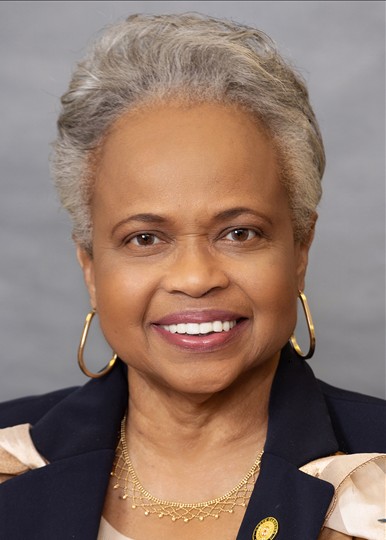
HB 1115 updates North Carolina laws regarding advance health care planning documents, such as health care powers of attorney and living wills, to align with recent recommendations from the General Statutes Commission. The bill primarily affects individuals creating these documents by simplifying the requirements for signing them and allowing multiple types of advance directives to be combined into a single document. Key provisions include clarifying how different documents interact, defining terms like 'life-prolonging measures' and 'mental health treatment,' and ensuring that the laws remain consistent with other state statutes.
HB 727 modifies the licensure process for marriage and family therapists and therapy associates in North Carolina. It streamlines the process for professionals licensed in other states to obtain a North Carolina license through reciprocity, making it mandatory for qualified applicants. The bill adjusts experience requirements and expands acceptable examination options to include California's clinical examination. Additionally, it clarifies that all applicants, including those applying via reciprocity, must undergo criminal history record checks. These changes aim to facilitate licensing for out-of-state therapists while maintaining regulatory oversight.
HB 693 establishes the "Interstate Massage Compact" to create a multistate licensing pathway for massage therapists across participating states. It directly affects licensed massage therapists seeking to practice in multiple states and the public receiving those services. Key mechanisms include creating an Interstate Commission to administer the compact, enabling therapists to hold a single "multistate license" valid in all member states, requiring background checks and continuing competence, and allowing states to share disciplinary information and hold licensees accountable. The compact aims to improve public access to safe massage therapy while reducing regulatory burdens for therapists, particularly aiding military members and their spouses relocating between states.
SB 77 allows parents of students with disabilities to choose their preferred nurse for school-based nursing services required by an Individualized Education Program (IEP), provided specific conditions are met. The bill requires schools to assign the parent's chosen nurse if that nurse previously provided care to the student, the nursing agency agrees to contract under standard terms, and the rate matches other contracted nurses. This directly affects families of students needing nursing services under IEPs and ensures schools honor parent preferences without altering their obligation to provide a free appropriate public education. The policy applies starting the 2025-2026 school year.
HB 697 establishes North Carolina's first licensure requirements for genetic counselors. The bill creates a 5-member Genetic Counselors Licensure Board (with 3 licensed counselors, 1 physician, and 1 public member) to regulate the profession. Key provisions include defining "genetic counseling," setting standards for licensure (requiring ABGC certification or equivalent), establishing temporary licenses for interns, and granting the Board authority to issue, deny, suspend, or revoke licenses. This directly affects genetic counselors practicing in North Carolina, requiring them to obtain a license to legally provide services. The bill does not change healthcare access or funding but sets professional standards for this specific healthcare role.
SB 344 ensures that North Carolina seniors aged 65+ who transfer funds into qualifying pooled special needs trusts (meeting federal standards) won't lose Medicaid or State-County Special Assistance eligibility. The bill requires the state health department to update eligibility rules so these transfers are treated as "fair market value" transactions - meaning the funds aren't counted against benefit eligibility if the trust uses the money to provide goods/services equal to the transfer value within the senior's life expectancy. It directly affects seniors using these trusts to manage assets while maintaining public benefits. The law amends state rules to align with federal guidelines (42 U.S.C. § 1396p(d)(4)(C)) and takes effect upon enactment.
HB 480 creates a new pathway for doctors, physician assistants, and anesthesiologist assistants to obtain North Carolina medical licenses by transferring licenses from other states ("licensure by endorsement"). To qualify, applicants must have held an active license in another U.S. jurisdiction for at least five years (with two years of practice post-residency for doctors), have a verified full-time job offer in North Carolina, maintain good standing with no recent disciplinary actions, and meet practice hour requirements. The bill increases application fees for endorsement (e.g., $825 for physicians vs. $400 for standard licensure) and requires additional documentation within 180 days to keep the license active. This directly affects out-of-state medical professionals seeking to practice in North Carolina without retaking exams.
HB 578, the Jason Flatt Act, requires all North Carolina public K-12 schools to implement suicide prevention education and training for school staff. It mandates that licensed educators complete at least one hour of annual suicide prevention training, while staff working with grades 6-12 must receive guidelines for identifying at-risk students and procedures for referrals. Schools must adopt a mental health plan including these elements, with initial staff training of six hours (within six months of hire) and two hours annually thereafter. The law applies to all public schools, charter schools, regional schools, and lab schools starting the 2025-2026 school year.
SB 171 allows licensed psychological associates in North Carolina to practice independently without direct supervision after completing 3,000 hours of supervised experience over 24-60 months. This directly affects psychological associates who meet the experience requirement, reducing regulatory barriers to their practice. The bill amends licensing rules to establish this pathway, requiring an application with proof of experience and granting certification as a "health services provider psychological associate." It also updates board composition rules to ensure balanced representation. The changes take effect October 1, 2025.
HB 231 establishes North Carolina's participation in the Social Work Interstate Licensure Compact, allowing licensed social workers from participating states to practice across state lines without obtaining separate licenses in each state. The bill directly affects licensed social workers seeking to provide services in multiple states, particularly those serving military families or addressing workforce shortages. Key provisions include mutual recognition of licenses among member states, accountability for social workers practicing where clients are located, and streamlined processes for disciplinary information sharing. This reduces duplicate licensing requirements while maintaining state authority to protect public health and safety through existing licensure systems.