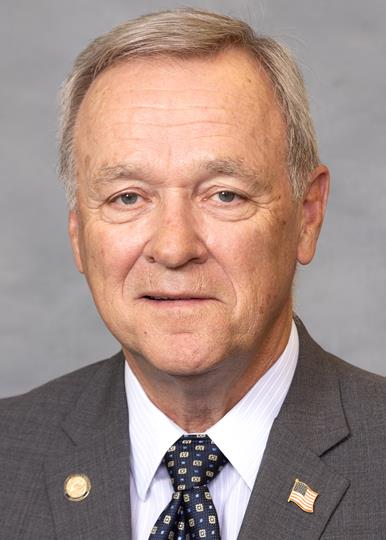
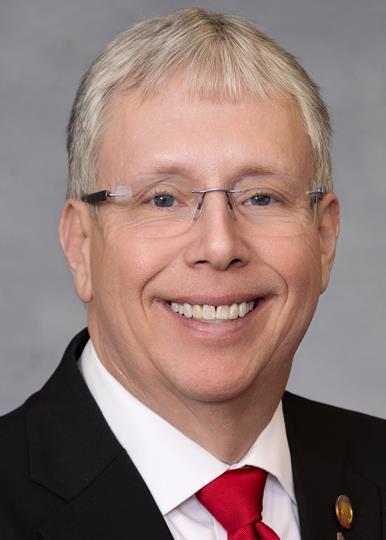
HB 739 allocates $61.3 million in nonrecurring state funds for specific projects in Wilson and Nash counties, primarily benefiting Wilson County entities and two towns. The bill directs funds for water infrastructure in Lucama, sewer projects in Stantonsburg, volunteer fire departments, school construction, a new courthouse, sheriff's training, Narcan in schools/libraries, housing authority projects, a transit program, and a new police building in Sharpsburg. It becomes effective July 1, 2025, with all funding designated for immediate, concrete local needs without new policy requirements.
HB 232 appropriates $16.39 million from North Carolina's disaster relief fund to repair hurricane-damaged short-line railroads. The bill directly provides $14 million to Blue Ridge Southern Railroad for line restoration and $2.39 million to Great Smoky Mountains Railroad for track repairs, facility fixes, and lost revenue following Hurricane Helene. These funds are allocated through the Department of Transportation's Rail Division using the Freight Rail & Rail Safety Improvement Fund. The bill becomes effective July 1, 2025, and focuses solely on direct financial assistance for specific rail infrastructure recovery.
This bill permits the sale, possession, and use of specific consumer fireworks (like sparklers, party poppers, and novelty items) in North Carolina, while maintaining restrictions on most pyrotechnics. It directly affects consumers and retailers by allowing limited fireworks that comply with strict weight limits (e.g., no more than 16 milligrams for party poppers) and requires compliance with new regulations under Part 2 of Chapter 58. The bill establishes an excise tax on consumer fireworks sales and amends existing laws to define permitted items, such as wire sparklers (under 100 grams) and sparklers emitting showers of sparks. It does not change prohibitions on most fireworks, including indoor displays or sales to minors under 18.
SB 563, "The Michael Jordans of Tomorrow Act," allows North Carolina's public universities (specifically UNC system institutions) to directly compensate student-athletes for participation in intercollegiate sports, up to $20.5 million annually from athletic department revenue. It also creates a 50% tax credit for businesses that pay student-athletes for name/image/likeness (NIL) agreements, capped at $500,000 per business yearly. Universities must report all direct compensation payments to state committees annually and collaborate with the state to ensure compliance with federal and state laws. The bill aims to enhance North Carolina's competitiveness in recruiting athletes by modernizing NIL policies and providing state-level incentives.
SB 520 appropriates $545,588 from North Carolina's General Fund for the 2025-2026 fiscal year to fund a pedestrian hybrid beacon and crosswalk at Pineville Town Hall, specifically at the intersection of Hwy 51 and Main St. The grant is directed to the Town of Pineville to improve pedestrian safety and enhance walkability in the downtown area. This bill provides a one-time funding allocation for a specific infrastructure project, not a new policy or law. The funds will cover construction costs for the safety device and crosswalk, with the project scheduled to begin after the bill's effective date of July 1, 2025.
HB 793 appropriates $5 million for Fayetteville's Innovation District (to foster collaboration between businesses, universities, and institutions), $2.5 million to consolidate the city and Cumberland County's 911 dispatch center, $25,000 for Hollywood Heights Community Club facility repairs, $400,000 annually for four fire stations, and $100,000 annually for Lake Rim Park maintenance. The bill directs state funds to specific local projects in Fayetteville and Cumberland County, effective July 1, 2025. It provides one-time and recurring funding for infrastructure, public safety, and community facilities without altering existing laws. The bill directly affects Fayetteville city operations, Cumberland County emergency services, and local nonprofit and park entities.
Tags
Public Safety
HB 709 establishes a pilot program to fund additional teacher assistants in North Carolina public schools for kindergarten through third grade. It provides $14.8 million annually (2025-2027) to cover the cost of teacher assistants based on specific ratios: one assistant per K-2 class and one per three third-grade classes. The program will select 16 schools (eight districts, one district school and one charter school per district) to participate, with funds distributed based on average class size and salary costs. The bill aims to directly support early-grade classrooms by increasing adult-to-student ratios, effective July 1, 2025.
HB 758 appropriates $100,000 from the state General Fund for the 2025-2026 fiscal year to provide a directed grant to Agency for Families in Distress, Inc. This funding supports "The Mind and Heart Haven Project," which aims to address mental health needs in Winston-Salem, Forsyth County, and North Carolina. The bill directly affects the nonprofit organization and the communities it serves by providing dedicated resources for mental health services. The grant is nonrecurring and becomes effective July 1, 2025.
HB 413 would legalize recreational marijuana for adults 21 and older in North Carolina, allowing possession of up to 2 ounces, 15 grams of concentrate, or products with 2,000mg THC. It establishes new regulations for cannabis businesses (like retail stores and cultivation facilities), requires lab testing and responsible packaging, and mandates that businesses prioritize diversity and community investment. Crucially, it creates two funds to reinvest tax revenue: the Community Reinvestment and Repair Fund for historically impacted communities, and the Cannabis Enterprise Opportunity Fund to support minority-owned businesses. The bill directly affects consumers aged 21+, cannabis businesses, and communities disproportionately affected by past cannabis enforcement.
HB 252, the Steele Creek Investment and Improvement Act, allocates $1.25 million in one-time state funds for community projects in Mecklenburg County’s Steele Creek area. It directs $250,000 to Steele Creek Community Place, Inc. for wellness programs focused on economic opportunity, health, and mental health; $500,000 to Steele Creek Fire and Rescue for equipment and facilities; and $500,000 to the NC Department of Transportation for a traffic study on Shopton Road West. The bill directly supports Steele Creek residents - particularly those in unincorporated areas lacking municipal services - and local nonprofits. It becomes effective July 1, 2025, with no policy changes beyond funding allocations.