Requires insurers to provide insurance coverage for treatment of rare diseases, life-threatening conditions or diseases, degenerative and disabling conditions, or diagnoses involving medically fragile children, by a provider of the patient's choice.
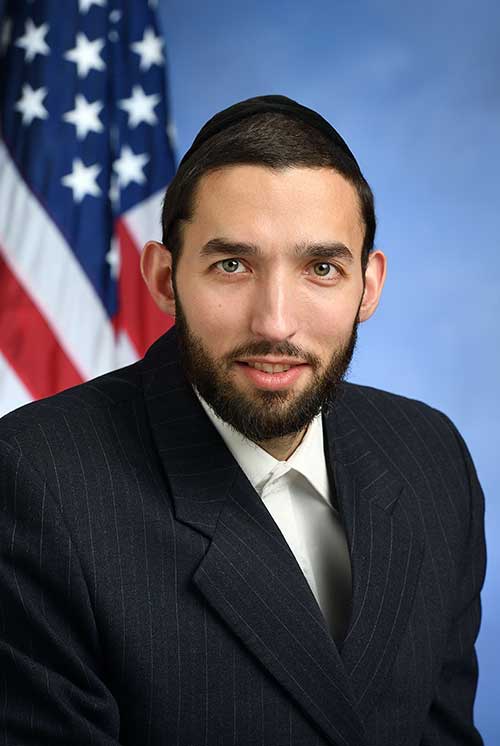
Rep. Simcha Eichenstein
Sponsored bills
Maddy summaryThis New York State bill (A 585) repeals Title 2 of Article 14 of the Election Law, which governed public financing for elections. The repeal removes the legal framework for public funding of candidate campaigns, directly affecting how political campaigns are financed in the state. The bill takes effect immediately upon enactment, eliminating the existing public financing system without creating new provisions. It is a procedural change that removes specific election law provisions without altering other campaign finance rules.
Maddy summaryThis bill limits robocalls to New York residents by banning most unsolicited automated calls (using prerecorded messages or auto-dialers) without prior consent. It requires all telephone service providers in New York to offer free call-blocking technology that identifies and stops unwanted robocalls. Exceptions include emergency calls, calls with explicit consent, and certain labor organization communications. The law aims to reduce nuisance calls while mandating free protection for residents through telecom providers.
Establishes new classes of vehicle driver's licenses for low velocity electric vehicles; establishes a low velocity electric vehicle operator's safety manual, test requirement, purchase requirements and registration requirement; relates to requiring instruction in low velocity electric vehicles safety as part of the drivers pre-licensing course; requires liability insurance for low velocity electric vehicles in cities having a population of one million or more.
Maddy summaryThis bill increases criminal penalties for damaging property or stealing items at religious worship sites and cemeteries. It makes damaging religious items (like scrolls, vestments, or religious symbols) at churches, synagogues, or religious museums a class D felony, and upgrades cemetery vandalism or theft (e.g., headstones, monuments) to higher felony levels based on value. Offenders face harsher punishments for targeting these specific locations, including theft exceeding $250 at cemeteries or damage exceeding $2,000 at religious sites. The law directly affects individuals who commit these acts at protected locations, with penalties now reflecting the heightened seriousness of targeting sacred or memorial spaces.
Requires state agencies and courts to take into consideration the International Holocaust Remembrance Alliance's definition and contemporary examples of antisemitism when reviewing, investigating, or deciding whether there has been a violation of any non-criminal or criminal law, rule, or policy prohibiting discriminatory acts.
Enacts the New York religious land use and religious exercise act prohibiting unreasonable restriction on regulations affecting religious land use or affecting religious exercise of institutionalized persons.
Relates to procedures relating to driving while ability impaired by drugs; defines impairment and intoxication; updates procedures for field testing of drivers suspected of being under the influence of drugs to include the use of oral/bodily fluid tests; provides that refusal to submit to such field tests is specified to be a traffic infraction; makes related provisions.
Maddy summaryThis bill requires the state to reimburse non-public and private schools for costs incurred when the state mandates COVID-19 testing for students, teachers, and staff in in-person school settings. It directly affects all non-public and private schools subject to such state-mandated testing requirements. The state must cover these costs through a process established by the Commissioner of Education, who will create rules and procedures for reimbursement. The law takes effect immediately upon passage.
Authorizes drivers to disobey a traffic-control device or signal, after exercising reasonable care, in order to yield the right of way to an authorized emergency vehicle.