Issue · Criminal Justice

Criminal Justice (Probation & Parole)

Every criminal justice bill, vote, and legislator stance in New York, automatically classified by Maddy, our AI policy reader.

Total bills
54
2025 Regular Session
Top supporter
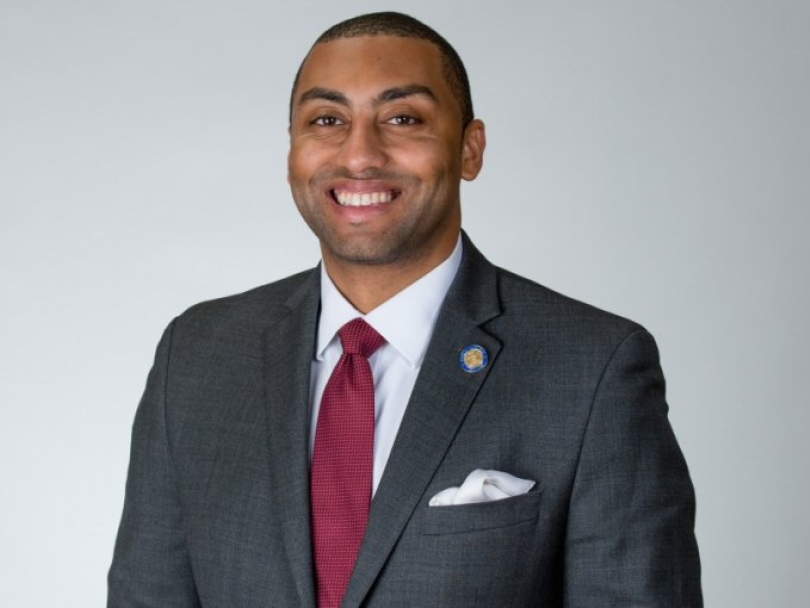
Jamaal Bailey
100% support rate
Top opponent
Patrick Gallivan
0% support rate
Ranked legislators
10
5 support · 5 oppose
Key legislators

Who's moving probation & parole in New York

Legislators moving probation & parole in New York
Legislator Party Stance Support rate Decisive votes
Jamaal Bailey
Jamaal Bailey Senate · District 36
D
Strong +
100% 31
Gustavo Rivera
Gustavo Rivera Senate · District 33
D
Strong +
100% 29
Julia Salazar
Julia Salazar Senate · District 18
D
Strong +
100% 28
Luis Sepúlveda
Luis Sepúlveda Senate · District 32
D
Strong +
100% 28
Pete Harckham
Pete Harckham Senate · District 40
D
Strong +
100% 27
Patrick Gallivan
Patrick Gallivan Senate · District 60
R
Strong −
0% 20
Dan Stec
Dan Stec Senate · District 45
R
Strong −
0% 18
Rob Ortt
Rob Ortt Senate · District 62
R
Strong −
0% 16
Mark Walczyk
Mark Walczyk Senate · District 49
R
Strong −
0% 13
Alexis Weik
Alexis Weik Senate · District 8
R
Strong −
0% 12
Showing 31–40 of 54 bills

All criminal justice bills

failed · New York · Assembly Jan 7, 2026

A 2013: Relates to sentencing of a person convicted of murdering a child who is less than thirteen years old

Provides that a person convicted of murder in the first or second degree, or aggravated murder, in the death of a child who is less than thirteen years old shall be sentenced to life imprisonment without parole.
in committee · New York · Senate Jan 7, 2026

S 2063: Relates to aggravated neglect of a companion animal

This bill defines "aggravated neglect" of a pet as subjecting it to cruelty (as defined in existing law) while failing to take reasonable steps to locate or care for the animal. It makes aggravated neglect a felony punishable by up to two years in prison, with a mandatory definite sentence (no probation). The law directly affects pet owners who repeatedly fail to provide adequate care or abandon their animals, aligning penalties with specific sentencing guidelines for this offense.
failed · New York · Assembly Jan 7, 2026

A 1480: Makes life imprisonment without parole mandatory for defendants convicted of murder in the first degree or second degree and the victim is a police officer, peace officer, first responder or correctional officer

Makes life imprisonment without parole mandatory for defendants convicted of murder in the first degree or second degree and the victim is a police officer, peace officer, first responder or correctional officer.
in committee · New York · Senate Jan 7, 2026

S 3024: Relates to the state board of parole membership, interviews with incarcerated individuals, and determination of parole

Allows for the removal of members of the state board of parole by a majority vote in the senate and the assembly; requires three or more members of such board personally interview potential parolees; requires that the determination to parole an incarcerated individual be unanimous.
Sub-Topics Probation & Parole
in committee · New York · Senate Jan 7, 2026

S 3114: Relates to restricting sex offenders from residing in a community residence for the mentally disabled

This bill prohibits sex offenders from residing in community residences for people with disabilities. It directly affects individuals convicted of sex offenses who are released from prison, on probation, or discharged from correctional facilities. Key provisions ban such individuals from moving into or remaining in these residences (defined under mental hygiene law) and require courts, social services, and mental health officials to deny admission or placement in these facilities. The law takes effect 90 days after enactment.
in committee · New York · Senate Jan 7, 2026

S 7050: Relates to crimes committed during periods of post-release supervision

Provides that a person who commits a crime during a period of post-release supervision and when such charge culminates in a new sentence, the period of post-release supervision shall be deemed interrupted for any period in which such person was held in pre-trial detention.
Sub-Topics Probation & Parole
in committee · New York · Assembly Jan 7, 2026

A 5165: Provides that sentence for commission of certain provisions of murder in the first degree is death or life without parole

This bill (A 5165) changes sentencing requirements for certain serious crimes in New York. It mandates that defendants convicted of specific types of first-degree murder (as defined in sections 125.27(i)-(iii) of the penal law), aggravated murder, or certain terrorism/chemical weapon offenses must receive either the death penalty or life imprisonment without parole. For other first-degree murder convictions, the court must choose between death, life without parole, or a standard class A-I felony sentence. The bill also specifies that individuals convicted of murder in the second degree under defined circumstances must receive life without parole. These changes apply directly to defendants convicted of the listed offenses in New York State.
failed · New York · Assembly Jan 7, 2026

A 1578: Relates to sentencing of person convicted of murdering a minor

Provides that a person convicted of murder in the first or second degree, or aggravated murder, in the death of a minor shall be sentenced to life imprisonment without parole.
in committee · New York · Senate Jan 7, 2026

S 5068: Requires sex offenders who fail to register or verify twice or more to wear a location-tracking device

Requires sex offenders who fail to register or verify their registration on two or more occasions to wear a location-tracking device while on probation, parole, conditional release or post-release supervision; establishes failure to wear such device shall be a class D felony and grounds for revocation of parole and probation.
Sub-Topics Probation & Parole
in committee · New York · Senate Jan 7, 2026

S 7019: Relates to tampering with electronic monitoring equipment

This bill creates two new criminal offenses related to interfering with electronic monitoring devices (like ankle bracelets used for house arrest or probation). It makes it a class A misdemeanor to intentionally tamper with or damage such equipment without authorization to disrupt its signals (second degree), and a class E felony if the tampering occurs while committing a serious felony (first degree). The first-degree offense requires the sentence to run consecutively to the underlying felony. The law directly affects individuals under electronic monitoring who attempt to bypass or disable the tracking devices.
Sub-Topics Probation & Parole
Showing 31 to 40 of 54 bills
Previous 1 … 3 4 5 … 6 Next