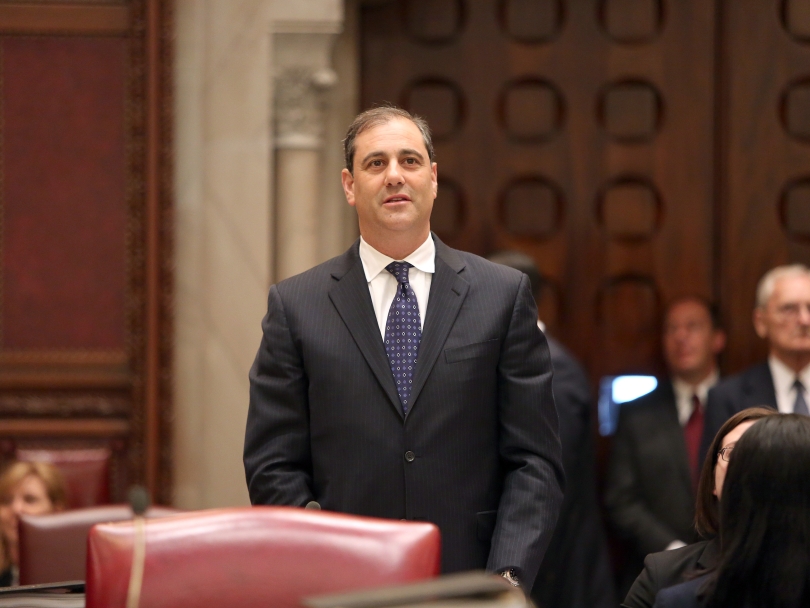
S 4057 extends New York's historic homeownership rehabilitation tax credit window, allowing eligible homeowners to claim the credit for tax years beginning after 2025 (previously expiring in 2025). It maintains a $50,000 annual credit limit per home (reducing to $25,000 after 2025) for qualified rehabilitation costs of certified historic properties. The bill also adds new reporting requirements: the state tax commissioner must annually report credit claims and utilization data by location and project size to state officials and the public. These reports will include details like certified project counts, credit values, and housing unit changes before/after rehabilitation. The bill directly affects homeowners rehabilitating historic properties in New York who qualify for the tax credit.
This bill (S 6624) provides a New York state tax credit equal to the cost of fishing and hunting licenses for volunteer firefighters and ambulance workers. Specifically, it covers the cost of "small and big game licenses" and fishing licenses for these volunteers, as defined by existing benefit laws. The tax credit directly affects eligible volunteer emergency service workers who pay for these licenses. It does not provide free licenses but reimburses the cost through a tax credit. The bill amends environmental conservation law to add this provision, effective immediately.
Establishes a supplemental household and dependent care credit payment for taxpayers who are eligible for certain household and dependent care services necessary for gainful employment.
Provides an exemption for the sale of the first $35,000 for a battery, electric, or plug-in hybrid electric vehicle from state sales and compensating use taxes; authorizes local governments to elect such incentives; repeals the hybrid exemption after ten years.
This bill provides accelerated funding to the Mount Vernon City School District, directly affecting its budget and operations. It mandates that the district receive up to $8 million annually - starting in 2025 - through a decreasing schedule over 30 years (based on the formula: $8M × (30 - years elapsed)/30), with payments due by specific dates each school year. The funds must support educational programs and district liabilities, while requiring monthly and quarterly financial reports on fund usage to state education and budget offices. The bill expires on June 30, 2055, after which payments cease. This is a targeted financial provision for Mount Vernon schools, not a broad policy change.
This bill allows workers to deduct cash tips they receive from their New York state income tax. It specifically applies to cash tips classified as wages under federal tax law (like those from servers or bartenders who collect cash). The deduction covers tips received during the taxable year, reducing the worker's taxable income. The change would take effect for tax years beginning on or after January 1, 2025.
This bill amends New York's STAR program to adjust how senior citizens' income is calculated for property tax exemption eligibility. It allows seniors who experience income decreases due to retirement or the death of a spouse to use their next year's income tax return (instead of the current year's) to determine eligibility for the enhanced exemption. To qualify, seniors must file their next year's tax return or provide income documentation to the local assessor by the tax deadline. This change directly affects seniors facing reduced income from retirement or bereavement, ensuring they maintain eligibility during the transition period.
S 5841 prohibits property tax exemptions for buildings or land used in violation of local zoning laws. This directly affects property owners who use their land for purposes not permitted by their municipality's zoning regulations, such as operating a business in a residential-only zone. The bill amends the real property tax law to explicitly deny tax exemptions when a property's use conflicts with applicable zoning rules. It takes effect immediately upon enactment and is currently pending in the Local Government committee.
This bill extends Monroe County's existing authority to impose an additional 1% sales and compensating use tax (on top of the current 3% rate) until November 30, 2027. The revenue from this tax will be distributed as follows: 5% to school districts outside Rochester, 3% to towns, 1.25% to villages, and 93.75% to the city of Rochester and Monroe County (with the county portion funding county operations). Distribution formulas are based on school enrollment for districts and population ratios for towns and villages, as defined in existing tax law. The extension covers the period from December 1, 2025, through November 30, 2027.
This bill changes the tax status of certain state-owned lands used for reforestation in New York. It requires these lands to be taxed under real property tax law in all counties except Orange County, where the tax exemption remains. Previously, all such lands were exempt from county-level taxes; this bill removes that exemption for every county except Orange. The change takes effect immediately upon enactment.