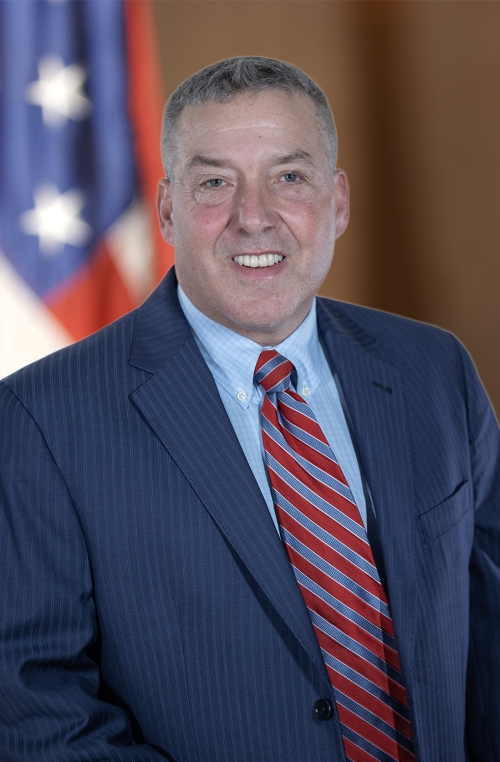
Establishes a municipal senior center capital support program in the office for the aging to assist municipalities in accessing capital funds necessary for the purchase of senior buses; directs the director of the office for the aging to develop an application and establish criteria for the disbursement of grants to eligible municipalities for the purpose of procuring senior buses; makes an appropriation.
This bill creates a tax credit for New York employers who pay down their employees' undergraduate student loan debt. Employers can claim a credit equal to the amount they pay toward an employee's federal, state, or institutional undergraduate loan debt (including interest), up to $10,000 per employee annually. The credit applies to loans related to undergraduate programs and covers both principal and interest payments. It directly affects employers who choose to assist employees with student debt and employees who receive this financial support.
This bill expands New York's tuition assistance program to include students experiencing homelessness, directly affecting homeless students seeking financial aid for higher education. It modifies eligibility criteria to align with federal definitions under the McKinney-Vento Act and requires a standardized verification process for homelessness status across all tuition assistance programs. The bill also clarifies that homeless students cannot be considered "emancipated" for aid purposes solely based on their homelessness status. These changes aim to streamline access to financial aid for homeless students while ensuring consistent federal-aligned verification.
Relates to tax abatement for rent-controlled and rent regulated property occupied by and real property owned by senior citizens or persons with disabilities.
S 7906 modifies New York's college tuition tax credit by introducing a sliding scale based on income. It eliminates the credit entirely for married couples filing jointly with New York adjusted gross income over $15 million, and reduces it to 25% for those earning $7.5-$15 million. For single filers and heads of household, the credit phases out entirely above $10 million, with reductions at $1-$5 million and $5-$10 million income brackets. This change directly affects high-income New York taxpayers who claim the tuition credit, making it less accessible as their income increases.
Establishes the "first-time homebuyer tax credit act"; provides that a qualified taxpayer shall be allowed a credit against the taxes imposed by this article for taxes levied on the taxpayer's primary residence by or on behalf of any county, city, town, village, or school district in which such property is located.
This bill would allow taxpayers to deduct interest paid on qualified student loans from their federal taxable income. It applies to individuals who pay interest on education loans used for higher education, directly affecting borrowers with such loans. The deduction would be calculated as specified in existing IRS rules (26 USC § 221) and would apply to tax years beginning January 1, 2026. This policy change reduces taxable income for eligible borrowers without altering current tax filing requirements.
Amends the imposition of sales tax to dramatic or musical arts performances, or live circus performances, or motion picture theaters, where such admission charge is not more than one thousand dollars.
Bill S 7797 provides emergency appropriations to fund state government operations from April 1, 2025, through May 9, 2025. This measure allocates funds for the salaries and benefits of state employees across the executive, legislative, and judicial branches. It also covers non-personal service liabilities for state departments and agencies, and provides aid to localities through the judiciary. Additionally, the bill adjusts specific appropriations within the Department of Health, including for the Center for Community Health Program and federal food and nutrition services. The purpose is to ensure the continuation of government functions until the full state budget for the fiscal year beginning April 1, 2025, is enacted.
Excludes the five state-run veterans homes from assessments on their gross receipts received from all patient care services and other operating income; directs the Commissioner of Health to apply to the secretary of the Department of Health and Human Services for any necessary waivers pursuant to federal law and regulation.