

This bill establishes a pilot program for deploying economic response teams that provide emergency technical assistance and support to a partner country subjected to the threat or use of coercive economic measures by a U.S. adversary. These teams also play a liaison role between the legitimate government of a partner country and the U.S. government. To carry out the program, the Department of State must identify U.S. government personnel across multiple departments who have relevant expertise to serve on teams and provide logistical and institutional support for the program and its teams. To deploy a team, the President must declare, and notify Congress of, a coercive economic emergency (i.e., an unusual and extraordinary economic coercive threat to a partner country made by a U.S. adversary). The initial deployment may last for up to 180 days; the President may extend a deployment by submitting to Congress a justification for the extension in the interest of national security. The State Department must provide to Congress an initial report following the establishment of the program and a subsequent report about its first year of operation. Authority for the program terminates on December 1, 2026.
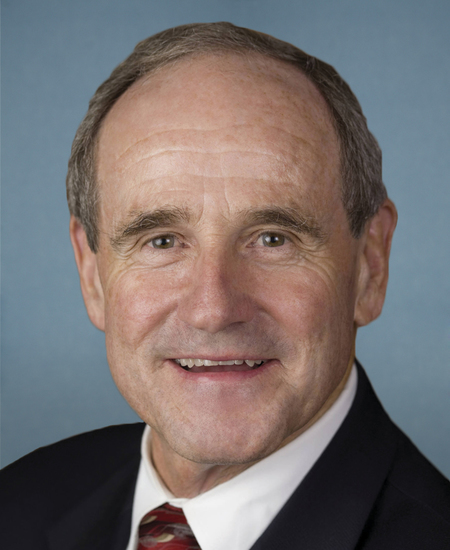
Sen. James E. Risch
Sponsored bills
This resolution recognizes April 30, 2021, as National Arbor Day and encourages the people of the United States to participate in National Arbor Day activities.
Don't Weaponize the IRS Act This bill codifies regulations promulgated by the Trump Administration exempting certain tax-exempt organizations from specified reporting requirements. Specifically the bill increases from $5,000 to $50,000 the gross receipts threshold used to determine the eligibility of tax-exempt organizations for the exemption from certain disclosure and reporting requirements; expands the definition of organization to include tax-exempt charitable organizations and organizations with no significant activities relating to lobbying, political activity, and the operation of a trade or business; exempts from disclosure the names and addresses of contributors to an organization in its annual informational return; and extends exemptions from reporting requirements to political action committees (i.e., 527 organizations).
This resolution calls for the immediate cessation of hostilities in the Tigray region of Ethiopia and condemns all violence against civilians. Further, the resolution calls on Eritrea to withdraw its military forces from Ethiopia, and it urges all parties to the conflict to cease hostilities and work to protect human rights. The resolution also calls on relevant U.S. agencies to take specified actions that encourage an end to the conflict and provide humanitarian support.
Helping American Victims Afflicted by Neurological Attacks Act of 2021 or the HAVANA Act of 2021 This bill specifically authorizes the Central Intelligence Agency, the Department of State, and other agencies to provide payments to agency personnel who incur brain injuries from hostilities while on assignment. Specifically, the bill allows agency personnel and their families to receive payments for brain injuries that are incurred (1) during a period of assignment to a foreign duty station; (2) in connection with war, insurgency, hostile acts, terrorist activity, or other agency-designated incidents; and (3) not as the result of willful misconduct. The bill's authority applies to injuries incurred before, on, or after the date of the bill's enactment. Agencies must submit classified reports on the bill's implementation, including the number of payments made and the amount of each payment. Since 2016, some intelligence, diplomatic, and other governmental personnel have reported experiencing unusual cognitive and neurological impairments while on assignment (particularly abroad), the source of which is currently under investigation. Symptoms were first reported by personnel stationed in Cuba and have since been collectively referred to as Havana Syndrome .
SBA Cyber Awareness Act This bill addresses the cybersecurity of the Small Business Administration (SBA). Specifically, it requires the SBA to report annually to Congress on (1) an assessment of SBA's information technology (IT) and cybersecurity; (2) a strategy to increase such cybersecurity; (3) a detailed account of SBA's IT component or system manufactured by a company located in the People's Republic of China; and (4) any SBA cyber threat, breach, or cyber attack that occurred during two years before the report, including SBA's actions to respond to or remediate it.
This resolution welcomes President Moon Jae-in of South Korea to the United States. It also reaffirms the importance of the U.S.-South Korea relationship to peace, security, and prosperity on the Korean Peninsula and in the Indo-Pacific region.
This resolution designates the week of May 9-May 15, 2021, as National Police Week.
Promising Pathway Act This bill establishes a provisional approval pathway for medicines intended for serious or life-threatening diseases, including illnesses posing a threat of epidemic or pandemic. The period of the provisional approval is for two years and is potentially renewable. The Food and Drug Administration (FDA) must establish a priority review system to evaluate completed provisional approval applications within 90 days of receipt. A provisional approval application may be approved if the FDA determines that (1) there is substantial evidence of safety for the drug; and (2) there is relevant early evidence of efficacy, based on adequate and well-controlled investigations. During the COVID-19 (i.e., coronavirus disease 2019) pandemic, or another epidemic or pandemic, the FDA must accept and review various portions of a provisional approval application on a rolling basis. The manufacturer of a provisionally approved drug must require patients to participate in an observational registry. A manufacturer that fails to comply with registry requirements is subject to civil penalties. A provisionally approved drug must be labeled as such. If a drug that receives provisional approval status is not brought to market within 180 days of the approval, the approval must be rescinded. The bill also limits the liability of a manufacturer of a provisionally approved drug with respect to any claim under state law alleging that the drug is unsafe or ineffective. Private health insurers and federal health care programs shall not deny coverage of a provisionally approved drug on the basis of it being experimental.
This resolution designates the week beginning November 8, 2021, as National Pregnancy Center Week.