Maddy summaryThis bill directs the National Medal of Honor Museum Foundation to place a monument honoring Medal of Honor recipients on federal land near the Lincoln Memorial in Washington, D.C., overriding standard location rules. It specifically requires the monument to be located within the National Mall's "Reserve" area adjacent to the Lincoln Memorial, as defined in federal law. The bill affects the museum foundation's construction plans and the public's access to this new memorial site. It does not change how the Medal of Honor is awarded, only the physical location of its commemorative monument.

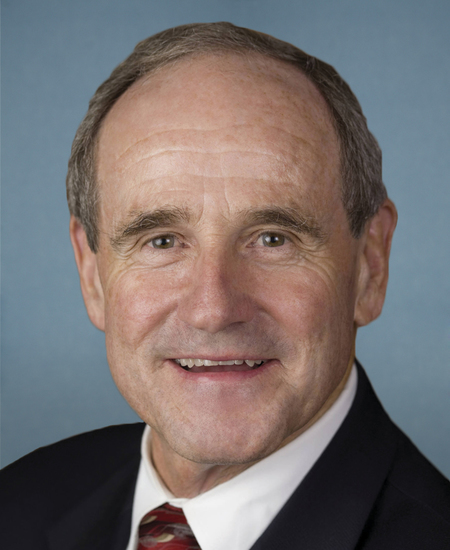
Sen. James E. Risch
Sponsored bills
Maddy summaryThis bill directs the Secretary of the Interior to formally disclaim any federal interest in approximately 15.12 acres of land in Bonners Ferry, Idaho. The land was originally platted under a specific section of the Revised Statutes and is identified on a map dated December 22, 1893. The action excludes any portion of the property that falls within the boundaries of the Kootenai Indian Reservation. The Secretary must issue this recordable disclaimer within 90 days of the bill's enactment to facilitate the transfer of ownership.
Maddy summaryThe Assuring the Future of Tibet Act of 2026 directs the U.S. government to treat the Central Tibetan Administration as the legitimate representative of the Tibetan people and to actively support their right to self-determination. The bill requires the Secretary of State to engage with Tibetan leadership at senior diplomatic levels, extend appropriate courtesies to their officials, and advocate for the administration’s observer status within the United Nations and other international bodies. Additionally, it mandates that the President use U.S. influence at the UN to support these efforts and requires the Department of State to submit annual reports to Congress detailing the implementation of these diplomatic initiatives for ten years.
Maddy summaryThis resolution designates the week of August 22 through August 30, 2026, as "National Park Week." It directly affects the public by encouraging responsible visits and support for the National Park System, which includes parks, battlefields, and historical sites located across the United States and its territories. The measure serves as a formal declaration to highlight the parks' role in recreation, education, and economic activity without altering any laws or funding.
Maddy summaryThe Circuit Court of Appeals Reorganization Act of 2026 restructures the Eighth, Ninth, and Tenth U.S. Circuit Courts to better align their geographic boundaries with current population distribution. The bill moves Alaska, Idaho, Montana, and Wyoming from the Ninth Circuit to the Eighth, while transferring Arizona and Nevada from the Ninth to the Tenth Circuit, leaving California, Hawaii, Oregon, Washington, Guam, and the Northern Mariana Islands in the newly defined Ninth Circuit. Each affected circuit receives a specific number of judges based on its new composition, with existing judges assigned to their respective new circuits based on their current locations while retaining their original seniority dates. Additionally, the legislation requires that states changing circuits immediately adopt the legal precedents of their new courts and mandates the General Services Administration to plan for new courthouse facilities in Rapid City, South Dakota.
Maddy summaryThe Keep Our Communities Safe Act of 2026 significantly expands the authority of the Secretary of Homeland Security to detain non-citizens who are facing removal from the United States. The bill removes time limits on detention during removal proceedings and allows for indefinite detention after a final order is issued if specific conditions, such as national security threats or public safety risks, are certified by government officials. It restricts access to bond hearings for many detainees, requiring them instead to prove they are not flight risks or community threats through clear and convincing evidence. Additionally, the legislation establishes administrative review processes that permit detention beyond standard removal periods if an individual fails to cooperate with deportation efforts or poses a continuing danger.
Maddy summaryThe Bring Our Heroes Home Act requires all government agencies to identify, preserve, and transmit records related to missing military personnel and civilian personnel who supported the military (from December 7, 1941, through the bill's enactment date) to a new Missing Armed Forces and Civilian Personnel Records Collection at the National Archives. It establishes a Review Board to oversee the process, ensure timely public disclosure of these records, and periodically review any records withheld for national security reasons. The bill aims to make these records more accessible to families of missing personnel, researchers, and the public, while allowing limited exceptions to protect national security. This would improve transparency about the fate of missing military personnel and civilians who went missing while serving the country.
Maddy summaryThis bill, the GOOD Act (Guidance Out Of Darkness Act), requires federal agencies to publish all their non-binding guidance documents - such as memos, bulletins, letters, and blog posts - on a single, publicly accessible government website. It applies to all federal agencies and mandates that existing guidance be posted within 180 days of the law's enactment, with new guidance published immediately upon issuance. Agencies must also maintain rescinded guidance documents online with clear labels indicating they are no longer in effect. The law does not apply to documents already exempt from public disclosure under the Freedom of Information Act (FOIA).
Maddy summaryS 24 designates the U.S. Postal Service facility at 154 First Avenue East in Jerome, Idaho, as the "Representative Maxine Bell Post Office." This bill changes all official references in federal laws, documents, and maps to this specific location to use the new name. The bill has no policy impact on postal services, funding, or operations - it solely updates the facility's official designation to honor Representative Maxine Bell.
Maddy summaryThe Veterans’ Earned Benefits Access Act of 2026 allows the Secretary of Veterans Affairs to recover separation, severance, and readjustment pay from service members who are receiving veterans' disability compensation. To manage this recovery, the bill authorizes deductions from monthly disability payments, with regulations ensuring that no more than 25 percent of a member's compensation is withheld in any given month. The legislation also establishes a process for service members to apply for a waiver if these deductions would cause them financial hardship. These provisions will take effect once final regulations are published and will apply to disability compensation paid on or after that date.