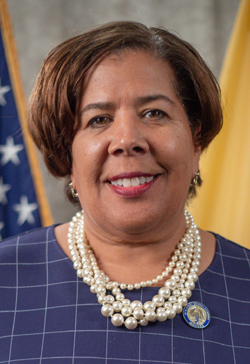
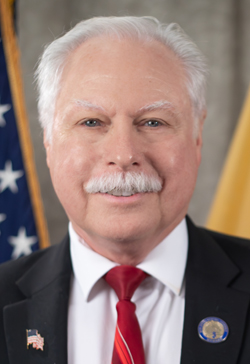
Key legislators
Who's moving transportation in New Jersey
Showing 11–15 of 15
bills
All transportation bills
This bill (S 2960) creates state funding preferences for New Jersey municipalities that adopt zoning changes to encourage denser residential development. It requires municipalities to review and update their master plans and development regulations to include specific housing strategies - such as allowing accessory dwelling units, reducing parking requirements, permitting multi-unit buildings in commercial zones, or increasing density near transit - before qualifying for preferential treatment. Municipalities that implement these changes will receive priority consideration for state grants and competitive financial assistance programs (like the Main Street New Jersey Program), as determined by the Department of Community Affairs. The bill applies to all municipalities that amend their regulations to increase permitted housing units, with funding preferences taking effect once the bill is enacted.
This bill creates a new program within the New Jersey Department of Transportation to identify and address abandoned mines that threaten roads, bridges, and public utilities. It requires the department to develop a comprehensive plan that maps at-risk mines, prioritizes them by danger level, and outlines specific steps to stabilize or reclaim them. The legislation grants state employees the right to enter private property to conduct necessary safety investigations, provided they give proper notice and do not force owners to pay for the work. Once the plan is complete, the department can either perform the reclamation projects directly or hire private contractors to carry them out.
This Senate Resolution condemns a federal Environmental Protection Agency rule that removes greenhouse gas emission standards for vehicles and engines. The bill directly affects New Jersey residents by formally opposing a decision that eliminates regulations designed to reduce air pollution from transportation. It argues that the EPA's action lacks scientific support and undermines efforts to address climate change impacts like sea-level rise and extreme weather. The resolution calls for maintaining existing standards under the Clean Air Act to protect public health and the environment.
S 601, "Dylan's Law," requires vessel owners in New Jersey to receive specific information about U.S. Coast Guard-approved personal flotation devices (PFDs) when applying for vessel numbers. It mandates that the New Jersey Motor Vehicle Commission include details on required and recommended PFD types in vessel application forms, and that approved boat safety courses must cover this information as part of their curriculum. The law directly affects vessel owners seeking registration and boat safety course providers. Key mechanisms include adding PFD requirements to application forms and course content standards, ensuring boaters understand proper safety equipment usage under state and federal rules.
S 685 creates a 15-member "Fleet Conversion Task Force" within New Jersey's Department of Environmental Protection to study the transition of commercial vehicle fleets (like delivery trucks and company vehicles) to zero-emission models. The task force will examine challenges such as costs for small businesses, coordinate with stakeholders including fleet operators, manufacturers, and environmental groups, and develop policy recommendations to support this shift. It directly affects commercial fleet owners, operators, and related industries by seeking solutions to reduce transportation emissions, which account for 38% of New Jersey's total greenhouse gases. The task force must hold public hearings, gather input from diverse sectors, and submit findings to the state within a set timeframe.