Issue · Healthcare

Healthcare (Medicaid)

Every healthcare bill, vote, and legislator stance in New Jersey, automatically classified by Maddy, our AI policy reader.

Total bills
217
2026-2027 Regular Session
Top supporter
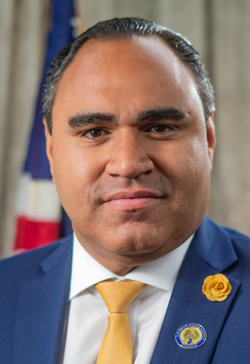
Brian Rumpf
67% support rate
Top opponent
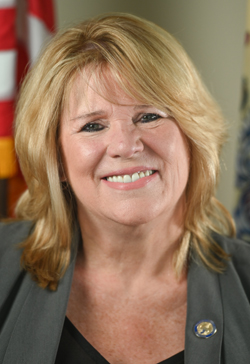
Carol Murphy
33% support rate
Ranked legislators
4
1 support · 3 oppose
Key legislators

Who's moving medicaid in New Jersey

Legislators moving medicaid in New Jersey
Legislator Party Stance Support rate Decisive votes
Brian Rumpf
Brian Rumpf House · District 9
R
Support
67% 3
Carol Murphy
Carol Murphy House · District 7
D
Oppose
33% 3
Gabe Rodriguez
Gabe Rodriguez House · District 33
D
Oppose
33% 3
Renee Burgess
Renee Burgess Senate · District 28
D
Oppose
33% 3
Showing 141–150 of 217 bills

All healthcare bills

in committee · New Jersey · General Assembly Feb 24, 2026

A 4445: Expands Medicare health care coverage to all New Jersey residents.

This bill would expand Medicare coverage to all New Jersey residents, regardless of age, health, or disability status, replacing current Medicaid and other state/local health programs with a unified New Jersey Medicare program. It requires the state to apply to federal Centers for Medicare & Medicaid Services (CMS) for a waiver to modify Medicare rules, with CMS estimating costs and adjusting premiums based on existing Medicare/Medicaid payments. The bill prohibits health insurers from offering plans covering services already provided by Medicare to prevent duplication. This would directly affect all New Jersey residents and health insurance providers in the state, as it would eliminate redundant coverage options.
in committee · New Jersey · General Assembly Jan 13, 2026

A 3344: "Mental Health Access Act;" increases Medicaid reimbursement rates for certain evidence-based behavioral health services.

This bill increases Medicaid reimbursement rates for certain mental health services to at least the Medicare rate. It directly affects Medicaid-eligible patients (adults and children) and providers like licensed substance abuse treatment centers or mental health professionals offering evidence-based outpatient counseling. The key provision requires that services must be proven effective (listed in federal registries or approved by state officials) and limited to individual/group therapy in outpatient settings. This policy change aims to improve payment for specific behavioral health treatments under New Jersey's Medicaid program.
in committee · New Jersey · General Assembly Jan 13, 2026

A 4000: "Gary Letizia Pre-Hospital Blood Transfusion Act"; authorizes advanced life support providers, under medical oversight, to administer blood products to patients in pre-hospital settings, and establishes certain reimbursement for such providers.

This bill authorizes paramedics and other advanced life support providers in New Jersey to administer blood products (like whole blood or packed red blood cells) during emergencies outside hospitals, under supervision by a trauma-trained physician. It requires providers to complete state-approved training, use FDA-approved equipment for storage and transport, and have two trained personnel present during transfusions. The law mandates that Medicaid and private insurers cover these pre-hospital blood transfusions at the same rate as hospital-based services, with the state creating grants to help EMS agencies cover initial equipment and training costs. It directly affects emergency medical services agencies, their certified providers, and patients experiencing severe bleeding from trauma or postpartum hemorrhage.
Sub-Topics Hospitals Medicaid
died · New Jersey · General Assembly Jan 13, 2026

A 2749: Requires health insurance and Medicaid coverage for screening, prevention, and treatment services of behavioral health issues affecting children.

This bill (NJ A2749) requires health insurance plans and Medicaid (NJ FamilyCare) to cover preventive behavioral health services for children under 18, including screenings and early intervention without requiring a formal mental health diagnosis. It mandates insurers to accept "at-risk diagnosis" billing - using Social Determinants of Health Z-codes instead of standard mental health codes - to pay for preventive care like therapy or screenings for children showing potential behavioral health needs. The coverage must be provided at the same level as other medical services, applying to all health plans sold in New Jersey, state employee health programs, and Medicaid managed care organizations. The bill was withdrawn after being approved as P.L.2025, c.369.
in committee · New Jersey · General Assembly Jan 13, 2026

A 537: Establishes minimum Medicaid reimbursement rate for pediatric special care nursing facilities; makes an appropriation.

This bill establishes a minimum daily Medicaid reimbursement rate of $950 for pediatric special care nursing facilities (SCNFs) participating in New Jersey's Medicaid or FamilyCare programs. It directly affects four facilities in New Jersey that provide specialized long-term care to medically fragile children and youth up to age 21. The law requires the state to appropriate funds from the General Fund to cover this rate increase, aiming to close a 63.5% gap between the highest and lowest existing reimbursement rates for these facilities. The policy change ensures these facilities receive consistent funding while maintaining compliance with state and federal licensing and quality standards.
in committee · New Jersey · General Assembly Feb 19, 2026

A 4244: Establishes Medicaid Managed Care Organization Oversight Program.

This bill creates a new Medicaid Managed Care Organization (MCO) Oversight Program within New Jersey's Department of Human Services to monitor health insurance companies (MCOs) that manage Medicaid and NJ FamilyCare services. It requires MCOs to submit quarterly data on providers and beneficiaries, and mandates annual verification that 100% of providers listed in public directories are Medicaid-eligible. The oversight program will independently check 20% of provider contact information and directory accuracy each year to ensure MCOs meet standards for access to care. This directly affects MCOs and aims to improve care access for Medicaid and NJ FamilyCare enrollees, addressing past audit findings about inadequate provider networks.
Sub-Topics Insurance Medicaid
in committee · New Jersey · General Assembly Jan 13, 2026

A 3512: Establishes "Equitable Drug Pricing and Patient Access Act."

This bill (A 3512) sets new reimbursement rules for pharmacies serving Medicaid patients in New Jersey. It requires pharmacies to be paid at least the national average drug cost plus a $10.92 dispensing fee, regardless of whether services are delivered through traditional Medicaid or managed care plans. The bill also mandates that Medicaid managed care plans must allow patients to choose any participating pharmacy and prohibits plans from unfairly blocking pharmacies from joining their networks. Additionally, it requires an audit to track pharmacy pricing and potential state savings from these changes. The law directly affects Medicaid beneficiaries, pharmacies, and Medicaid managed care organizations in New Jersey.
in committee · New Jersey · General Assembly Jan 13, 2026

A 1756: Requires DOC to ensure inmates have opportunity to participate in Medicaid pre-enrollment and enrollment sessions at least 60 days prior to release; requires applicable inmates to receive Medicaid card at release.

This bill requires New Jersey state and county correctional facilities to help inmates prepare for Medicaid coverage before release. Specifically, it mandates a peer-led session at least 60 days prior to release explaining Medicaid benefits and application options, followed by a dedicated enrollment session within five days to assist with completing applications. Facilities must also ensure inmates receive Medicaid eligibility notifications and physical Medicaid cards at the time of release if approved. The policy does not change Medicaid eligibility standards but aims to streamline access to healthcare for returning individuals by addressing enrollment barriers.
Sub-Topics Medicaid
in committee · New Jersey · Senate Feb 2, 2026

S 3264: Requires health insurance carriers to use federal resource-based relative value scale when determining reimbursement values for evaluation and management billing codes appended by modifier 25.

This New Jersey bill (S 3264) requires health insurance companies to use the federal Medicare/Medicaid resource-based relative value scale (RBRVS) when setting payment rates for specific doctor visits. It specifically applies to evaluation and management services (coded 99202-99499) that include modifier 25, which identifies a significant, separate visit occurring on the same day as another procedure. The law mandates that insurers base reimbursement payments on the federal RBRVS system, which calculates rates based on the resources needed to deliver care. This affects all health insurance carriers in New Jersey and directly impacts healthcare providers who bill for these specific types of visits.
in committee · New Jersey · General Assembly Jan 13, 2026

A 3442: Establishes annual cost of living adjustment based on Consumer Price Index for certain children, youth, and family services organizations.

This bill requires New Jersey's Department of Children and Families (DCF) to include annual cost-of-living adjustments (COLA) in contracts with organizations providing child, youth, and family services. The COLA would be calculated using the Consumer Price Index (CPI) from the previous year (October 1-September 30) and announced by DCF each October 1. It directly affects contracted social service organizations - including those receiving Medicaid funding - by ensuring their fixed service rates (which cover staff wages and operational costs) adjust annually for inflation. This mechanism aims to sustain funding for essential services and maintain competitive staff compensation as living costs rise. The bill takes effect immediately upon enactment.
Sub-Topics Medicaid
Showing 141 to 150 of 217 bills
Previous 1 … 14 15 16 … 22 Next