Issue · Budget & Taxes

Budget & Taxes

Every budget & taxes bill, vote, and legislator stance in New Hampshire, automatically classified by Maddy, our AI policy reader.

Total bills
225
2026 Regular Session
Top supporter
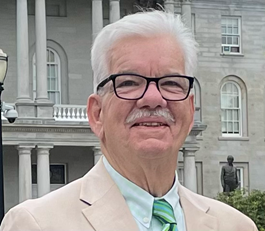
Bryan Morse
100% support rate
Top opponent
Rebecca Perkins Kwoka
21% support rate
Ranked legislators
10
5 support · 5 oppose
Key legislators

Who's moving budget & taxes in New Hampshire

Legislators moving budget & taxes in New Hampshire
Legislator Party Stance Support rate Votes
Bryan Morse
Bryan Morse House · District Merrimack 3
R
Strong +
100% 13
Russ Dumais
Russ Dumais House · District Belknap 6
R
Strong +
88% 41
Peter Varney
Peter Varney House · District Belknap 7
R
Strong +
82% 17
Victoria Sullivan
Victoria Sullivan Senate · District 18
R
Support
79% 35
Denise Ricciardi
Denise Ricciardi Senate · District 9
R
Support
79% 25
Rebecca Perkins Kwoka
Rebecca Perkins Kwoka Senate · District 21
D
Oppose
21% 35
Pat Long
Pat Long Senate · District 20
D
Oppose
21% 35
Debra Altschiller
Debra Altschiller Senate · District 24
D
Oppose
21% 35
Tara Reardon
Tara Reardon Senate · District 15
D
Oppose
21% 35
Cindy Rosenwald
Cindy Rosenwald Senate · District 13
D
Oppose
21% 35
Showing 31–40 of 225 bills

All budget & taxes bills

died · New Hampshire · House Aug 20, 2026

HB 1777: relative to the enhanced 911 system fund.

HB 1777 restricts New Hampshire's Enhanced 911 (E911) system fund to only direct 911 operations, including call delivery, dispatch, and related technology. It prohibits using the fund for commercial wireless infrastructure, unrelated public safety costs, or administrative overhead not tied to 911 services. The bill requires separate accounting for the fund, mandates repayment of misused funds within one year, and adds penalties for agencies that divert funds. Citizens can file complaints about misuse, which may lead to civil action if unresolved after 90 days.
Tags Public Safety
passed · New Hampshire · House Jun 3, 2026

HB 224: relative to rebates to ratepayers from the renewable energy fund.

HB 224 requires the state to rebate excess funds in the Renewable Energy Fund directly to all retail electric ratepayers (including households, businesses, and government entities) on a per-kilowatt-hour basis. The bill mandates that any money remaining in the fund after covering administrative costs and renewable energy incentive programs must be returned to ratepayers, rather than being retained or redirected. This applies to funds generated from Alternative Compliance Payments (ACPs) paid by utilities that fail to meet renewable energy requirements under the state’s portfolio standard. The rebates would be administered by the Public Utilities Commission, with the amount depending on annual fund balances and program expenditures.
Sub-Topics Renewable Energy
signed · New Hampshire · House May 19, 2026

HB 1151: relative to conservation commission appropriations.

HB 1151 clarifies how cities manage conservation funds by requiring city treasurers to hold all conservation fund money and disburse it only upon written orders from the conservation commission. It mandates that fund spending must be approved by a majority of the commission and requires a public hearing with notice before using funds for property purchases or contributions to qualified organizations. This bill directly affects city treasurers and conservation commissions in New Hampshire cities with established conservation funds, ensuring greater oversight for how these public funds are spent. The changes update existing law to strengthen commission authority over fund disbursement.
Sub-Topics Conservation
died · New Hampshire · House Mar 5, 2026

HB 186: relative to the legalization and regulation of cannabis and making appropriations therefor.

HB 186 legalizes and regulates cannabis for adults 21 and older in New Hampshire, establishing a comprehensive framework for cultivation, manufacturing, and retail sales. The bill creates a Cannabis Commission to license and regulate businesses, sets strict limits on personal possession (2 ounces of flower or equivalent), and prohibits smoking in public places with escalating fines for violations. Revenue from cannabis taxes will fund the general fund (55%), substance misuse prevention programs (15%), municipalities based on sales (25%), and public safety agencies (5%). The bill also includes provisions to vacate past cannabis possession convictions for adults 21+ and creates a dual-use system allowing therapeutic cannabis centers to operate retail stores under specific conditions.
failed · New Hampshire · House Jan 7, 2026

HB 97: making an appropriation to the department of environmental services for wastewater infrastructure projects.

HB 97 appropriates $15 million annually for fiscal years 2026 and 2027 from the General Fund to the Department of Environmental Services. This funding supports approved wastewater infrastructure projects under state law, directly benefiting local wastewater systems and communities requiring upgrades. The money is nonlapsing, meaning unused funds carry over to future years, and must be used for projects approved by June 30, 2026. The bill takes effect July 1, 2025, with no new state positions created.
in committee · New Hampshire · House Jun 3, 2026

HB 635: relative to taxing non-profit entities who settle illegal immigrants as for-profit entities.

HB 635 would require non-profit organizations that provide housing, legal assistance, or other support to undocumented immigrants (defined as people in the U.S. without legal status) to pay business taxes as if they were for-profit entities. It defines "settling" to include offering housing, cash, legal aid, or help applying for government benefits to undocumented immigrants. The bill also allows the state to pay whistleblowers up to 10% of the tax owed for reporting such non-profits to the Department of Revenue Administration. This primarily affects 501(c)(3) non-profits engaging in these activities, expanding the tax base to include them under the business enterprise tax.
Sub-Topics Business Taxes
failed · New Hampshire · House Jan 7, 2026

HB 585: relative to the property tax exemption for religious organizations.

HB 585 creates a property tax exemption for religious organizations that rent out specific properties. It allows one rental church parsonage (residential) and one rental worship building (e.g., church, synagogue, mosque) to be exempt from property taxes, provided the rental income is used solely for the religious leader’s compensation, building maintenance, or standard religious programs. The exemption applies only to single houses of worship (like churches or synagogues) and limits each organization to one exemption per property type. This change takes effect for tax periods ending after December 31, 2024.
died · New Hampshire · Senate Feb 5, 2026

SB 651: relative to the legalization and regulation of cannabis and making appropriations therefor.

SB 651 would legalize cannabis use for adults 21 and older in New Hampshire, requiring businesses to obtain licenses and follow regulations similar to alcohol, including age verification for purchases, product testing, and labeling. It establishes a new cannabis tax fund, with revenue from sales allocated to support substance abuse prevention, treatment, and education programs through a dedicated fund managed by the Department of Health and Human Services. These programs would cover evidence-based initiatives, mental health services for dual-diagnosis cases, and public education campaigns about cannabis risks for both youth and adults. The bill mandates annual reporting on fund usage and ensures tax revenue directly supports state efforts to address substance misuse.
failed · New Hampshire · House Jan 7, 2026

HB 563: relative to the cost of an opportunity for an adequate education, extraordinary need grants, fiscal capacity disparity aid, and determination of education grants.

HB 563 adjusts New Hampshire's education funding for students receiving special education services by introducing three new funding categories based on the intensity of support needed. It increases grants by $2,185 for students receiving services 80% or more of the day (Category B), $3,278 for those needing 80% or more specialized support (Category B), and $7,648 for students in separate schools or homebound settings (Category C). The bill directly affects public school districts, charter schools, and Education Freedom Accounts, with an estimated $7.1 million increase in state funding for districts in fiscal year 2026. This change takes effect July 1, 2025, and replaces the previous special education funding structure with these tiered amounts.
failed · New Hampshire · House Jan 7, 2026

HB 519: making an appropriation to the department of health and human services to fund and support the Waypoint youth and young adult shelter.

HB 519 appropriates $500,000 annually from the General Fund for fiscal years 2026 and 2027 to fund the Waypoint youth and young adult shelter's operations, programs, and projects. This funding directly supports the shelter’s services for youth and young adults experiencing homelessness or housing instability. The bill authorizes the Department of Health and Human Services to use these funds starting July 1, 2025, with no additional policy changes beyond the financial allocation. It is a straightforward funding measure with no legislative policy shifts.
Showing 31 to 40 of 225 bills
Previous 1 3 4 5 23 Next