Maddy summaryThis bill modifies tax reporting rules for payment platforms like Venmo or PayPal. It reinstates a higher reporting threshold, requiring third-party payment processors to report transactions only if a user's total exceeds $20,000 or 200 transactions in a year - reverting to pre-American Rescue Plan rules. The law directly affects payment processors and small businesses/freelancers who receive frequent small payments through these platforms. It takes effect for 2025 calendar years, reducing administrative burdens for low-volume transactions.
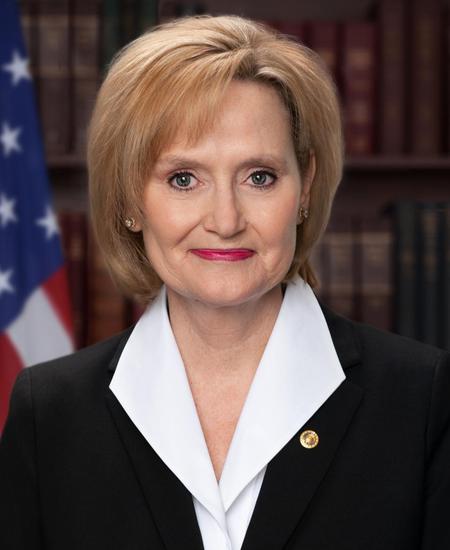
Sen. Cindy Hyde-Smith
Sponsored bills
Maddy summaryThis bill (S 1357, the SAFE Act) requires companies seeking to list securities on U.S. exchanges or already listed to disclose specific ties to the Chinese government. It mandates annual disclosures on whether the Chinese government provided financial support (like subsidies, loans, or tax breaks), the conditions attached to that support (such as export requirements or intellectual property use), the presence of Chinese Communist Party committees within the company, and details about officers/directors with prior government roles in China. The disclosure rules apply to all issuers filing reports under Section 13(a) of the Securities Exchange Act. The Securities and Exchange Commission must implement these rules within 180 days of the bill's enactment.
Maddy summaryS 1359 (STOP CCP Act of 2025) prohibits U.S. persons (including citizens, residents, and entities in the U.S.) from buying or selling publicly traded securities of Chinese entities operating in China's defense/military sectors or surveillance technology sectors, or entities owned by such companies. The bill requires the Treasury Secretary to expand the existing sanctions list (NS-CMIC List) to cover entities supporting China's military-industrial complex, including successors or financial service providers. It also closes sanctions loopholes by mandating that sanctions apply across all relevant laws unless the President waives them for national security reasons and reports to Congress. The law directly affects U.S. investors and financial institutions engaging with targeted Chinese companies.
Maddy summaryThis resolution (SRES 159) is a ceremonial Senate measure honoring the late Senator John Bennett Johnston, Jr. (1932-2024), who represented Louisiana in the U.S. Senate from 1972 to 1997. It commemorates his career, including his work on energy policy, flood control, and Louisiana conservation efforts, and requests the Senate adjourn in his memory while sending condolences to his family. As a non-binding resolution, it has no policy impact or direct effect on any individuals or laws.
Maddy summaryS 1312 establishes a new Office of the Special Investigator within the USDA to investigate competition violations in the meat and poultry industry. The Special Investigator, appointed by the Secretary, will investigate packers and live poultry dealers for violations of the Packers and Stockyards Act (7 U.S.C. 181 et seq.) using tools like subpoenas and can bring civil or administrative actions against these regulated entities. The office must coordinate with the Department of Justice, Federal Trade Commission, and Homeland Security on competition and security matters within the food sector. This bill directly affects meat and poultry processors and dealers regulated under the Packers and Stockyards Act, creating a dedicated USDA office with specific investigative and prosecutorial authority for competition issues.
Maddy summarySRES 157 designates April 2025 as "National Native Plant Month" to recognize the environmental and ecological benefits of native plants. The resolution highlights that native plants - indigenous species adapted to specific regions - support biodiversity, improve air and water quality, stabilize soils, and provide essential food and habitat for wildlife like birds and pollinators. As a non-binding Senate resolution, it does not create new laws or funding but aims to raise public awareness about conserving native plant species, which face threats from habitat loss and invasive species.
Restoring Industry Development in Entertainment Act or the RIDE Act This bill makes certain workers with a traveling carnival or circus eligible for P visas (nonimmigrant visas for athletes, artists, and entertainers). Such visas shall be available for workers who perform functions that are integral and essential to the carnival or circus, such as transporting and assembling relevant structures and equipment. Such visas shall only be available for a position if (1) there are not sufficient U.S. workers available, and (2) employing a non-U.S. national ( alien under federal law) will not adversely affect the wages and working conditions of similarly employed U.S. workers.
Maddy summaryThe Rural Development Hospital Technical Assistance Program Act of 2025 establishes a new program within the Department of Agriculture to provide tailored technical assistance to eligible rural hospitals and clinics. It directly affects facilities like critical access hospitals, rural health clinics, and other designated rural health care providers in underserved areas, particularly those facing financial challenges or located in health professional shortage zones. The program helps these facilities identify development needs (such as facility upgrades, telehealth expansion, or health IT systems), improve financial management, and access USDA loan and grant programs. Authorized funding is $2 million annually for fiscal years 2025-2029, with mandatory annual reports to Congress on program outcomes and effectiveness.
Maddy summaryS 1289 authorizes the U.S. Mint to produce and sell commemorative $5 gold and $1 silver coins to mark the 25th anniversary of the September 11, 2001, terrorist attacks. The bill specifies coin specifications (e.g., 90% gold/silver content, design requirements including "Never Forget"), sets a one-year issuance window (January 1, 2027-2028), and requires surcharges of $35 per gold coin and $10 per silver coin. These surcharges will be paid directly to the National September 11 Memorial and Museum to support its operations and maintenance, with coins sold at a price covering face value, surcharge, and production costs. The legislation does not impose new regulations or affect public policy but focuses on commemoration and funding for the museum.
Maddy summaryThis bill expands an existing federal rule allowing aquaculture facilities to manage double-crested cormorants that damage fish stocks. It requires the Secretary of the Interior to reissue the 2016 depredation order within one year, applying it to aquaculture facilities in 12 additional states (California, Colorado, Connecticut, Illinois, Indiana, Iowa, Michigan, Missouri, New Jersey, Ohio, Pennsylvania, Wisconsin) and to licensed lake and pond managers. The key change adds these new states and facility types to the existing rule without altering the original management procedures. This directly affects private aquaculture operations and water managers in those states who currently face cormorant-related fish losses.