Maddy summaryThis bill amends the Immigration and Nationality Act to expand the definition of "aggravated felonies" by adding "sexual assault and aggravated sexual violence" to the list of crimes triggering mandatory deportation for non-citizens. It directly affects non-citizens convicted of these specific sexual offenses, making them subject to automatic deportation under immigration law. The key change is adding this provision to Section 101(a)(43) of the Immigration and Nationality Act, which defines aggravated felonies. This policy shift would expand the scope of offenses classified as deportation triggers without creating new enforcement procedures.
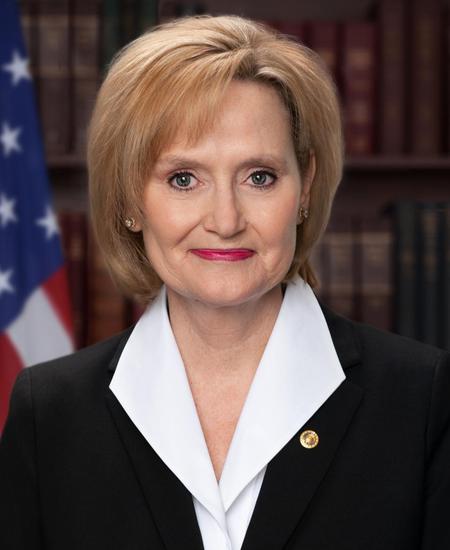
Sen. Cindy Hyde-Smith
Sponsored bills
Maddy summaryThis bill amends federal murder law to treat fentanyl distribution causing death as first-degree murder. It specifically targets individuals who distribute fentanyl (or certain analogues) in quantities of 2 grams or more (or 0.5 grams for analogues) and who know or should know the substance contains fentanyl, resulting in death. Those convicted face the death penalty or life imprisonment. The law directly affects drug distributors whose actions cause fatal overdoses, shifting prosecution from drug trafficking charges to capital murder under federal law.
Maddy summaryThis resolution (SRES 177) designates 2025 as the "Vicksburg Bicentennial" to commemorate the 200th anniversary of Vicksburg, Mississippi's incorporation on January 29, 1825. It honors the city's historical significance, including its role in the Civil War siege, preservation of Vicksburg National Military Park, and contributions to Mississippi and U.S. history. The Senate encourages Americans to acknowledge this milestone and requests the Secretary of the Senate transmit a copy of the resolution to Vicksburg. As a ceremonial resolution, it has no legal effect or direct impact on policy or constituents.
Maddy summaryThis resolution designates the week of April 19-27, 2025, as "National Park Week" in the U.S. Senate. It encourages the public to responsibly visit, experience, and support national parks across the United States. The resolution highlights the National Park System’s role in preserving natural and cultural resources while acknowledging its economic impact and recreational value. It does not create new laws or alter funding, focusing solely on recognition and public engagement.
Maddy summaryThe Combating Organized Retail Crime Act amends federal law to strengthen legal tools for addressing organized retail crime, including theft from stores, online, and supply chains. It establishes a new Organized Retail and Supply Chain Crime Coordination Center within the Department of Homeland Security to coordinate Federal, State, local, and tribal law enforcement efforts. The Center will share information, assist with investigations, track crime trends, and provide training to combat these crimes. The bill expands legal definitions to include organized retail crime as a specific category and requires annual reports on the Center's activities. The Center will operate for 7 years before sunset.
Supplemental Oxygen Access Reform Act of 2025 or the SOAR Act of 2025 This bill establishes certain requirements with respect to the payment and provision of supplemental oxygen and related services under Medicare. For example, the bill provides for separate payments, indexed to inflation, of oxygen and related equipment, supplies, and services under Medicare (rather than under the competitive acquisition program). It also specifically covers services that are provided by respiratory therapists under Medicare and provides for an additional payment adjustment for these services. Additionally, the bill (1) requires the Centers for Medicare & Medicaid Services to develop an electronic template for providers to use when prescribing oxygen and related equipment, supplies, and services; and (2) establishes certain rights for beneficiaries receiving these items and services, such as the right to choose their suppliers and to receive clear communications and be informed about the services provided.
Maddy summaryThis bill increases the federal tax credit for rehabilitating historic buildings from 20% to 30% for projects under $3.75 million (or $5 million in rural areas), up from the current rate. It allows property owners to transfer unused credits to other taxpayers and expands eligibility to include more building types. The bill also removes certain tax adjustments for these projects and simplifies rules for tax-exempt properties. These changes primarily affect developers and owners of small historic properties, especially in rural communities seeking tax incentives for rehabilitation.
Maddy summaryS 1480 (American Infrastructure Bonds Act of 2025) creates a tax credit for state and local governments that issue qualifying infrastructure bonds. It allows issuers to receive a 28% credit from the Treasury on each interest payment made on these bonds, paid simultaneously with the interest. The bonds must meet specific criteria: interest would normally be tax-exempt under federal law, they cannot be private activity bonds, and the issuer must elect to use this credit. This provision reduces the cost of issuing infrastructure bonds for governments, making it cheaper to finance projects like roads, bridges, and water systems.
Maddy summaryThis bill (S 1481) repeals a specific provision (Section 13532 of Public Law 115-97) related to advance refunding bonds. It restores the previous rules allowing state and local governments to issue these bonds for infrastructure projects, as if the 2017 amendment had never been enacted. The change directly affects state and local governments seeking to refinance existing debt using advance refunding bonds. The bill takes effect upon enactment and does not create new funding or alter infrastructure project eligibility.
Maddy summaryThis bill modifies tax reporting rules for payment platforms like Venmo or PayPal. It reinstates a higher reporting threshold, requiring third-party payment processors to report transactions only if a user's total exceeds $20,000 or 200 transactions in a year - reverting to pre-American Rescue Plan rules. The law directly affects payment processors and small businesses/freelancers who receive frequent small payments through these platforms. It takes effect for 2025 calendar years, reducing administrative burdens for low-volume transactions.