Maddy summaryThe Foreign Propaganda Disclosure Act amends the Foreign Agents Registration Act to explicitly include social media influencers in its regulatory scope. The bill defines a social media influencer as any individual who maintains a monetized account on a social media platform, using an existing definition from the Trafficking Victims Prevention and Protection Reauthorization Act of 2022. By making this addition, the legislation requires these specific digital content creators to comply with the same registration and disclosure obligations currently applied to other foreign agents.
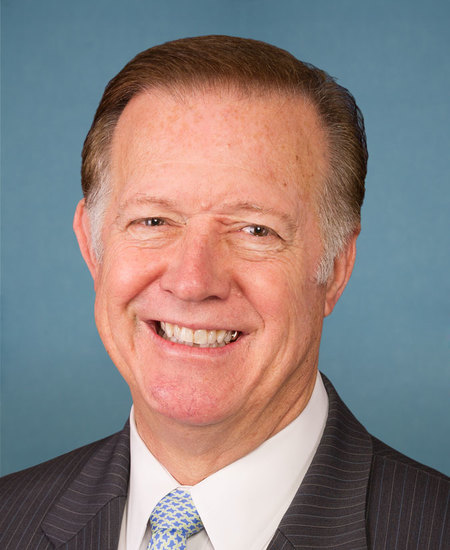
Rep. Randy K. Weber, Sr.
Sponsored bills
Maddy summaryThis House resolution formally honors the life and legacy of the late Representative Kay Granger from Texas, recognizing her historic achievements in public service. The bill highlights her roles as the first woman elected mayor of Fort Worth, the first Republican woman to represent Texas in the U.S. House, and the first Republican woman to chair the House Committee on Appropriations. It also acknowledges her contributions to national defense, including her work on the F-35 fighter jet program and the naming of a Navy ship for Fort Worth. The resolution expresses sympathy to Granger's family and directs the Clerk of the House to send an official copy of the document to her loved ones.
Maddy summaryThe GATE Act of 2026 prohibits U.S. national laboratories from admitting or granting access to foreign nationals from China, Russia, Iran, North Korea, and Cuba who are not permanent residents or U.S. citizens. This ban applies to individuals seeking to visit the facilities or work there for more than 30 consecutive days. The Secretary of Energy may issue a written waiver to allow specific exceptions if they determine that the benefits to the United States outweigh national security and economic risks, a decision made in consultation with intelligence officials. Any such waivers must be reported to relevant congressional committees within 30 days, including details on the individual's country of origin and the specific reasons for the exception.
Maddy summaryThe Right to Worship Act makes it unlawful for individuals to knowingly disrupt religious services or prevent people from entering houses of worship within 100 feet of an entryway during the hour before and after a scheduled service. The bill applies to conduct that meaningfully interferes with a service's normal operation or unreasonably hinders participation, while explicitly allowing free speech as long as it adheres to these specific time, place, and manner restrictions. Violators face escalating civil fines ranging from $2,500 for a first offense to $10,000 for subsequent offenses, assessed by the Attorney General. Additionally, the act permits aggrieved individuals, the U.S. Attorney General, or state attorneys general to file civil lawsuits seeking injunctive relief, compensatory damages, and attorney fees.
Maddy summaryThe FASTER Act of 2026 expands the list of major food allergens regulated by the FDA to include barley, rye, and oats alongside wheat. This change requires food manufacturers to clearly label these gluten-containing grains, helping consumers with allergies and Celiac disease identify potential triggers. The law also mandates that the FDA update its compliance guides within a year to reflect these new allergen categories. Additionally, the bill directs the Department of Health and Human Services to produce a comprehensive report on Celiac disease, covering data on prevalence, diagnostic methods, prevention strategies, and potential treatments. These provisions apply to all foods entering the market starting one year after the law is enacted.
Maddy summaryThis bill creates a legal exemption from antitrust laws for companies and organizations that share information or coordinate actions to protect against security risks posed by artificial intelligence. Specifically, it allows these entities to exchange data or agree to temporarily delay the release or deployment of AI systems if they believe such steps are necessary to prevent threats like weaponization, attacks on critical infrastructure, or unauthorized access. To qualify for this protection, the organizations must act in good faith, use the shared information solely for security purposes, and submit a written notice to the Department of Justice before implementing any coordinated delays. The law also ensures that details submitted to the government remain confidential and allows the Attorney General to seek court orders against companies that fail to prove their actions were legitimate security measures.
Maddy summaryThis bill, known as the Deputy Darren Almendarez Act, adds a new federal crime for knowingly possessing or purchasing catalytic converters removed from vehicles with the intent to sell or distribute them. It directly affects individuals involved in the removal and resale of these parts, as well as businesses like scrap yards and repair shops, by establishing penalties of up to five years in prison and fines of $100,000 for first offenses. The law includes specific exceptions that allow for legal possession or purchase if the converter was removed by a vehicle owner, acquired during official duties by authorized entities, or bought from licensed businesses that follow state and local identification rules. For repeat offenders, the potential prison sentence increases to ten years and the fine limit rises to $200,000.
Maddy summaryThe Stop EU Overreach Act directs the United States Trade Representative to initiate a formal investigation within 30 days of enactment to determine if specific European Union environmental and sustainability regulations unfairly burden American commerce. These targeted measures include rules on corporate sustainability due diligence, reporting, deforestation traceability, and carbon border adjustments that apply to US companies based on their operations or supply chains outside the EU. If the investigation concludes that these foreign practices are unreasonable or discriminatory, the USTR is authorized to take retaliatory actions such as imposing duties on imports from EU member states or suspending trade agreement benefits. The bill includes a sunset provision that terminates its requirements for any specific EU measure once the USTR certifies that the European Union has repealed the rule or entered into a binding agreement to exempt US persons from its extraterritorial obligations.
Maddy summaryThis bill reauthorizes and expands the Accelerating Access to Critical Therapies for ALS Act through 2031, extending funding for research into treatments for amyotrophic lateral sclerosis. It requires drug manufacturers to share interim clinical trial data with the FDA to better assess the progress of investigational drugs and clarifies that phase 3 clinical trial definitions include combined phase 2/3 trials and planned trials not yet enrolling participants. The legislation also mandates the FDA to publish an updated five-year action plan for ALS and other rare neurodegenerative diseases, including resource needs and coordination strategies with broader disease communities. Additionally, the bill requires the Government Accountability Office to submit a report on the program's implementation four years after enactment.
Maddy summaryThe Citizenship Act of 2026 redefines the term "invader" to include individuals who are unlawfully present in the United States or those seeking entry specifically for the purpose of giving birth. Under this legislation, children born in the U.S. to these designated invaders would not be entitled to birthright citizenship if their mothers were not lawfully admitted or if the parents do not meet specific residency requirements. The bill also explicitly excludes children born through commercial surrogacy contracts involving nationals of certain countries from acquiring citizenship. Additionally, the act declares that courts cannot review the President's or Congress's determination that an invasion is occurring.