

Maddy summaryThis bill requires federal crime control grants to include a certification that applicants have not improperly shared personal details about individuals involved in firearm transactions or background checks. It directly affects public agencies, private organizations, and local governments receiving funding from the Department of Justice, mandating they confirm they have protected sensitive data from accidental or intentional leaks. The law specifically defines "personally identifiable information" to include names, social security numbers, and biometric records to clarify what must be safeguarded. By adding these certification requirements to existing grant programs, the legislation aims to enforce stricter data privacy standards for those handling firearm-related records.
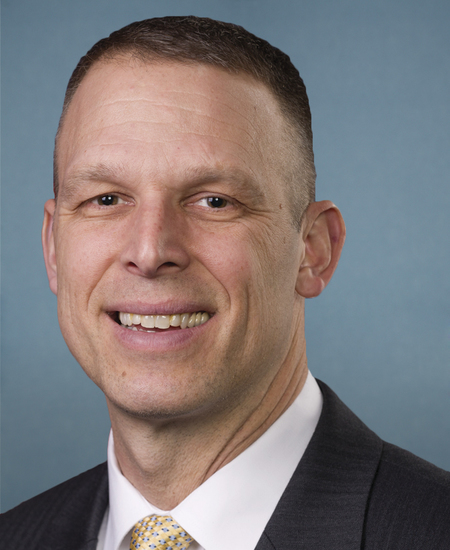
Rep. Scott Perry
Sponsored bills
Maddy summaryThis bill, titled the No Capital Gains Tax on Family Farms Act, would allow farmers to sell their land to immediate family members without paying capital gains tax on the profit. To qualify, the property must have been used as a farm for at least two years within the eight years prior to the sale, and the buyer must be a spouse, lineal descendant, or their spouse. If the new owner keeps the farm for ten years, the property's tax basis will be adjusted upward to reflect its fair market value at the time of the sale. The law applies to sales occurring after its enactment and requires the IRS to issue regulations to guide its implementation.
Maddy summaryHR 2424, the Modern, Clean, and Safe Trucks Act of 2025, repeals a 12% federal excise tax on new heavy trucks, tractors, and trailers. This tax currently adds significant costs - $7,000+ for trailers, $20,000+ for clean diesel trucks, and up to $50,000 for advanced technology trucks - discouraging replacement of older, less efficient vehicles. The bill directly affects truck manufacturers, dealers, and fleet operators by removing this cost barrier, making newer, cleaner models more affordable. It aims to accelerate the adoption of modern trucks with improved safety and environmental features, particularly benefiting electric and alternative-fuel vehicles that face higher upfront costs.
Maddy summaryThis joint resolution aims to disapprove and nullify a specific rule issued by the Environmental Protection Agency (EPA). It directly affects the EPA's ability to implement its recent changes to the Renewable Fuel Standard (RFS) program. The bill utilizes the Congressional Review Act to block the EPA's rule, which set biofuel blending standards for 2026 and 2027 and included a partial waiver for 2025 cellulosic biofuel volumes. If passed and signed into law, this resolution would prevent the EPA's new RFS program standards and related provisions from taking effect, thereby maintaining the prior regulatory framework.
Maddy summaryThe Equal Treatment for Farmers Act removes references to 'socially disadvantaged farmers and ranchers' from multiple federal agricultural laws and programs. This bill amends various statutes including the Federal Crop Insurance Act, Consolidated Farm and Rural Development Act, and other agricultural legislation to eliminate special preferences or categories based on social disadvantage status. The legislation also prohibits the USDA from providing any preference, priority consideration, or enhanced benefits based on race or gender in its programs. These changes affect how federal agricultural assistance, loans, and benefits are categorized and distributed to farmers and ranchers.
Maddy summaryThe No TAP Act of 2026 modifies federal surface transportation laws to prohibit the transfer of funds designated for specific highway projects to other uses. This legislation directly affects state and local transportation departments by removing the ability to move money set aside for certain infrastructure initiatives into their general transportation pools. The bill achieves this by amending the United States Code to strike existing clauses that allowed for the transferability of these specific funds and reorganizing related subsections. Consequently, funds earmarked for particular projects must remain dedicated to those projects rather than being reallocated by state officials.
Maddy summaryThe Stop Climate Shakedowns Act of 2026 prohibits state and local governments from suing energy companies for damages related to climate change or greenhouse gas emissions. This bill declares that regulating emissions is exclusively a federal responsibility and voids any state laws that hold energy businesses liable for alleged climate harms. Consequently, all pending lawsuits of this nature against energy producers must be dismissed immediately, preventing states from imposing retroactive penalties for past lawful operations. The legislation directly affects companies involved in the production, refinement, and sale of oil, gas, and coal by shielding them from civil liability in both state and federal courts.
Maddy summaryThis bill directs the U.S. Treasury Department to designate the Council on American-Islamic Relations (CAIR) as a Specially Designated Global Terrorist, which would block all U.S. assets belonging to CAIR and its affiliates and prohibit Americans from engaging in any financial transactions with the organization. The legislation also requires the Treasury Secretary to suspend CAIR's tax-exempt status under federal law. These actions are based on provisions in Executive Order 13224 that allow the government to restrict support for designated terrorist organizations. The bill includes a requirement for federal agencies to submit a detailed report to Congress within 30 days explaining the legal criteria used to justify the designation.
Maddy summaryThe No CIG Act eliminates the Federal Transit Administration's Fixed Guideway Capital Investment Grants program by repealing the relevant sections of the U.S. Code. This change directly affects public transit agencies that previously received funding for building or upgrading rail systems, as they will no longer be eligible for these specific grants. The bill removes the legal authority for the program and makes corresponding adjustments to related code sections to ensure consistency.
Maddy summaryThis bill removes a specific protective arrangement for employees under Section 5333(b) of Title 49 of the United States Code. The provision being repealed likely provided certain legal protections or benefits to workers in the transportation or related industries. By repealing this section, the bill eliminates those specific employee protections from federal law. The change directly affects workers who were previously covered under the repealed arrangement. This legislative action is a straightforward removal of existing regulatory text without adding new requirements or benefits.