Maddy summaryThis joint resolution seeks to overturn a specific Environmental Protection Agency rule that granted California the authority to enforce its own nonroad engine pollution standards for commercial harbor craft. If enacted, the bill would render the EPA’s decision invalid and prevent it from taking effect. The measure directly affects California by removing its ability to impose stricter local emissions regulations on these vessels.
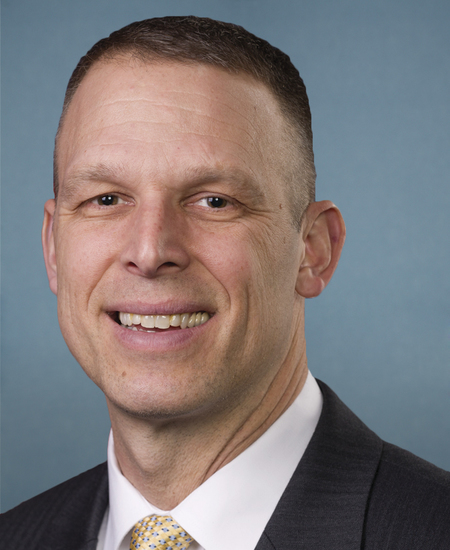
Rep. Scott Perry
Sponsored bills
Maddy summaryThis bill proposes to reject a specific rule issued by the Environmental Protection Agency regarding pollution control standards for ocean-going vessels at ports in California. If passed, the measure would use a congressional veto to cancel the rule, preventing it from taking legal effect. The legislation directly impacts the EPA's ability to enforce these specific emission limits and affects shipping companies and ports in California that would have been subject to the new standards.
Maddy summaryThis bill amends the Robert T. Stafford Disaster Relief Act to explicitly prohibit discrimination based on political affiliation when distributing federal disaster assistance. It directly affects all FEMA disaster aid programs by requiring that eligibility and aid distribution consider political affiliation as a prohibited factor, alongside existing protections for economic status. The key change is adding "political affiliation" to the list of protected categories in Section 308(a) of the law. This is a procedural update to existing federal disaster law with no new funding or program changes.
Maddy summaryThe Make Apportionment Great Again Act would change how U.S. House seats are distributed among states by excluding noncitizens from the population count used for apportionment. It requires the Secretary of Commerce to recalculate state populations using existing federal and state government records, without conducting a new census, and mandates that future censuses include a question on citizenship status. The bill establishes a legal presumption that any resulting changes in seat allocation are valid, allowing courts to overturn them only with clear evidence of statutory or constitutional violations. Additionally, it creates an expedited judicial process for legal challenges, requiring cases to be heard by three-judge panels and permitting direct appeal to the Supreme Court.
Maddy summaryThe Strengthening Oversight in Public Buildings Act enhances congressional and external oversight of federal real estate management by requiring the General Services Administration (GSA) to share all relevant data and reports with the Government Accountability Office (GAO). The bill clarifies that federal agencies with independent leasing authorities must comply with specific accounting and notification requirements, including submitting a list of such agencies to Congress within one year. It also allows GSA to retain certain buildings as temporary "swing space" to facilitate the sale or renovation of other properties, provided this does not exceed the savings from those transactions and annual plans are submitted to congressional committees. Finally, the legislation extends the authority of the Public Buildings Reform Board through December 31, 2028, and grants it access to building utilization data collected by the Office of Management and Budget and GSA.
Maddy summaryHR 5267, the American Franchise Act, clarifies when franchisors can be considered joint employers of franchisee employees under federal labor laws. It defines "substantial direct and immediate control" over essential employment terms like wages, benefits, hours, hiring, and discipline - requiring franchisors to actively set these terms to be deemed joint employers. The bill explicitly excludes routine brand standards, training, or minimal safety requirements from constituting such control. This directly affects franchisors and franchisees by limiting joint employer liability to cases where franchisors exert significant, ongoing influence over core employment decisions. The law applies prospectively to new cases after enactment, not past disputes.
Maddy summaryThe Ending Restaurant Purchases with SNAP Act of 2026 would prohibit the use of Supplemental Nutrition Assistance Program (SNAP) benefits to buy meals at restaurants and other private food service establishments. The bill achieves this by removing specific legal provisions from the Food and Nutrition Act of 2008 that currently allow states to run optional restaurant programs for eligible groups such as the elderly, disabled, and homeless individuals. If enacted, these changes would take effect 180 days after the date of enactment, directly affecting SNAP recipients who rely on these state-level options for dining out.
This bill designates the facility of the United States Postal Service located at 6 Pennsylvania Avenue in Matamoras, Pennsylvania, as the "PFC Edward Kuhn Memorial Post Office".
Maddy summaryThis bill would prohibit any state or local government designated as a "sanctuary jurisdiction" from receiving grant funds distributed by the Department of Housing and Urban Development (HUD). A jurisdiction is defined as a sanctuary if it has laws, policies, or practices that restrict officials from sharing information about an individual's immigration status or from complying with federal requests to detain or notify about the release of individuals. The funding restriction would apply to grants distributed 180 days after the bill's enactment. To determine which jurisdictions qualify for this ineligibility, the HUD Secretary is required to consult with the Secretary of Homeland Security.
Maddy summaryThis joint resolution seeks to overturn an Environmental Protection Agency rule that granted California permission to enforce its own stricter pollution standards for small off-road engines. If enacted, the measure would revoke this waiver, effectively preventing California from implementing regulations that exceed federal requirements for equipment such as lawn mowers and generators. The bill operates under congressional review authority to nullify the agency's decision, ensuring that national uniformity is maintained for these specific engine emissions standards.