Maddy summaryThe PROTECT Taiwan Act requires U.S. agencies to bar representatives of China from attending meetings of six major international financial organizations (including the Bank for International Settlements and Financial Stability Board) if the President declares that China's actions threaten Taiwan's security or U.S. interests. It directs the Treasury, Federal Reserve, and SEC to implement this exclusion policy. The law expires automatically after five years unless the President notifies Congress that continuing it serves U.S. national interests. This is a procedural policy change affecting U.S. participation in international financial forums, not a direct economic or security measure.
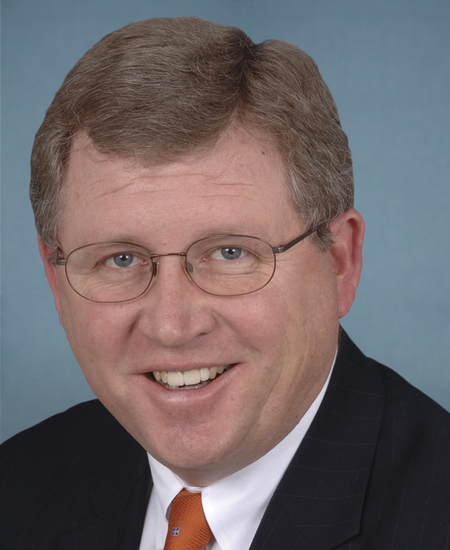
Rep. Frank D. Lucas
Sponsored bills
Maddy summaryHR 7391, the Community Health Center Drug Pricing Protection Act, requires that Federally Qualified Health Centers (FQHCs) pay the discounted 340B ceiling price for covered drugs **at the time of purchase**, not later through rebates or adjustments. This directly affects FQHCs, which rely on 340B discounts to provide affordable care to low-income patients. The bill amends the Public Health Service Act to prohibit manufacturers from entering agreements where FQHCs initially pay more than the ceiling price, with later reimbursement. It takes effect immediately upon enactment for all new drug purchases and applies to existing agreements starting then.
Maddy summaryThis bill prevents state or local governments from banning or restricting energy connections (like installation, modification, or access) based on the type or source of energy, such as electricity, natural gas, or renewable fuels. It directly affects consumers choosing energy providers and energy companies seeking to offer services. The key provision prohibits local laws, regulations, or policies that limit energy services sold in interstate commerce, covering all energy types listed in the bill’s definitions. It does not create new programs but limits regulatory authority at the state or local level. The law aims to ensure open access to diverse energy sources without source-based restrictions.
This resolution supports the designation of the International Year of the Woman Farmer and recognizes the critical role of women in agriculture. The resolution also encourages citizens to celebrate the impact these women have on the food systems and agricultural workforce of the United States by encouraging and empowering women to pursue careers in agriculture and cultivate leadership opportunities.
Maddy summaryThis bill creates a tax credit for businesses selling products made with U.S.-grown cotton. The credit equals 24% of the cotton's market value if processed only in the U.S. or in countries with U.S. trade deals, or 18% for other processing locations. To qualify, cotton must be digitally traced from U.S. farms to finished products and certified by the USDA as meeting origin requirements. It directly affects clothing and textile manufacturers selling qualifying products in the U.S. market.
Maddy summaryThis symbolic House resolution expresses U.S. congressional support for Iranian protesters demanding democracy and human rights. It condemns the Iranian regime's violent suppression of protests, including killings, mass arrests, and internet restrictions, while urging the regime to release political prisoners and restore communication access. The resolution reaffirms the Iranian people's right to self-determination through free elections and echoes a 2023 resolution (HCR 7) that similarly praised protesters. As a non-binding expression of support, it does not impose new policies or alter U.S. government actions.
Maddy summaryThe Fiscal State of the Nation Act requires the chairs of the House and Senate Budget Committees to hold an annual joint hearing within 45 days after the Treasury submits its annual financial report. At this hearing, the Comptroller General must present a nonpartisan analysis of the federal government's financial condition, including budget deficits, surpluses, and long-term fiscal projections, based on the Treasury's report. The hearing must be open to the public and media, and all members of Congress may participate, regardless of committee membership. This requirement applies to financial reports submitted on or after the bill's enactment date.
Maddy summaryHR 909, the Crime Victims Fund Stabilization Act of 2025, modifies how funds from the False Claims Act are deposited into the Crime Victims Fund. It specifies that from 2025 through 2029, certain False Claims Act proceeds (specifically those for qui tam plaintiff payments and government damage reimbursements) cannot be deposited into the fund. This change directly affects the composition of the Crime Victims Fund by excluding these specific revenue streams during the specified period. The bill does not create new benefits or alter victim services; it only adjusts fund allocation rules for existing False Claims Act revenues.
Miracle on Ice Congressional Gold Medal Act This act provides for the award of Congressional Gold Medals to the members of the 1980 U.S. Olympic men's ice hockey team in recognition of the team's achievement at the 1980 Winter Olympic Games.
Maddy summaryThis bill establishes a new interagency Task Force to dismantle foreign scam operations targeting Americans, particularly through "pig butchering" scams in Southeast Asia. The Task Force, chaired by the Secretary of State, will coordinate efforts across multiple agencies to shut down scam centers, impose sanctions on perpetrators, and support victims of trafficking. It requires a detailed strategy within 180 days and annual reports to Congress on progress, including sanctions imposed and funds recovered. The bill authorizes $30 million for these efforts in fiscal years 2026-2027, focusing on countries like Cambodia, Laos, and Burma where scam centers operate with forced labor.